Archaeology
Muge Shell Middens
Muge Shell Middens, in Salvaterra de Magos: Mesolithic shell mounds with hundreds of burials, discovered in 1863 and a National Monument since 2011.
- Location
- Muge, Salvaterra de Magos, Santarém
- Built
- Mesolítico (ocupação iniciada há cerca de 8000 anos)
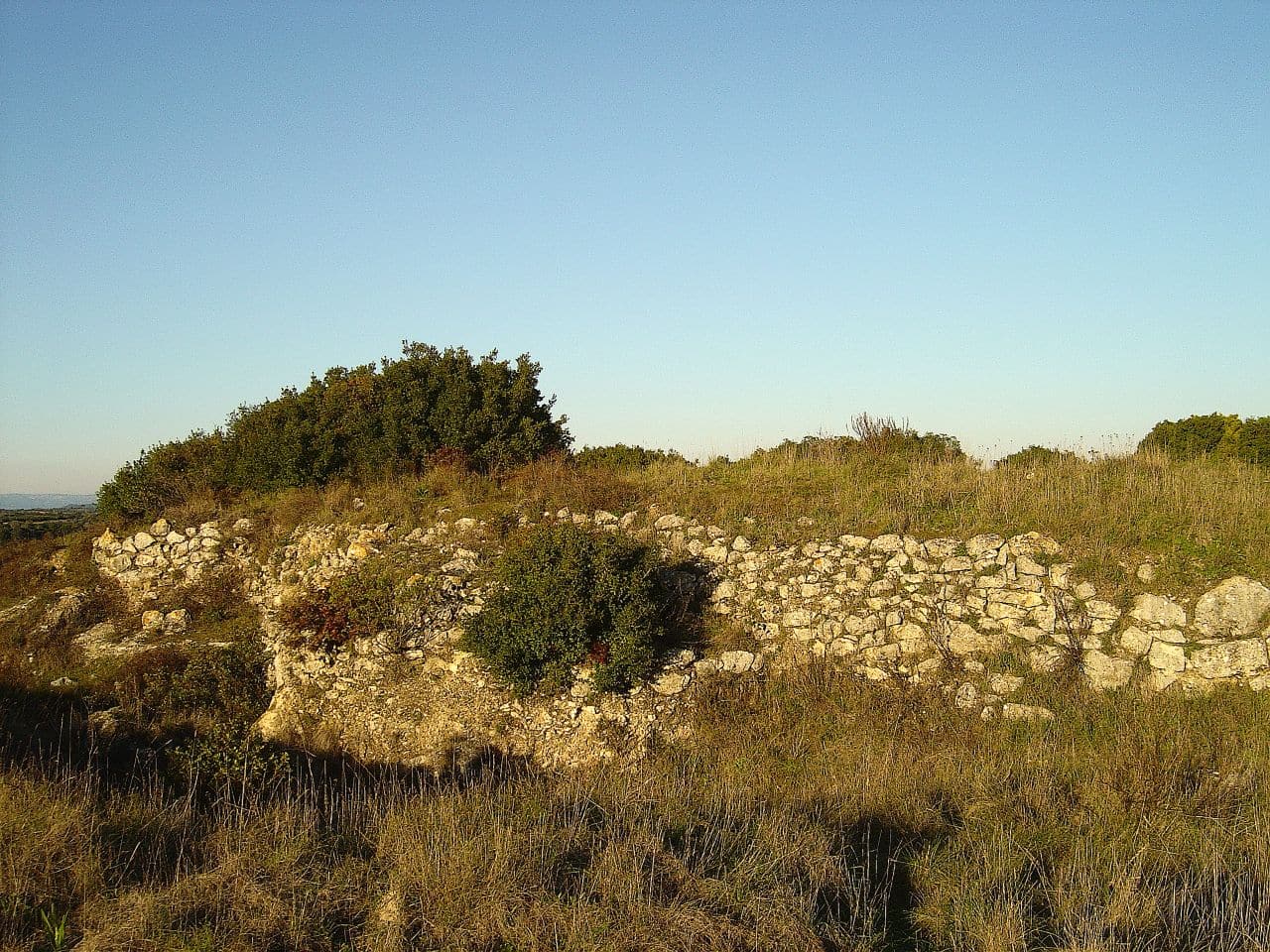
The Muge Shell Middens are among the most cited sites in European prehistory, although very little can be seen at the surface. In the stream valleys on the left bank of the Tagus, in the municipality of Salvaterra de Magos and district of Santarém, Mesolithic hunter-gatherer communities accumulated for centuries the shells of the molluscs they ate, together with animal bones, tools, ashes and the bodies of their dead. The result was artificial hills which, according to the national register, reach five metres in height. Three of them, the Moita do Sebastião, the Cabeço da Amoreira and the Cabeço da Arruda, are now a National Monument.
An estuary that no longer exists
The present landscape of lowlands and rice fields is deceptive. The Muge Portal, from the research team of ICArEHB (University of Algarve), explains that the shell middens now lie about 60 kilometres upstream from the Tagus estuary. At the end of the last glaciation, however, rising sea levels formed a vast inland estuary which, at its maximum, covered nearly 1,300 km². It was in this setting that, about 8,000 years ago, hunter-gatherer groups settled along streams then flooded by brackish waters. Later silting gave rise to the alluvial plains known today.
What a shell midden holds
A shell midden is not merely a rubbish heap of shells. The national register describes deposits formed by the surplus of everyday life over a long period. The materials are mainly microlithic: blades and geometric pieces used to assemble hunting and fishing weapons and implements. Pottery is scarce. The dead were buried among these remains, within the mound itself.
Recent research adds detail. At Cabeço da Amoreira, meagre (corvina) dominates the fish remains, and analysis of the otoliths points to catches in the warm season. Among the molluscs, the lambujinha and the cockle predominate. Red deer, wild boar, aurochs and rabbit were the main prey, and the dog already accompanied these communities. Strontium isotope analyses of teeth indicate populations that were mostly local, with limited mobility. The portal nevertheless stresses that the plant component of the diet remains poorly documented.
Why they matter
The 2011 classification decree states that the Muge Shell Middens are «cited in all the prehistory manuals of Europe». There are two main reasons. The first is the age of the research: the site has been scientifically excavated since the 1860s, before the very concept of the Mesolithic had been established. The second is the number of burials. The Muge Portal counts more than 300 human burials, which it describes as one of the largest assemblages of the European Mesolithic. Bones, teeth and funerary contexts allow the study of diet, health, mobility and rituals of those whom the portal calls the last hunter-gatherers of the Tagus valley. For the first agricultural societies, continue to Neolithic.
More than 160 years of excavation
According to the Muge Portal, Carlos Ribeiro identified the first shell middens in April 1863, during the work of the Geological Commission for the Geological Map of Portugal. Ribeiro directed the first excavations at Cabeço da Arruda in 1864–1865. Francisco Pereira da Costa’s 1865 memoir on the skeletons found there is presented by the portal as the first scientific publication devoted to a prehistoric site in Portugal.
In 1880, participants in the International Congress of Anthropology and Prehistoric Archaeology, meeting in Lisbon, visited the shell middens. The national register notes that the burials among the remains aroused the greatest curiosity during that visit. Excavations by Francisco de Paula e Oliveira at Cabeço da Arruda and Moita do Sebastião followed. Between 1930 and 1937, the anthropologist António Mendes Correia, of the University of Porto, excavated Cabeço da Amoreira and Cabeço da Arruda; the materials from those campaigns are held at that university.
The Moita do Sebastião was almost wholly destroyed in April 1952, during the construction of an agricultural complex for rice processing. Jean Roche and Octávio da Veiga Ferreira excavated what remained between 1952 and 1954 and identified the base of a hut, pits and combustion structures. The same team returned to Cabeço da Amoreira in 1962–1965 and found new burials at the base of the midden. Around 1998–2003, José Manuel Rolão resumed work at Cabeço da Amoreira and Cabeço da Arruda. Since 2008, the ICArEHB team has been excavating Cabeço da Amoreira. Radiocarbon dates define there five main phases of deposition, between about 8,000 and 7,400 years ago.
To place Muge within the long sequence of prehistory, see also Palaeolithic, prehistoric art in Portugal and the overview of Portuguese archaeology.
Protection
The Muge Shell Middens — Moita do Sebastião, Cabeço da Amoreira and Cabeço da Arruda are a National Monument under Decree No. 16/2011, published on 25 May 2011, in the parish of Muge. The process began with a proposal by José Arnaud in 2000, according to the Cultural Heritage register, I.P. The special protection zone, which includes a non aedificandi zone, was set by Ordinance No. 457/2012, of 18 September, corrected by Correction Declaration No. 13/2013. In the Cultural Heritage Atlas, each of the three shell middens appears as its own area, part of the classified ensemble. The shell middens are not part of any UNESCO inscription.
The coordinates on this page are those of the national register and of Wikidata, and correspond to the area of Moita do Sebastião. According to the Atlas delimitations, Cabeço da Amoreira and Cabeço da Arruda lie less than 2 km from that area.
Preparing a visit
Do not expect a visitable archaeological site. The Muge Portal informs that the shell middens are on private property and are not freely accessible. The ICArEHB announcement of the opening of the interpretation centre adds that they are covered by layers of earth and are therefore barely visible.
The way to get to know them is the Muge Shell Middens Interpretation Centre, opened on 13 September 2025 at the Casa do Povo de Muge (Estrada Nacional 118, n.º 5, 2125-317 Muge). It results from a partnership between ICArEHB, the University of Algarve and the Municipality of Salvaterra de Magos. The exhibition addresses the funerary practices, adornments, lithic industry and diet of these communities, and includes a stratigraphic section of a shell midden and a skeleton from Cabeço da Amoreira. The portal also indicates Casa Cadaval as a starting point for exploring the shell middens.
When consulted on 5 November 2026, the portal gave the following hours: Tuesday to Friday, 9:00–12:30 and 13:30–17:00, by prior appointment by telephone or email. It also indicated opening on Saturdays and Sundays, from 14:30 to 16:30, only during the month of March, and closure on Mondays. Confirm hours and booking by telephone at 263 509 520 or on the visit page of the Muge Portal.
Frequently asked questions
- What are the Muge Shell Middens?
- They are large artificial mounds formed by the accumulation of shells from molluscs eaten by Mesolithic hunter-gatherer communities, along the streams on the left bank of the Tagus, in the municipality of Salvaterra de Magos. Besides shells, they hold animal remains, stone tools, dwelling structures and graves.
- Who discovered them and when?
- Carlos Ribeiro identified the first shell middens in April 1863, during the work of the Geological Commission for the Geological Map of Portugal. The first excavations, at Cabeço da Arruda, followed in 1864–1865.
- Are they classified?
- Yes. The shell middens of Moita do Sebastião, Cabeço da Amoreira and Cabeço da Arruda have been a National Monument under Decree No. 16/2011, of 25 May. The special protection zone was set by Ordinance No. 457/2012, of 18 September. They are not part of any UNESCO inscription.
- Can they be visited?
- The shell middens are on private property and are not freely accessible. The gateway for getting to know them is the Muge Shell Middens Interpretation Centre, at the Casa do Povo de Muge, opened in September 2025; when consulted on 5 November 2026, visits were by prior appointment.
Sources
- Património Cultural, I.P. — Concheiros de Muge (342923)
- Património Cultural, I.P. — Atlas do Património Classificado e em Vias de Classificação (NINV 72452)
- Diário da República — Decreto n.º 16/2011, de 25 de maio
- ICArEHB / Universidade do Algarve — Muge Portal: Os Concheiros
- ICArEHB / Universidade do Algarve — Muge Portal: Visitar
- ICArEHB / Universidade do Algarve — Muge Portal (página inicial)
- ICArEHB — Muge Shell Middens gain new Interpretation Centre (15-09-2025)
- Wikidata — Concheiros de Muge (Q15047295)
Keep exploring
Heritage nearby
More places to discover from here. Approximate straight-line distances, within 50 km.