Monuments
Church of Santa Maria de Marvila, Santarém
Church of Santa Maria de Marvila, in Santarém: Manueline reform of c. 1530, high chapel and portal, tiles of 1617–1642 known as the cathedral of azulejos.
- Location
- Santarém, Santarém
- Built
- reforma manuelina concluída c. 1530; azulejos de 1617–1642
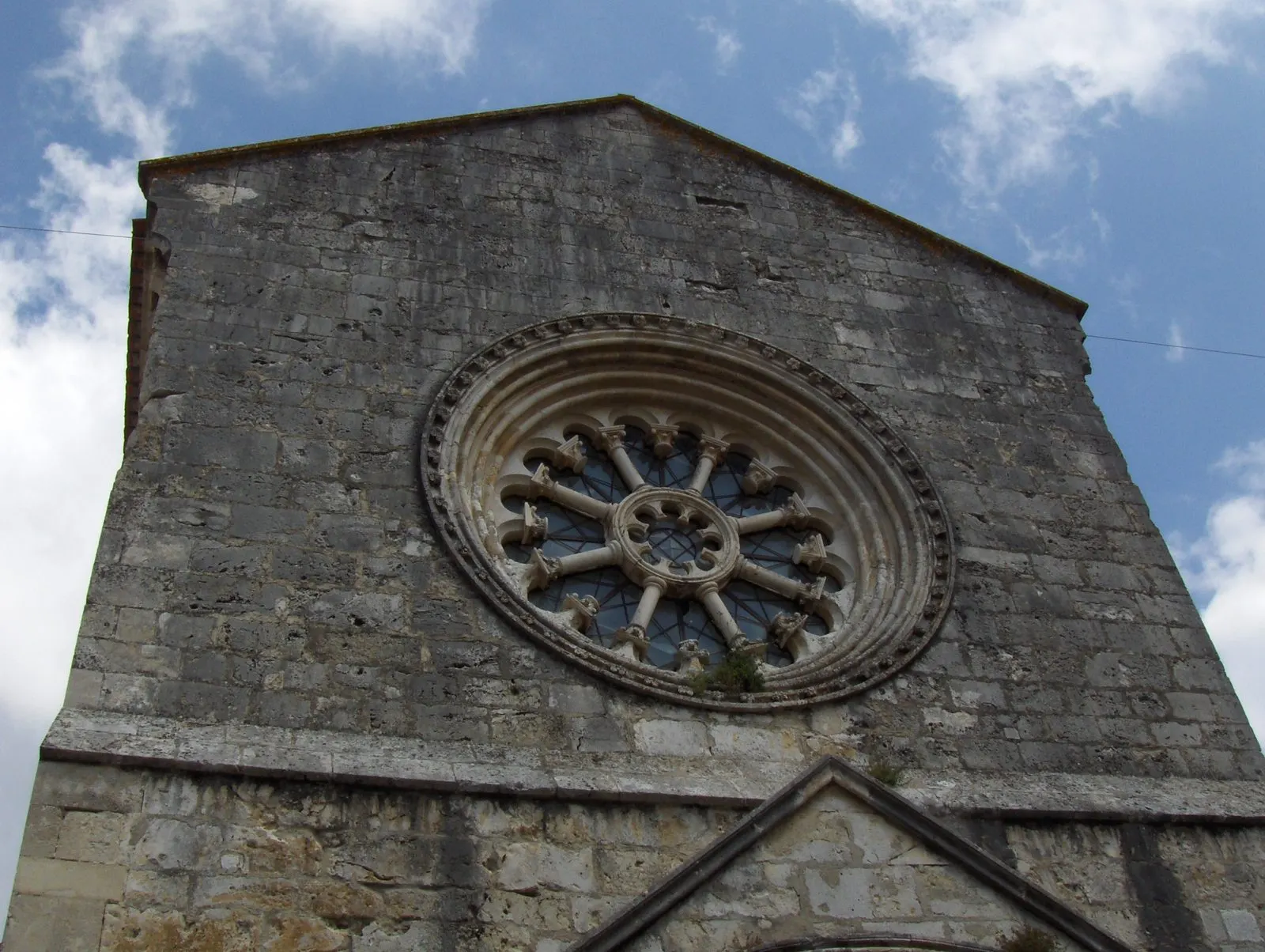
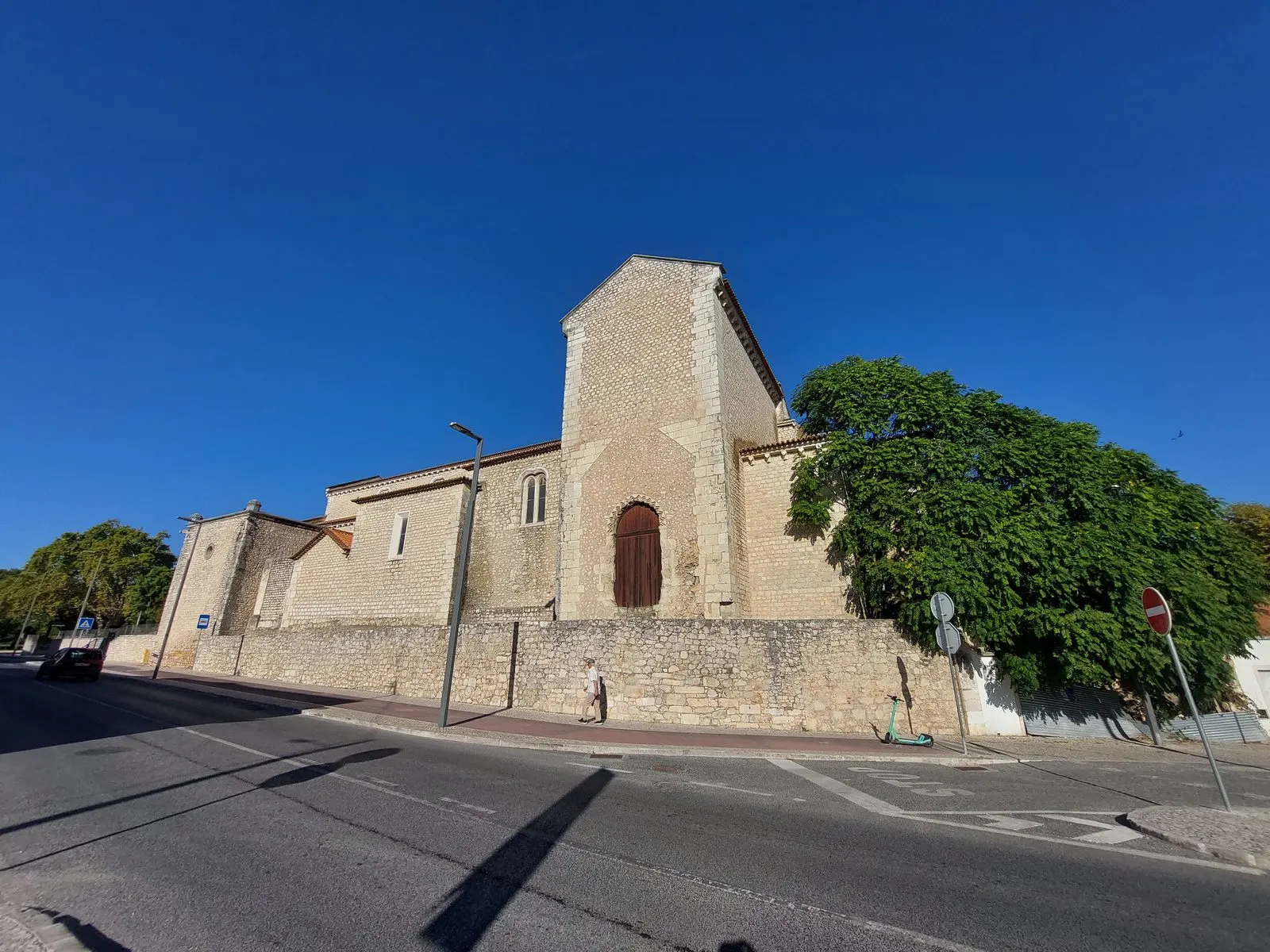
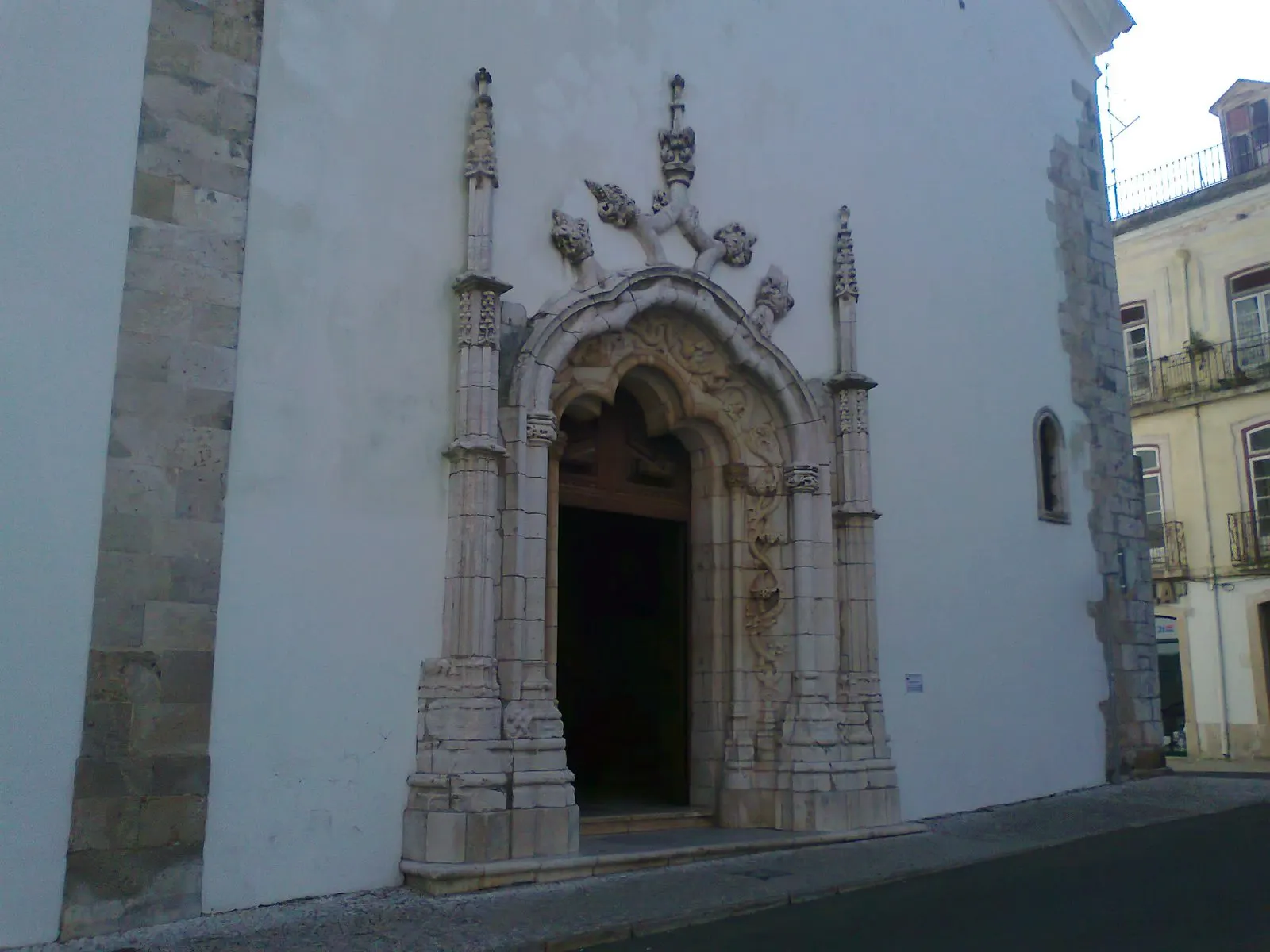
The Church of Santa Maria de Marvila is the parish church of the Marvila district, in the upper part of Santarém. Outside, it is a plain, whitewashed building with a stone portal laden with vegetal and fantastical motifs. Inside, it is lined with seventeenth-century azulejos that gave it national fame and a rather immodest name: the “cathedral of azulejos”.
From the Templars to the collegiate church
The register of the Património Cultural, I.P. considers that the church probably results from the refounding of a former mosque in the medina of Santarém, following the Christian reconquest. In 1159, D. Afonso Henriques donated it to the Order of the Templars. The temple may originally have been called Santa Maria de Santarém, which would indicate its primacy over the city’s other churches, namely Santa Maria da Alcáçova.
Already Christianised, it was entirely rebuilt in the mid-thirteenth century, in a Gothic style of which little remains today. In 1244, the Bishop of Lisbon, D. Aires Vasques, added revenues and privileges to it, and the church became the Collegiate Church of Santa Maria de Marvila. The Islamic origin is a hypothesis (“probably”) of the register, not a documented fact.
The Manueline reform
The complex underwent a total reform and enlargement at the beginning of the sixteenth century, sponsored by the Viceroy of India D. Francisco de Almeida and completed around 1530. There was a further intervention on the initiative of D. João III, but it is the Manueline work that stands out most, although it was somewhat altered later. The register includes in it:
- the main portal, with naturalistic, fabulous and festive elements in “thick” carving;
- the lateral elevations, with pointed-arched windows;
- the arches giving access to the choir and to the baptismal chapel;
- the east end, with a high chapel opened by a polylobed triumphal arch, which simulates an elegant draped curtain, and two side chapels, all with ribbed vaulting.
The bosses of the high chapel’s vault bear emblems of D. Manuel: the cross of the Order of Christ, the armillary spheres and, in the central boss, the royal shield of five escutcheons. The side chapels open onto the transept through Gothic arches which, together with the doors of the choir and the baptistery, are scant traces of the original construction. The register, citing Vítor Serrão, considers it the most important witness of Manueline art in Santarém.
From the campaign of D. João III, already Renaissance in character, came the interior of three naves divided by round arches on classical columns with Ionic capitals, and the side doors with triangular pediments. The tower, with a tall pyramidal spire, was demolished in 1876; with it disappeared the Gothic arcosolia at its base, which housed two tomb chests, one of which can be seen today in the city’s Municipal Museum.
The azulejos of 1617 to 1642
What most captivates the visitor is the ceramic cladding. According to the national register, the church preserves a very rich ensemble of seventeenth-century azulejaria, made between 1617 and 1642, in blue-and-white checkerboard (enxaquetado) and in “carpet” (tapete) compositions in blue and yellow. It is a good place to understand the seventeenth-century pattern on a monumental scale; for the general panorama, see the page on azulejo. The sacristy has a ceiling decorated in blue and red, dated 1690, and a dado of equally seventeenth-century azulejos.
The same register mentions a marble pulpit from the late seventeenth century, two sixteenth-century holy water stoups, tomb slabs with inscriptions, and the slab of the chapel of the Blessed Sacrament, for Paulo de Pedrosa Meireles, who died on 27 November 1663. The Mannerist retable of the high chapel was lost following the French invasions and was replaced by a canvas of the Assumption of the Virgin, by Fuschini, a painter of Ajuda.
Classification
It is a National Monument by Decree no. 3 318, published in the Diário do Governo, I Série, no. 144, of 27 August 1917. The special protection zone was set by ministerial order of 30 August 1946 (Diário do Governo, II Série, no. 262, of 11 November 1946). It is not part of any UNESCO inscription.
Preparing the visit
The church is located at the Largo de Marvila, in Santarém, and is a parish church in active use. When consulted on 5 November 2026, we did not find a confirmed visiting schedule in an updated official source: the municipal website was inaccessible and the Turismo de Portugal page required automated verification. Please confirm opening hours and entry conditions with the municipality or the parish before travelling, especially on days of worship. In the same part of the city, the Church of São João de Alporão and the Convent of São Francisco complete a route through Santarém’s Gothic and Manueline heritage.
Photograph by GualdimG, dated 20 September 2014. Original on Wikimedia Commons, under CC BY-SA 4.0; resized and compressed for the web, without altering the composition.
Frequently asked questions
- Why is it called the "cathedral of azulejos"?
- The register of the Património Cultural, I.P. notes that the church preserves a very rich set of seventeenth-century azulejos, made between 1617 and 1642, in blue-and-white checkerboard (enxaquetado) and in "carpet" (tapete) compositions in blue and yellow, which earned it the designation "cathedral of azulejos".
- Is the church Manueline?
- The reform and enlargement of the early sixteenth century, sponsored by the Viceroy of India D. Francisco de Almeida and completed around 1530, is the most prominent: the main portal, the high chapel and the arches of the choir and the baptismal chapel. The present three-aisled interior results from a Renaissance campaign in the time of D. João III.
- Is it a National Monument?
- Yes, by Decree no. 3 318, published in the Diário do Governo, I Série, no. 144, of 27 August 1917. It is not part of any UNESCO inscription.
- What are the visiting hours?
- We could not confirm this from a current official source. When consulted on 5 November 2026, the Santarém municipal website was inaccessible and the Turismo de Portugal page was protected by an automated verification check. Please confirm with the municipality or the parish before travelling.
Sources
- Património Cultural, I.P. — Igreja de Santa Maria de Marvila (70432)
- Património Cultural, I.P. — Atlas do Património Classificado e em Vias de Classificação (NINV 3931)
- Diário do Governo — Decreto n.º 3 318, de 27 de agosto de 1917 (I Série, n.º 144)
- Wikidata — Igreja de Santa Maria de Marvila (Q5994176)
Keep exploring
Heritage nearby
More places to discover from here. Approximate straight-line distances, within 50 km.