Monuments
Church of São João de Alporão, Santarém
Santarém's Church of São João de Alporão: a Hospitaller temple of Romanesque origin, pioneering Gothic chevet, former museum, classification and visit status.
- Location
- Santarém, Santarém
- Built
- últimas décadas do século XII (campanha românica); campanha gótica posterior
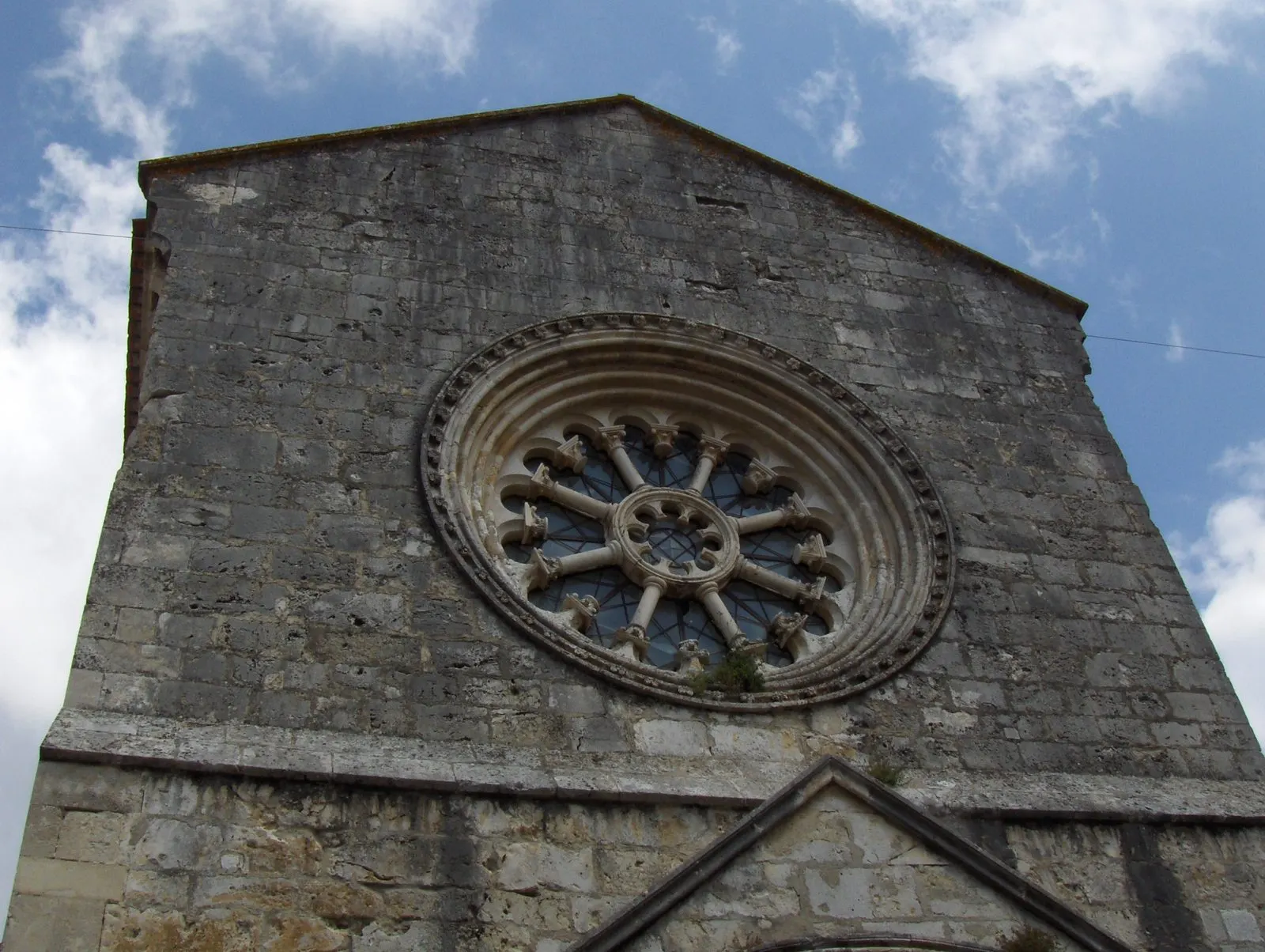
The Church of São João de Alporão stands in the historic centre of Santarém, near the Torre das Cabaças. It was built by a military and hospitaller order at the end of the twelfth century and is today one of the most debated medieval buildings in the country, because it displays, within a single construction, the close of the Romanesque and the first steps of the Gothic. For a long time it also housed the city’s museum.
The Order of the Hospital in Santarém
The Cultural Heritage register (Património Cultural, I.P.) attributes the foundation to the Order of St John of the Hospital, whose establishment in Santarém is dated between 1159 and 1185. A charter of 1179 already allows the presence of the Hospitallers to be inferred, but the exact date of their establishment remains unknown. As the dating of the church cannot be tied to the arrival of the order, the proposed dates for its construction vary; the register nevertheless considers that there is little doubt about an initially Romanesque conception, dating from the last decades of the twelfth century.
Between Romanesque and Gothic
The national register describes a “hybrid product”. On the Romanesque side, it points to the massive structure of the nave, which relates to the single-nave churches of the Upper Douro, the main portal with round-arched archivolts, the buttresses without structural function, and the fortified character of the whole, to which a heavy circular tower was attached, demolished in 1785 to allow the royal coach of D. Maria I to pass. For the stylistic context, see Romanesque architecture in Portugal.
On the Gothic side, the polygonal apse, with wide pointed-arched windows between buttresses, stands out, as does the original vaulting of the nave’s three bays, in ribbed cross-vaulting with pointed arches. The principal work of this phase is the gallery extending beyond the chancel to the outer limit of the apse, which the register cites as the “first Gothic gallery in Portuguese architecture”. Its function is still debated; it probably gave access to the Romanesque tower. The register admits that it may be an example of Norman influence along the Lisbon–Santarém–Coimbra axis from the second half of the twelfth century.
The authors cited agree on two autonomous building campaigns. Either the Romanesque project was left unfinished, or the original barrel vault of the nave collapsed; in either case, the second campaign raised an entirely new apse, attributed to patrons and builders probably of French origin. For the style as a whole, consult Gothic architecture in Portugal.
From church to museum
After the religious orders were suppressed, the church served as a theatre. In 1877, the Administrative Commission of the District Museum of Santarém began restoration works to adapt it into a museum, directed by João Fagundo da Silva. According to the national register, they favoured consolidation over reconstruction, although they used hydraulic cement in the vault and turned the side portal into a large window. In national databases, the building also appears under the alternative names Núcleo Museológico de Arte e Arqueologia Medievais and Museu Municipal de Santarém.
Current state of visiting
This point calls for caution. A Lusa news report of 2 April 2019 stated that the museum had been closed since 2012 for safety reasons: a study by the Instituto Superior Técnico, dated 2004, had identified water infiltration from the foundations, aggravated by the local stone and by earlier repairs using cement mortar. The municipality said it wished to reopen the space “as soon as possible”, without giving a date, and was preparing a provisional intervention with the Direção-Geral do Património Cultural.
When consulted on 5 November 2026, the website of the Municipality of Santarém was inaccessible, and we found no other official source saying whether the building has reopened or under what conditions it may be visited. For that reason we give no opening hours or prices. Before travelling, please confirm with the municipality and with Turismo de Santarém. The church is located on the Largo Zeferino Sarmento.
Classification
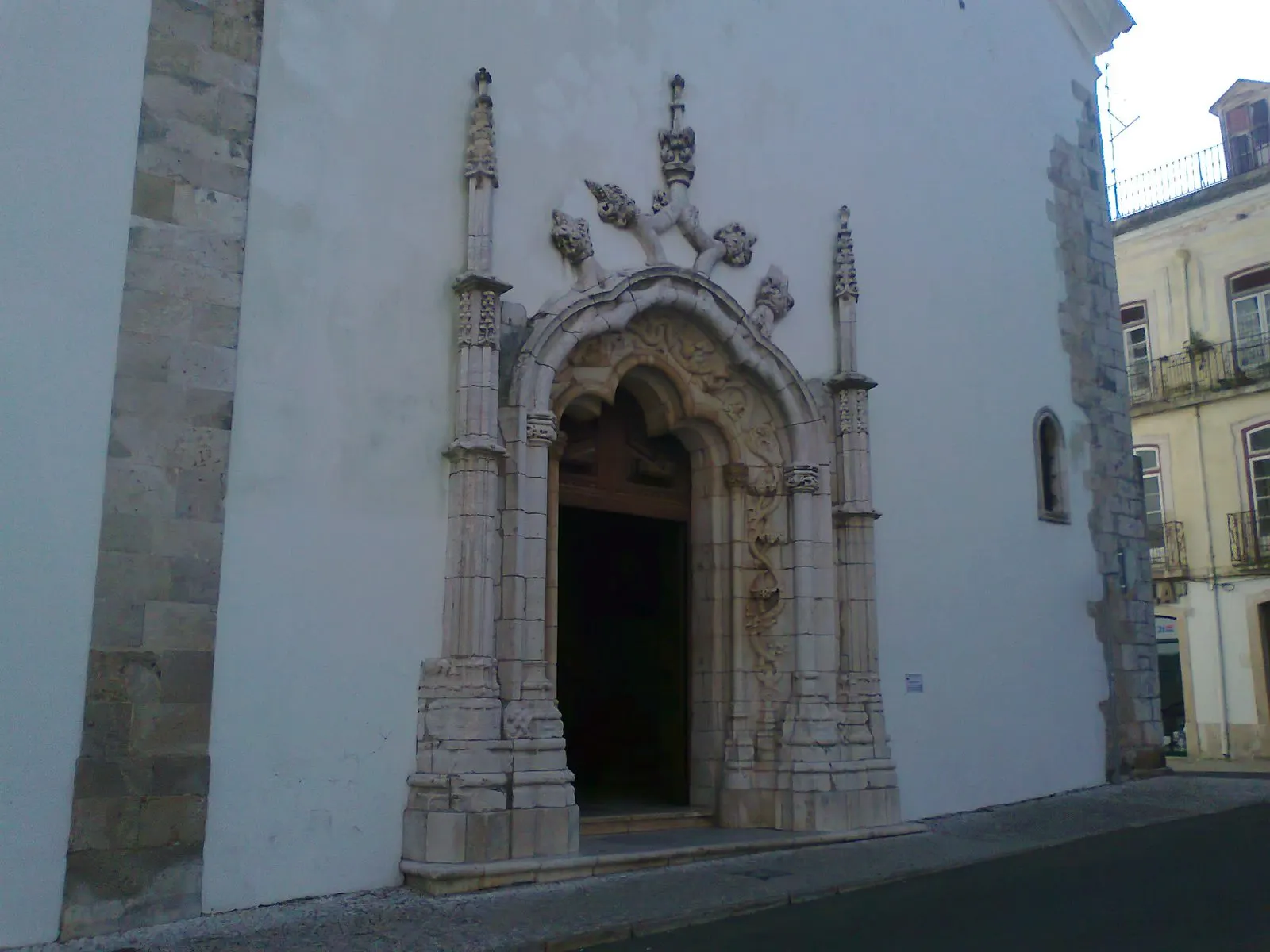
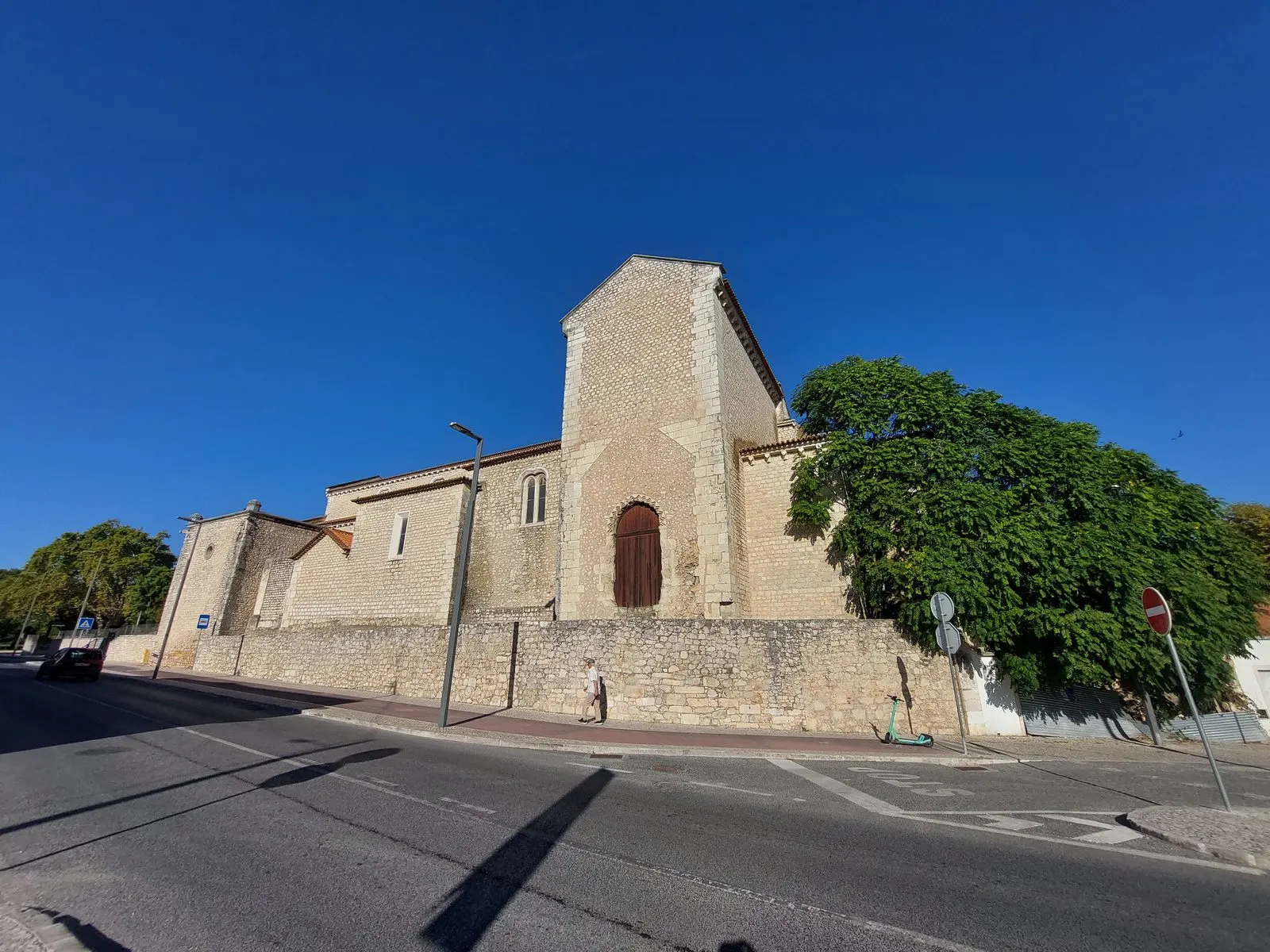
It is a National Monument by decree of 16 June 1910 (Diário do Governo no. 136, 23 June 1910). The special protection zone, with a non aedificandi zone, was fixed by ordinance of 14 January 1947 (Diário do Governo, II Série, no. 50, 3 March 1947), and is shared with the Torre das Cabaças. It is not part of any UNESCO inscription. In the city, it is worth comparing this church with the Convent of São Francisco, of mendicant Gothic, and with the Church of Santa Maria de Marvila, which was remodelled in the Manueline style.
Photograph by Rei-artur, 17 May 2008. Original on Wikimedia Commons, under CC BY-SA 3.0; resized and compressed for the web, without altering the composition.
Frequently asked questions
- Who commissioned the Church of São João de Alporão?
- The Cultural Heritage register (Património Cultural, I.P.) attributes its foundation to the Order of St John of the Hospital, whose establishment in Santarém dates between 1159 and 1185. The exact date of settlement is unknown, and the initial Romanesque conception is dated to the last decades of the 12th century.
- Why is it such a widely studied building?
- Because it combines Romanesque solutions, such as the massive nave and the round-arched main portal, with elements already Gothic, such as the polygonal apse and the gallery that the national register presents as the first Gothic gallery in Portuguese architecture. The authors cited recognise two distinct building campaigns.
- Can the museum be visited today?
- We could not confirm this. A Lusa news report of 2 April 2019 stated that the museum had been closed since 2012 for safety reasons, due to water infiltration. When consulted on 5 November 2026, the website of the Municipality of Santarém was inaccessible, and we found no current official source. Please confirm with the municipality.
- Is it a National Monument?
- Yes, by decree of 16 June 1910 (Diário do Governo no. 136, 23 June 1910). The special protection zone also covers the Torre das Cabaças.
Sources
- Património Cultural, I.P. — Igreja de São João de Alporão (70434)
- Património Cultural, I.P. — Atlas do Património Classificado e em Vias de Classificação (NINV 3934)
- Diário do Governo — Decreto de 16 de junho de 1910 (n.º 136, 23-06-1910)
- Lusa / Diário de Notícias — Santarém quer abrir museu de S. João de Alporão «o mais rapidamente possível» (2-04-2019)
- Wikidata — Igreja de São João de Alporão (Q10300766)
Keep exploring
Heritage nearby
More places to discover from here. Approximate straight-line distances, within 50 km.