Monuments
Church of Santo Estêvão, Alfama
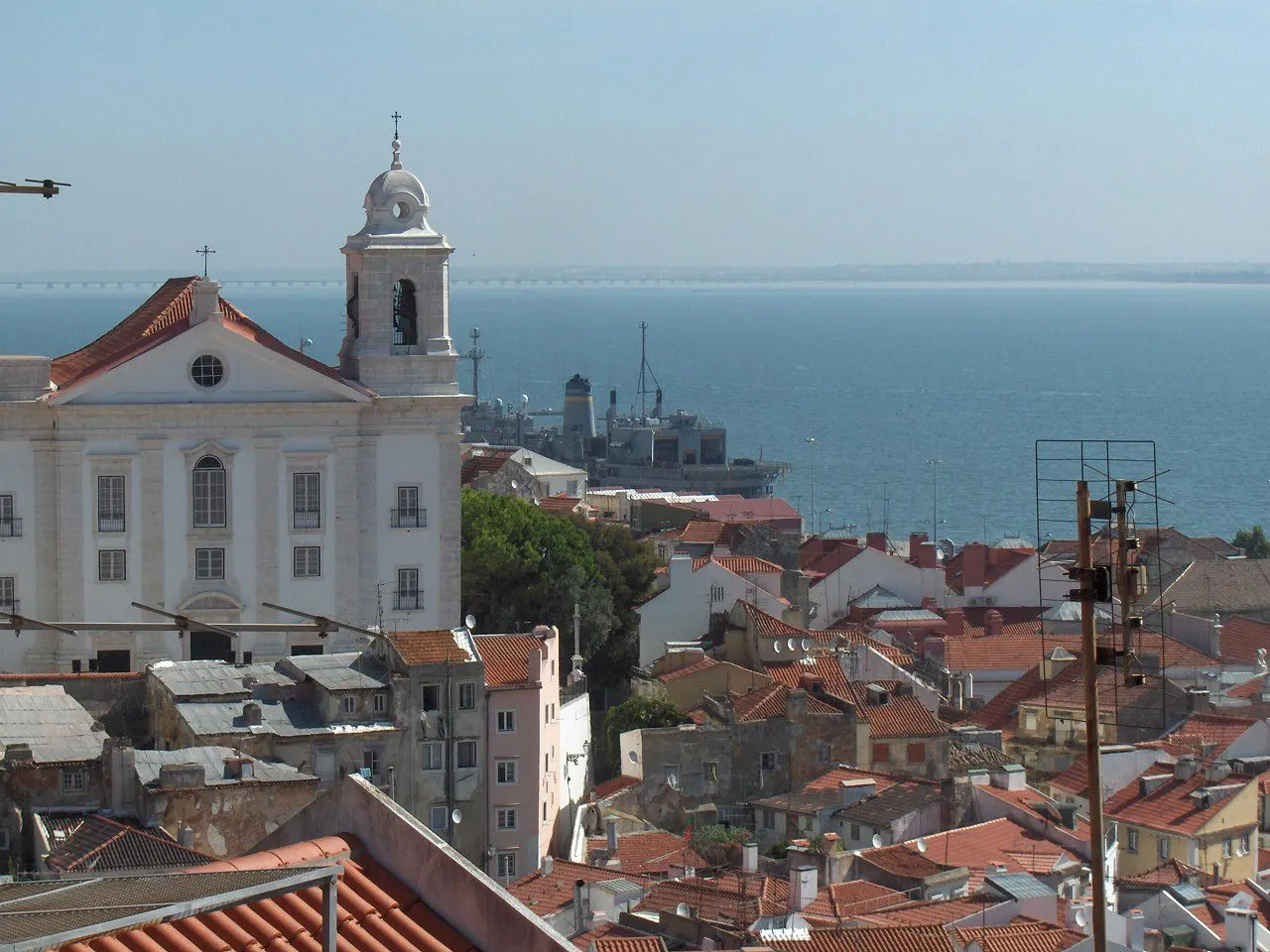
Church of Santo Estêvão in Alfama, Lisbon: medieval origins, rebuilt in 1733 by Manuel da Costa Negreiros, octagonal plan. National Monument.
- Location
- Alfama, Lisboa, Lisboa
- Built
- Origem medieval; reconstruída a partir de 1733
The Church of Santo Estêvão rises at the top of Alfama, in the Largo de Santo Estêvão, in the parish of Santa Maria Maior, with the Tagus river as its backdrop. Together with the Sé de Lisboa and the Mosteiro de São Vicente de Fora, it forms part of the religious skyline of the district. It is a church of medieval origin that took its present form in the eighteenth century, with an unusual plan for Lisbon, and it has been a National Monument since 1918.
From medieval temple to Baroque church
The available summaries agree on one point: the church has medieval origins, which tourist guides and Wikipedia place in the twelfth century, in the Romanesque style. This dating does not appear in the official record I consulted and should be read with caution; what the e-cultura portal of the Ministry of Culture records is that the temple was rebuilt in 1733 by Manuel da Costa Negreiros.
The earthquake of 1755 caused damage, followed by repairs that extended until 1773, and the church was restored again in the nineteenth century. The frequently asked question about a link to Ludovice, the architect of Mafra, has no support in the sources I found: the documented attribution is to Manuel da Costa Negreiros. For the stylistic context, see Baroque architecture in Portugal.
Plan and façade
The e-cultura entry describes an octagonal plan, a less common form among Lisbon churches, and a principal façade facing south, with a central body and a triple entrance. The photograph on this page shows it seen from the Miradouro de Santa Luzia: a triangular pediment, a central arched window and a bell tower. Several guides note that only one of the two original towers survives, and that beside it there is a terrace-viewpoint over the Tagus.
The interior
According to the same entry, the interior combines marbles, polychrome embrechados, azulejos and wood sculpture, which leads it to classify the church as one of the significant examples of Portuguese Baroque. A tourist guide adds that, unlike many contemporary churches, it is not entirely covered in gilding, and describes the high altar in stone, with a crucified Christ surrounded by angels. The attribution of these sculptures to José de Almeida appears only in tourist sources, and I have not confirmed it in an official record.
Classification
The Atlas do Património Classificado lists the church as a National Monument, under Decree No. 5 046, Diário do Governo, I Série, No. 268, of 11 December 1918, the same instrument as the Igreja de Santa Catarina. It is not part of any UNESCO inscription. For another major religious monument in the district, see the Igreja de Santa Engrácia; for the wider city, the page on Lisbon.
Planning a visit
The registered address is Largo de Santo Estêvão, 13, 1100-219 Lisboa. Entry is free, but opening hours vary by source: one guide indicates opening on Sundays and on Tuesday afternoons, with the Tuesday Mass suspended in summer; another gives different weekday hours; and some report that the doors are usually closed outside Mass times. When consulted on 5 November 2026, I found no timetable published by the parish, and so I give none here. Please confirm with the parish or on site before going. The terrace beside the tower is described by guides as a viewpoint over the river.
Photograph by Georges Jansoone, 19 September 2006. Original on Wikimedia Commons, under CC BY 2.5; resized and compressed for the web, without altering the composition.
Frequently asked questions
- Who designed the Church of Santo Estêvão in Alfama?
- The e-cultura portal entry of the Ministry of Culture states that it was rebuilt in 1733 by Manuel da Costa Negreiros. I found no source attributing it to Ludovice or to any other architect.
- Is the church a National Monument?
- Yes. The Atlas do Património Classificado lists it as a National Monument under Decree No. 5 046, published in the Diário do Governo No. 268, of 11 December 1918. It is not a UNESCO inscription.
- What happened to the church in 1755?
- The e-cultura entry records that the 1755 earthquake damaged it, that repairs were carried out until 1773, and that it was restored in the 19th century. Several guides state that only one of the two original towers survives.
- When is it open?
- Published opening hours differ between tourist sources, and one indicates that the doors are usually closed outside Mass times. When consulted on 5 November 2026, I found no official timetable; please confirm with the parish.
Sources
- Património Cultural, I.P. — Atlas do Património Classificado e em Vias de Classificação (NINV 3292)
- Diário do Governo — Decreto n.º 5 046, I Série, n.º 268, de 11 de dezembro de 1918
- Ministério da Cultura (e-cultura.pt) — Igreja de Santo Estevão de Alfama
- Lisbon Portugal Tourism — Igreja de Santo Estêvão (guia de visita)
- Wikidata — Igreja de Santo Estêvão (Q5994220)
Keep exploring
Heritage nearby
More places to discover from here. Approximate straight-line distances, within 50 km.