Monuments
Águas Santas Monastery (Santo Sepulcro)
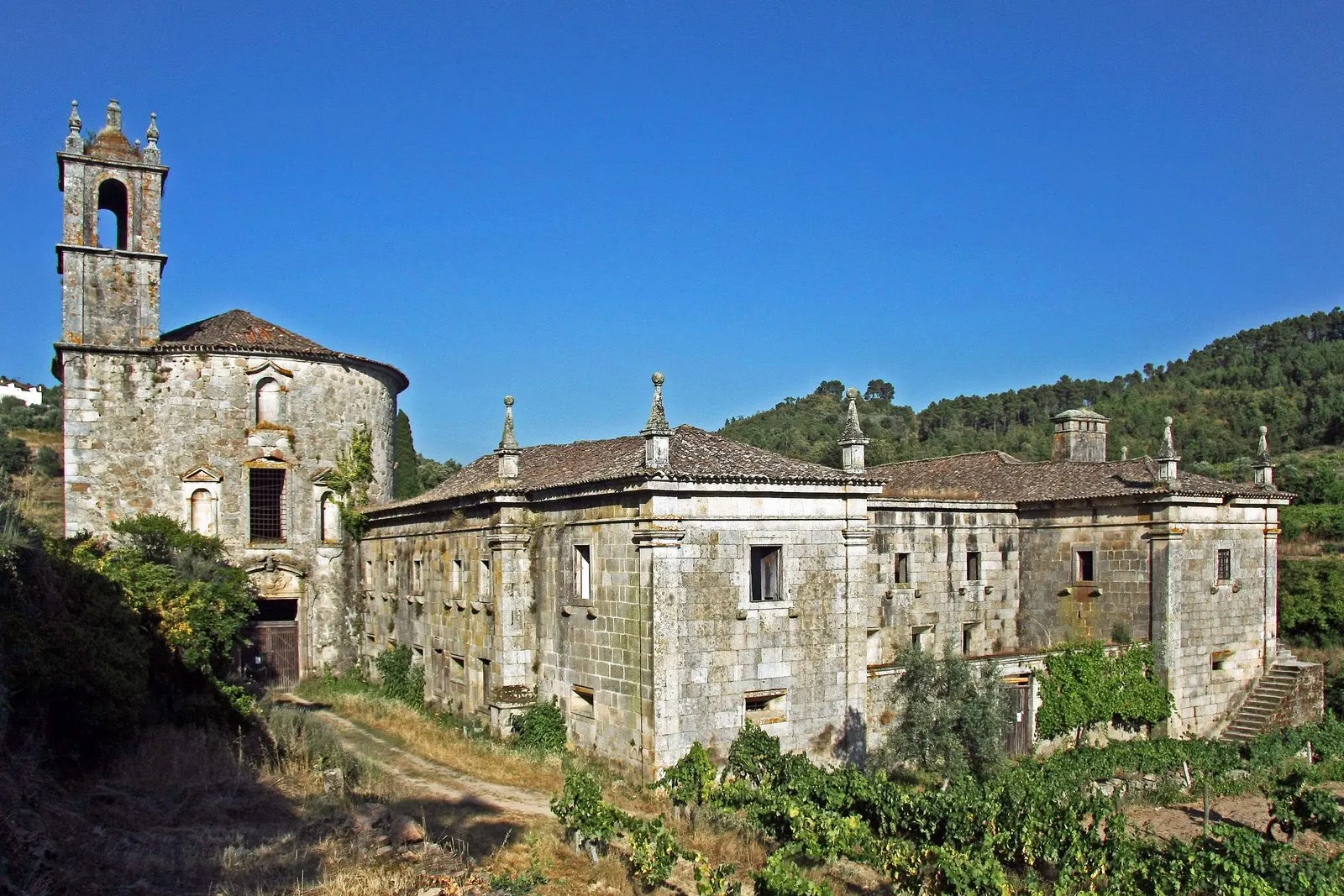
Mosteiro das Águas Santas (Santo Sepulcro) in Penalva do Castelo: a Holy Sepulchre house linked to D. Teresa, with a Romanesque church. National Monument.
- Location
- Quinta do Mosteiro, Trancozelos, Penalva do Castelo, Viseu
- Built
- Século XII (fundação); igreja românica de pequenas dimensões
The Monastery of Santo Sepulcro, also called the Monastery of Águas Santas, stands on the Quinta do Mosteiro, in the parish of Trancozelos, municipality of Penalva do Castelo, near the River Dão. What makes it unusual lies in what is said of its origins: the decree that classified it as a National Monument presents it as the first monastery of the canonical and military Order of the Holy Sepulchre in the Iberian Peninsula. Of the medieval complex, what survives above all is a small Romanesque church, surrounded by outbuildings that served as residences.
Foundation and the Order of the Holy Sepulchre
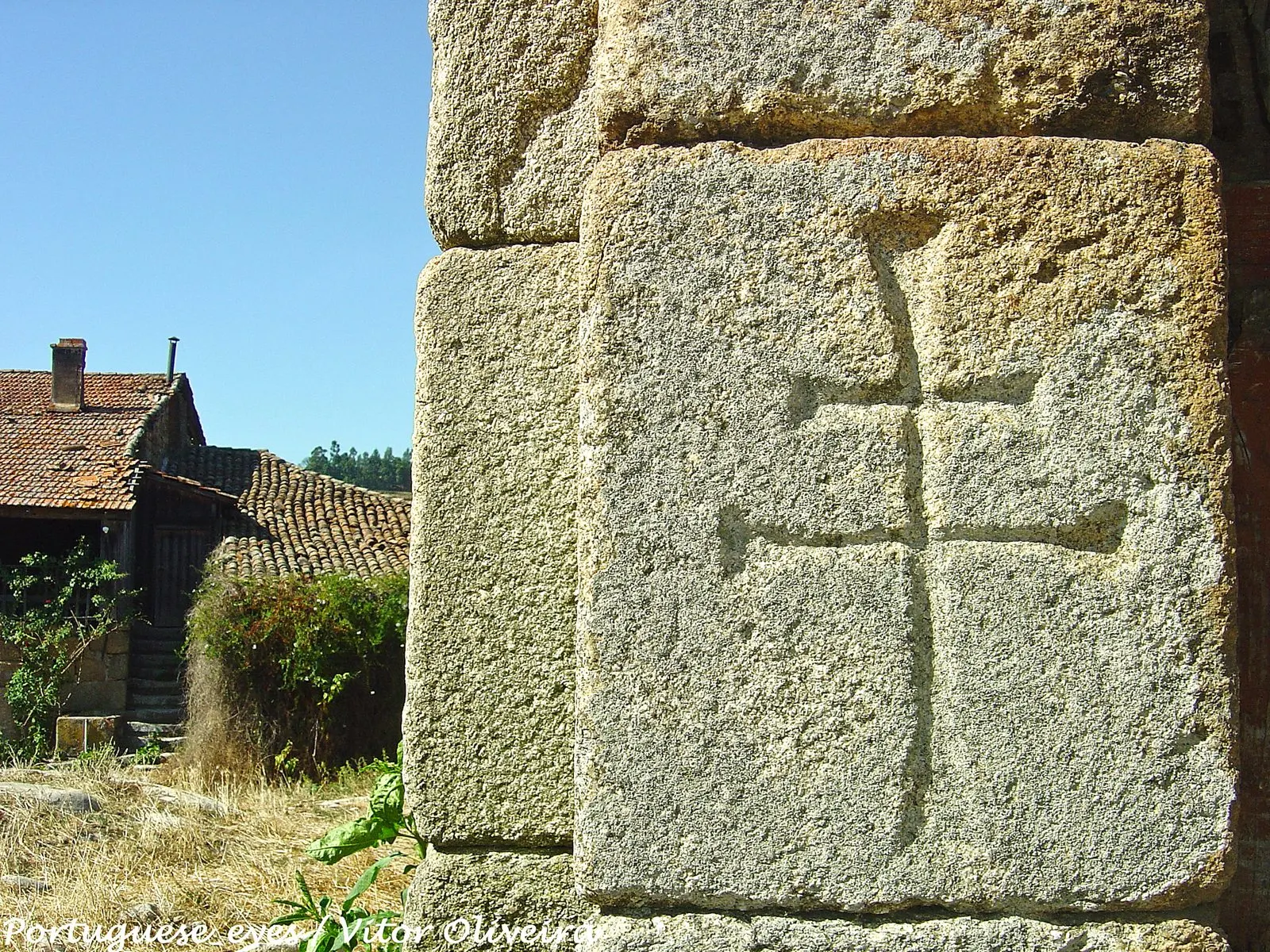
According to the national heritage register, the foundation is due to the initiative of D. Teresa and dates back to the beginning of the nationality. The monastery and the settlement, then called Vila Nova do Santo Sepulcro, grew for centuries thanks to donated properties, until a period of decline. The register notes that the monastery came to depend on the Commandery of Sezures which, in 1492, still maintained a connection with the order’s second house, based at Águas Santas (the local press identifies it with the one in Maia). A papal bull of 1489 had already ordered the union of the monastery with the Order of Malta, and hence the various crosses visible in the old enclosure.
With the extinction of the religious orders, in 1844, the property was bought by the Albuquerque family, of the Casa da Ínsua, and the monastic dependencies were converted into a residence: a «closed-courtyard house», with an upper floor and a balcony, surrounded by the service buildings.
The Romanesque church
The church was dedicated to Santa Maria de Águas Santas de Vila Nova do Mosteiro. It is a Romanesque temple of modest dimensions, with a gable front truncated by the bell-cote, a solution the register describes as common in the north of the country. The portal has two round archivolts with projecting imposts, and one of them bears the cross of the Order of the Holy Sepulchre. Inside, the single nave communicates with the chancel through a broken triumphal arch. Several epigraphic marks survive in the former dependencies, and there are reports of anthropomorphic graves beneath the nave. To situate this vocabulary, see Romanesque architecture in Portugal; another large Romanesque monastery is that of Travanca.
Access to the monastery is by a paved road that the register considers certainly late medieval, and nearby there is a bridge over the Dão, which the same register links with certainty to the monastery and its foundation.
Two decrees and a reclassification
The classification process began in 1999, with proposals from the Municipality of Penalva do Castelo for the monastery and the bridge. In 2012 the classification of the bridge was shelved and that of the monastery went ahead, which Ordinance No. 387/2013 (Diário da República, 2nd series, No. 115, of 18 June 2013) classified as a property of public interest, with a special protection zone covering the Trancozelos bridge. In 2020 the Municipality requested an upgrade in category, and Decree No. 2/2023, of 7 February (Diário da República, 1st series, No. 27) reclassified it as a National Monument, maintaining the protection zone. The decree highlights the «high degree of authenticity» of the small Romanesque temple and the well-preserved rural territory around it.
A useful caveat: the Atlas of Classified Heritage, when consulted on 5 November 2026, still listed the 2013 instrument as the classifying act, so the correct category is that of the 2023 decree, as confirmed in the register entry. The same entry notes that a possible correction of the designation to «Mosteiro do Santo Sepulcro» awaits a decision. It is not part of any UNESCO inscription.
Works and requalification
In December 2022, the newspaper Jornal do Centro reported that the property, which is privately owned, had been granted to the municipality under a 20-year commodatum, that there was a protocol with the Order of the Holy Sepulchre, and that the project was funded by Centro 2020, with an investment of 700 thousand euros (Alive FM spoke, in February 2023, of 650 thousand). An interpretation centre, an open-air amphitheatre and integration into a municipal medieval trail were planned. The works were delayed by archaeological finds, and the monastery was inaugurated in July 2025, according to the same newspaper, which made it known to the public on 12 July. When consulted on 5 November 2026, we found no official source confirming that the interpretation centre or the amphitheatre had opened, so we do not state that they have. Alive FM noted that most of the buildings would remain without a roof, as they were.
Planning a visit
The monastery is located on the Quinta do Mosteiro, in Trancozelos (postal code 3550-334, according to Visit Viseu Dão Lafões). An earlier entry from Visit Viseu Dão Lafões described access as free of charge, by rural road, but still listed it as a monument of public interest and in ruins, so it may be out of date. When consulted on 5 November 2026, we found no visiting hours or admission prices in an official source: please confirm with the Municipal Council of Penalva do Castelo (telephone 232 640 020) before going. Do not confuse it with the Church of Águas Santas in Maia, which is another National Monument. For an overview, see monasteries and religious heritage.
Photograph by Vitor Oliveira, 5 August 2013. Original on Wikimedia Commons, under CC BY-SA 2.0; resized and compressed for the web, without altering the composition.
Frequently asked questions
- Why does it have two names, Santo Sepulcro and Águas Santas?
- The national register designates it «Mosteiro de Santo Sepulcro ou Mosteiro das Águas Santas». The church was dedicated to Santa Maria de Águas Santas de Vila Nova do Mosteiro, and the monastery belonged to the canonical and military Order of the Holy Sepulchre. It should not be confused with the Church of Águas Santas in Maia, which is another National Monument.
- What is its classification?
- National Monument, since Decree No. 2/2023, published in the Diário da República, 1st series, No. 27, of 7 February 2023, which reclassified the property, previously of public interest under Ordinance No. 387/2013. It is not part of any UNESCO inscription.
- What is its historical importance?
- The decree and the national register present it as the first monastery of the Order of the Holy Sepulchre in the Iberian Peninsula, whose foundation, on the initiative of D. Teresa, dates back to the beginning of the nationality.
- Can it be visited?
- The property is privately owned but has been granted to the Municipality of Penalva do Castelo under a 20-year commodatum, and the requalification works were inaugurated in July 2025, according to the local press. When consulted on 5 November 2026, we found no official visiting hours; please contact the Municipal Council.
Sources
- Património Cultural, I.P. — Mosteiro de Santo Sepulcro ou Mosteiro das Águas Santas (155820)
- Património Cultural, I.P. — Atlas do Património Classificado e em Vias de Classificação (NINV 70030)
- Diário da República — Decreto n.º 2/2023, de 7 de fevereiro (1.ª série, n.º 27)
- Jornal do Centro — Mosteiro da Ordem do Santo Sepulcro inaugurado em Penalva do Castelo (15 de julho de 2025)
- Jornal do Centro — Mosteiro medieval de Penalva do Castelo com centro interpretativo (3 de dezembro de 2022)
- Alive FM — Penalva do Castelo: Mosteiro do Santo Sepulcro reclassificado como monumento nacional (9 de fevereiro de 2023)
- Visit Viseu Dão Lafões — Mosteiro do Santo Sepulcro
- Município de Penalva do Castelo — Portal
Keep exploring
Heritage nearby
More places to discover from here. Approximate straight-line distances, within 50 km.