Monuments
Monastery of Travanca
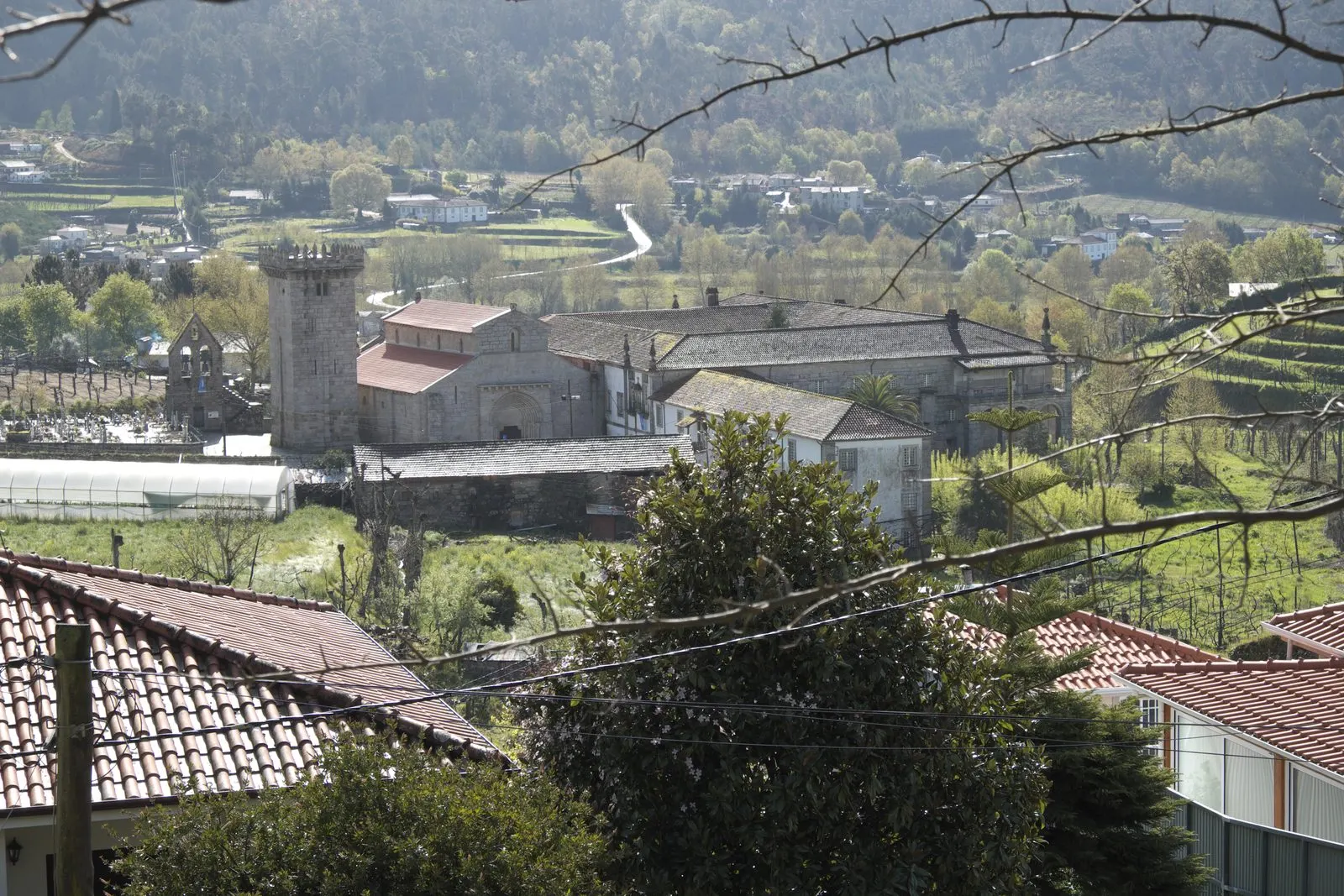
Amarante's Travanca Monastery: 13th-century Romanesque church with three naves, isolated tower with Agnus Dei, Gasco link, National Monument since 1916.
- Location
- Travanca, Amarante, Porto
- Built
- Séculos XI–XII (fundação); igreja do século XIII
The Monastery of Travanca, or Monastery of the Saviour of Travanca, stands in the parish of Travanca, in the municipality of Amarante, in an agricultural valley of the Baixo Tâmega e Sousa. It forms part of the Rota do Românico and is, according to the Rota itself, one of the most powerful monastic institutions in the Sousa region during the Middle Ages. What makes it recognisable from a distance is the detached tower beside the church.
Foundation and the Gascos lineage
The Rota do Românico places the monastery’s foundation in the 11th–12th centuries and associates it with the Gascos lineage, to which Egas Moniz belonged, tutor and governor of D. Afonso Henriques, the first king of Portugal. The same chronology notes that, in the 12th century, Count D. Henrique and D. Teresa granted a charter of immunity (carta de couto) to the monastery, and that the church was built in the 13th century. In 1320, the revenues of the church and monastery were assessed at 1800 pounds to aid the Crusades.
The institutional history is divided into periods of governance: perpetual abbots (1280–1492), commendatory abbots (1492–1565) and triennial abbots (1572–1834). A visitation ordered by Cardinal D. Henrique gave rise to an inquiry into the state of the monastery in 1568. The reconstruction of the monastic buildings is dated to 1678, and between 1716 and 1813 there was a phase of works and artistic investment in furnishings, especially the side and lateral altars, the choir, the organ and the sacristy. In 1834, with the extinction of the religious orders, monastic life came to an end and the congregation’s property was nationalised.
The church and the tower
The church impresses by its dimensions and has three aisles. On the exterior, the main portal stands out, divided into a projecting body, crowned by a cornice on rectangular corbels and decorated with corbels carved as bovine heads. The archivolts have angular-section rolls, and the capitals show birds with intertwined necks, serpents, human figures and monsters devouring naked men. The north side portal has a similar composition. To place this vocabulary, see the page on Romanesque architecture in Portugal and the Monastery of Paço de Sousa, another major Romanesque monastery of the Sousa.
The interior brings together architectural and artistic solutions from several periods, medieval and later. The sacristy, whose baroque spirit is visible in the arcades and ceiling paintings, reflects the major reforms of the early modern period.
The tower, detached from the body of the church, is considered by the Rota one of the tallest medieval towers in Portugal. Its military appearance is, according to the same source, purely symbolic, and what draws the most attention is the richly carved portal, whose tympanum bears a unique representation of the Agnus Dei (Lamb of God) raising a cross pattée. In 1939, the then DGEMN published its Boletim No. 15 devoted to the restoration project of the Romanesque church of Travanca.
Classification
The monastery is a National Monument under Decree No. 2 199, of 27 January 1916 (Diário do Governo, I series, No. 16), under the designation «Mosteiro de Travanca, compreendendo o convento, a igreja e a torre». The Atlas do Património Classificado records no special protection zone. It is not part of any UNESCO inscription. In 2010 the monastery joined the Rota do Românico, which carried out conservation works on the roofs, walls and openings of the church and tower in 2013–2014.
Concession for operation
On 27 August 2019 Turismo de Portugal published in the Official Journal of the European Union (TED) a public tender for the concession of the monastery’s operation, including works (among them infrastructure works) and subsequent tourism exploitation, as a hotel establishment, local accommodation or another tourism-oriented project, for 600 months. When consulted on 5 November 2026, we found no official source confirming the current state of the concession or the opening of any tourist unit, so we do not state it. The church remains in liturgical use, according to the Rota do Românico.
Preparing a visit
When consulted on 5 November 2026, the Rota do Românico indicated visits by appointment, Mass on Sundays at 8 a.m., and that the monument is not accessible to persons with reduced mobility. The address is Rua do Mosteiro, Travanca, Amarante, and bookings are made through the Rota’s contacts (+351 255 810 706 or +351 918 116 488, [email protected]). Confirm on the Rota do Românico website before going. Other monasteries in the same circuit, such as Pombeiro, and the general overview of monasteries, help with comparison. Also linked to the Gascos, the Church of Vila Boa do Bispo lies in the neighbouring municipality of Marco de Canaveses.
Photograph by GFreihalter, 13 April 2016. Original on Wikimedia Commons, under CC BY-SA 3.0; resized and compressed for the web, without altering the composition.

Frequently asked questions
- What distinguishes the Monastery of Travanca?
- The Rota do Românico highlights the church's dimensions, its three aisles, the main portal with corbels carved as bovine heads, and the detached tower, considered one of the tallest medieval towers in Portugal, whose portal has a tympanum with the rare representation of the Agnus Dei.
- What is its classification?
- National Monument, under the designation «Mosteiro de Travanca, compreendendo o convento, a igreja e a torre» (Monastery of Travanca, comprising the convent, the church and the tower), by Decree No. 2 199, published in the Diário do Governo, I series, No. 16, of 27 January 1916. It is not part of any UNESCO inscription.
- When did monastic life end?
- In 1834, with the extinction of the religious orders and the nationalisation of congregation property, according to the chronology of the Rota do Românico.
- Can it be visited?
- When consulted on 5 November 2026, the Rota do Românico indicated visits by appointment, Mass on Sundays at 8 a.m., and that the monument is not accessible to persons with reduced mobility. Always confirm before going.
Sources
- Património Cultural, I.P. — Atlas do Património Classificado e em Vias de Classificação (NINV 3609)
- Diário do Governo — Decreto n.º 2 199, de 27 de janeiro de 1916 (I série, n.º 16)
- Rota do Românico — Mosteiro do Salvador de Travanca
- Rota do Românico — Roteiro: Mosteiro de Travanca (guia em PDF)
- Jornal Oficial da UE (TED) — Anúncio 402868-2019: concessão da exploração do Mosteiro de São Salvador de Travanca
- Wikidata — Mosteiro de Travanca (Q10332643)
Keep exploring
Heritage nearby
More places to discover from here. Approximate straight-line distances, within 50 km.
-
 4.1 kmin a straight lineMonuments
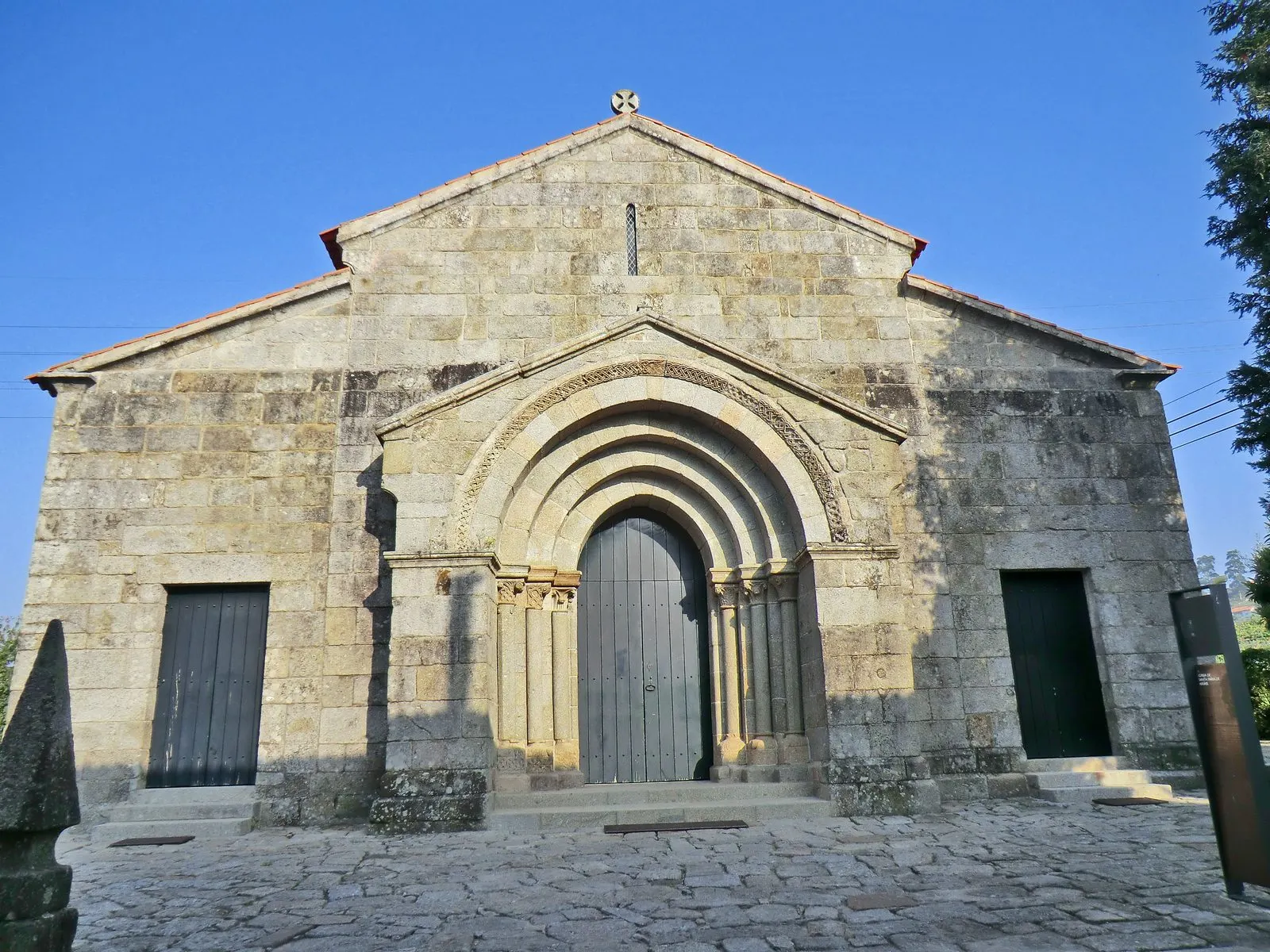
Church of Santa Maria de Airães
Lugar do Mosteiro, Airães, Felgueiras -
 7.8 kmin a straight lineMonuments
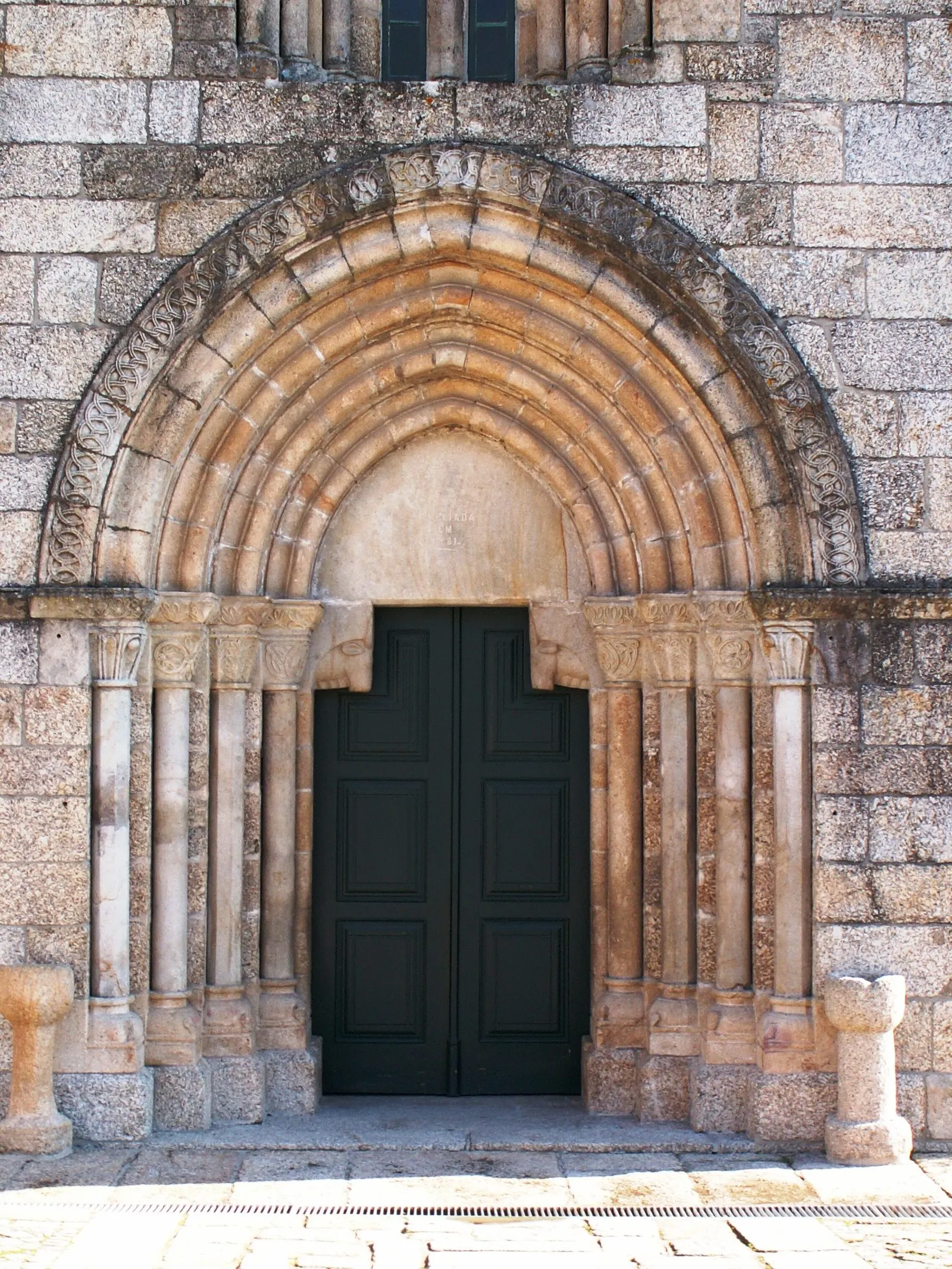
Church of Vila Boa de Quires
Vila Boa de Quires, Marco de Canaveses -
 8.7 kmin a straight lineMonuments
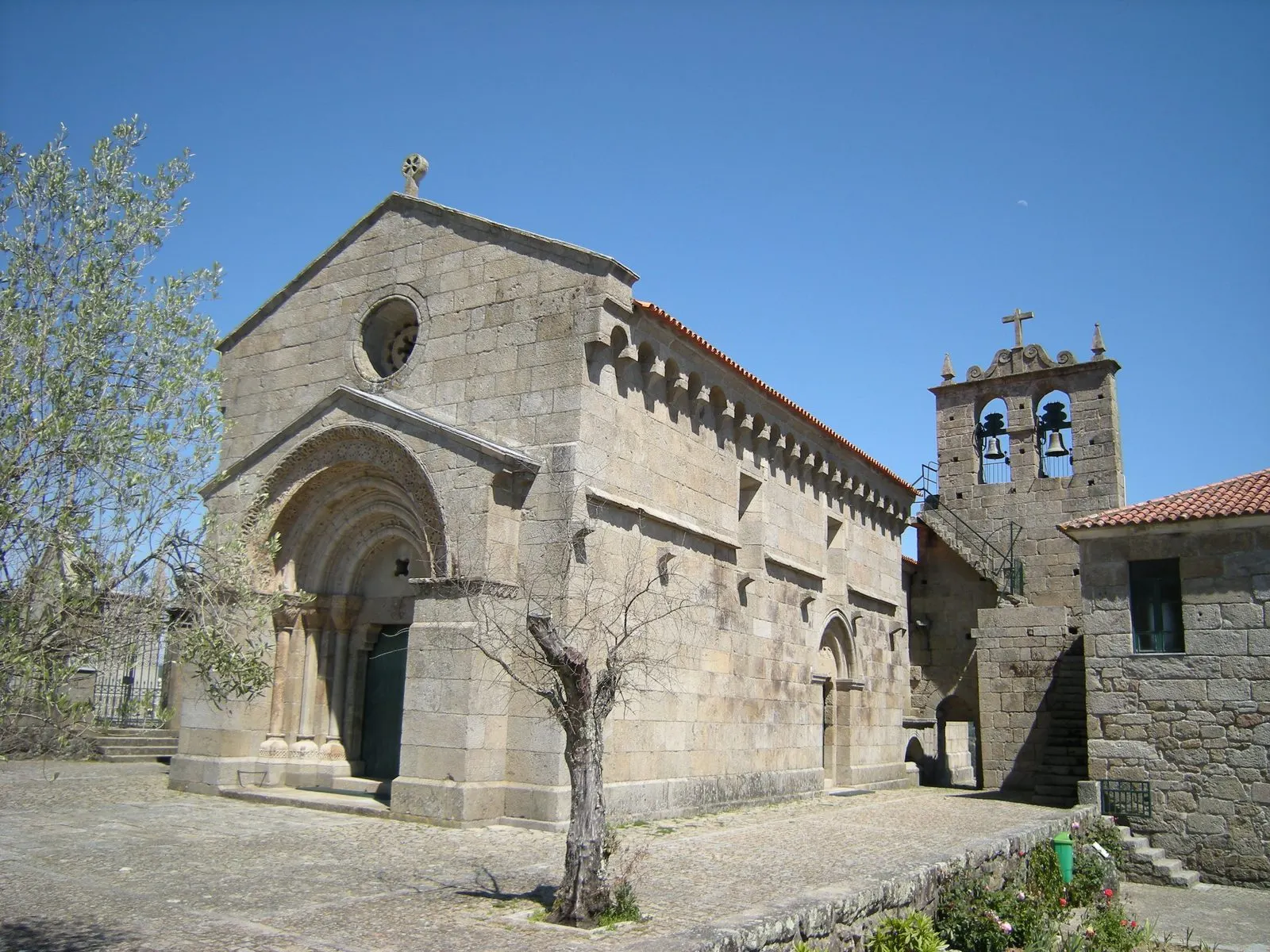
Church of São Vicente de Sousa
Sousa, Torrados e Sousa, Felgueiras