Monuments
Walls of Silves
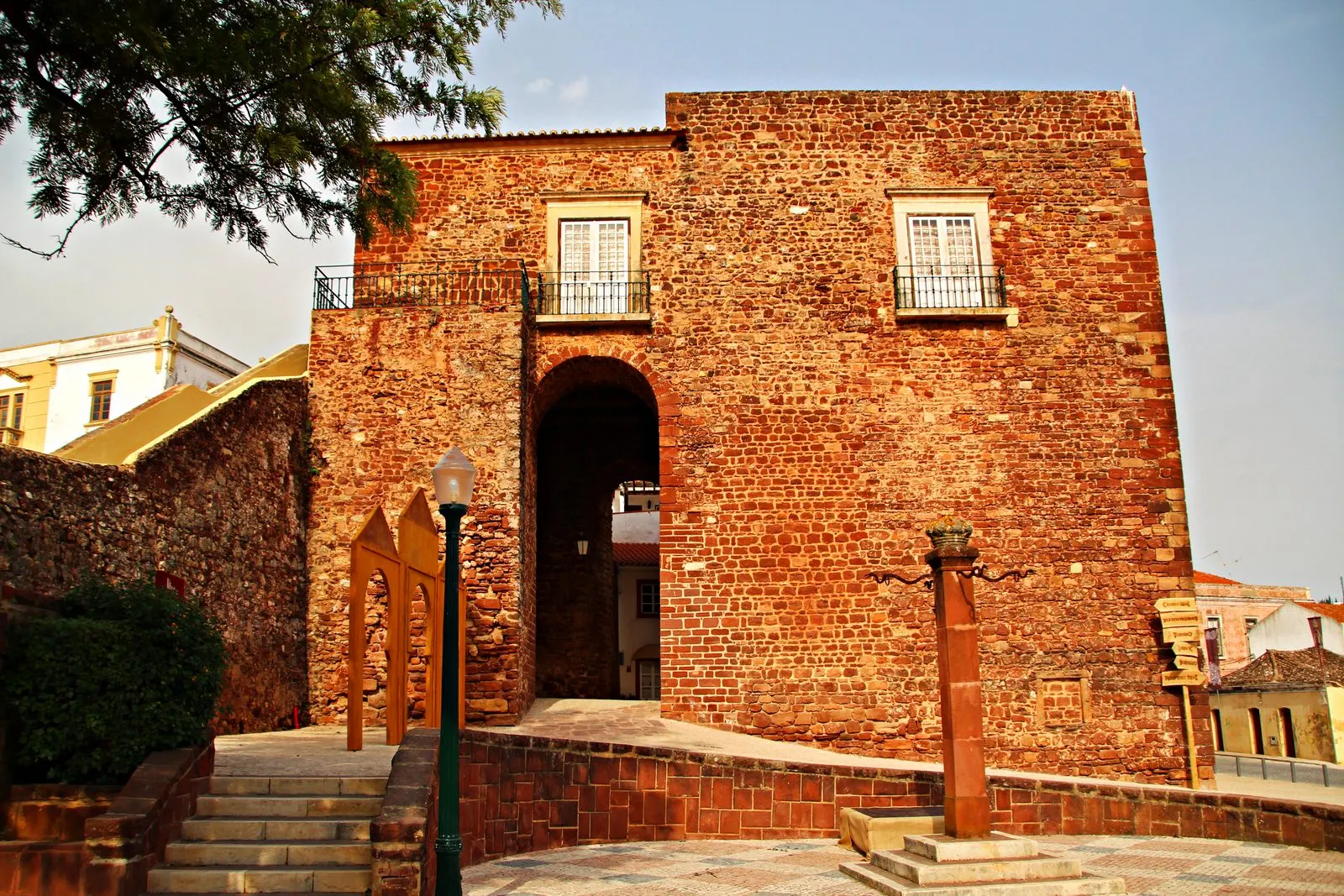
The Islamic walls and Almedina Gate of Silves, old Xelb: albarrana towers and a bent-entrance gate, apart from the castle. National Monument since 2012.
- Location
- Silves, Faro
- Built
- Período islâmico (sobretudo séc. XII–XIII), com alterações da época cristã
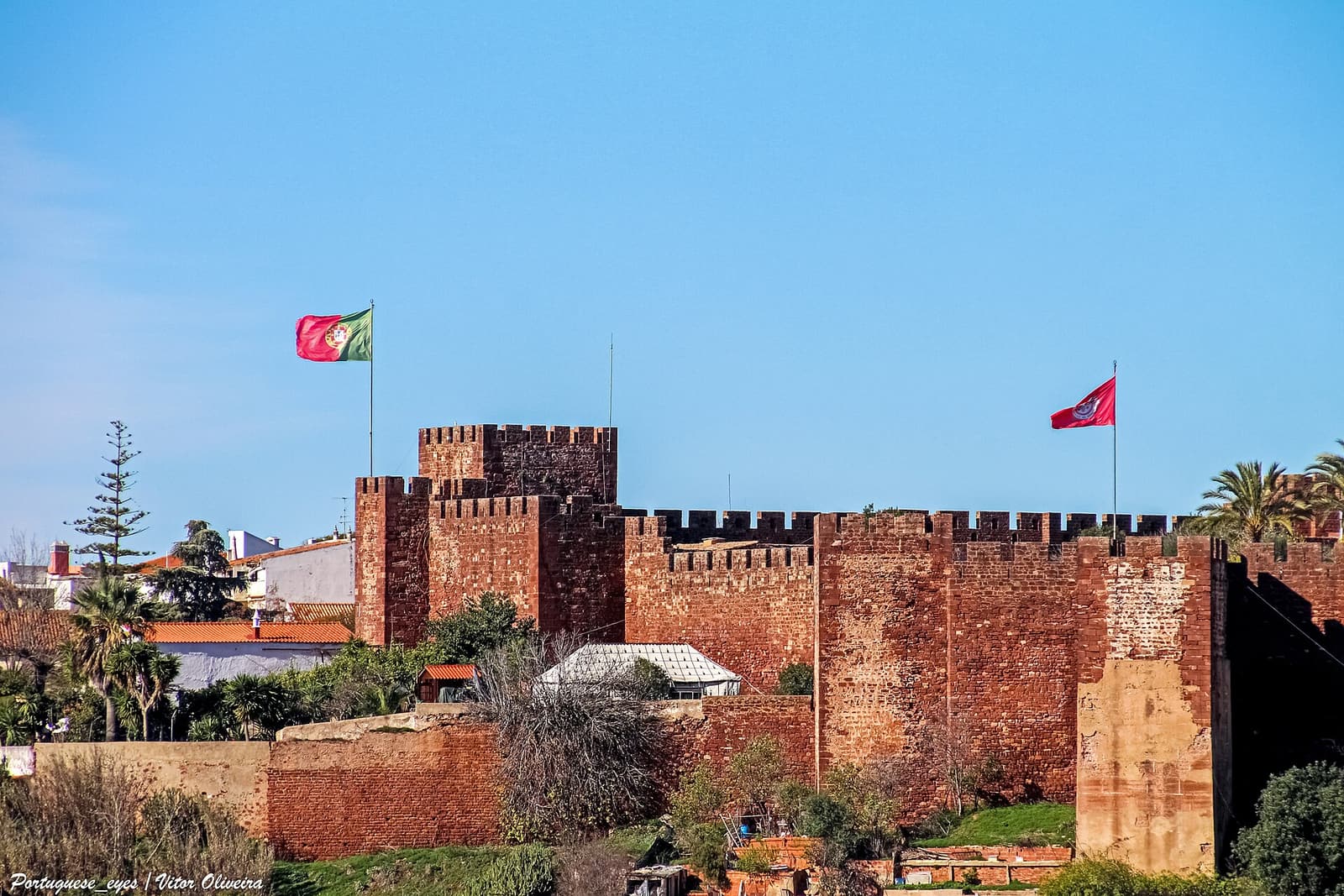
In Silves, almost everyone climbs to the castle. But the reddish wall visible on the top of the hill is only the seat of power, the former alcazaba. Further down, the Islamic city of Xelb had its own belt of walls, with towers, gates and a couraça down to the river. It is this enclosure of the almedina, the city where the population lived, that is classified as the Walls and Gate of the Almedina of Silves. The most visible monument is the main gate, a massive tower over a passage arch, at the entrance to the historic centre.
Castle and almedina: two different monuments
In a Muslim city, the settlement was organised around two poles. The alcazaba was the fortified enclosure of government and the garrison. The almedina, or medina, was the city proper, where merchants and artisans worked and where, as the national register notes, the peasants who went out by day to cultivate the fields of the suburbs took shelter. The two were linked by at least one gate.
In Silves, the alcazaba corresponds to the Castle of Silves, classified as a National Monument by decree of 16 June 1910. The 2012 decree classifying the almedina walls is very clear: the 1910 classification “covers only the former alcazaba and part of the medina wall”. The new classification completed it. Therefore, when speaking of the walls of Silves, it is worth distinguishing those of the castle, which are visited with a ticket, from those of the city, spread through the historic centre.
A walled city of Gharb al-Andalus
According to the national register, the alcazaba and almedina were surrounded by walls over one kilometre in length, enclosing about seven hectares. Citing Cláudio Torres, the register admits a population that, at periods of peak, could reach five thousand people, some of them already in the suburbs.
The street layout may be even older. The archaeologist Rosa Varela Gomes, cited in the register, identified two axes crossing in the middle of the city, in the manner of a Roman cardo and decumanus. The first runs from the Almedina Gate along the former Rua Direita, today Rua da Sé, to the gate of the alcazaba. The second, the present Rua de D. Sancho I, linked the western and eastern gates. At the crossing stood the main mosque, converted from the thirteenth century into the Cathedral of Silves.
The classification decree underlines the building technique: the use of military rammed earth (taipa militar), typical of the Maghrebi dynasties, and a defensive system reinforced with albarrã towers, couraças and elbow-shaped gates. For the national register, what remains is sufficient to make Silves the principal Islamic urban military monument in the country.
Towers, couraça and water
Several towers protected the almedina. One of them, octagonal, next to the Azóia Gate, was destroyed in the nineteenth century. In the thirteenth century, the last Muslim ruler of Silves, Ibn al-Mahut, had the system reinforced with a new tower, of which a commemorative plaque survives.
The city also had a couraça, mentioned during the first Christian conquest of Silves, in 1189. It was a stretch of wall with one or more towers that allowed water to be fetched near the Arade river with some protection. Water did not depend only on the river. There were cisterns and wells at various points in the city. Near the Loulé Gate a well-cistern was identified that supplied part of the medina. It now stands inside the Municipal Archaeology Museum and is separately classified as a National Monument.
The Almedina Gate
The Almedina Gate, also called the Loulé Gate, was the city’s main entrance. The national register describes it as a massive structure, much altered in the Christian period, protected by two albarrã towers and with an elbow-shaped entrance, which obliged those entering to change direction. The other gates had polygonal and quadrangular towers and, at the Azóia Gate, the octagonal tower.
The register admits that much of the system disappeared in the Christian centuries, including the couraça, some stretches of wall and the original configuration of almost all the gates. Archaeological campaigns continue to reveal new traces. On this work, see Islamic Silves.
Classification
The Walls and Gate of the Almedina of Silves are a National Monument under Decree No. 31-C/2012, published in the Diário da República, 1st series, No. 252 (supplement), of 31 December 2012. The process had been reopened in 2005, because the original file was lost. The special protection zone was proposed in Notice No. 15560/2011 of 27 October 2011. When consulted on 5 November 2026, we found no ministerial order establishing it. In the same area there are other properties classified separately: the castle, the well-cistern and the pillory. The walls are not part of any UNESCO inscription.
Preparing the visit
The Almedina Gate and the surviving stretches stand in public space in the historic centre and can be seen freely from the streets. The best complement is the Municipal Archaeology Museum, on Rua das Portas de Loulé. Opened in 1990, it was built around the Almohad well-cistern and incorporates a section of the city wall. When consulted on 5 November 2026, the museum’s municipal page listed a ticket of 2.10 euros and a combined ticket with the castle of 3.90 euros. The Geoparque Algarvensis listed the museum as open every day, from 10:00 to 18:00, with last entry at 17:30, and closed on 25 December and 1 January. Please confirm opening times with the municipality.
To continue, climb to the Castle of Silves and compare it with the Castle of Paderne, another Almohad rammed-earth fortification in the Algarve. The art of the period is covered in Islamic art in Portugal, and the urban enclosures of other cities in city walls and urban enclosures.
Photograph by Hovallef, 4 August 2018. Original on Wikimedia Commons, under CC BY-SA 4.0; resized and compressed for the web, without altering the composition.
Frequently asked questions
- What is the difference between Silves Castle and the walls of the almedina?
- The castle is the former alcazaba, the seat of power on the top of the hill, classified as a National Monument in 1910. The walls of the almedina enclosed the city where the population lived and worked. They were classified separately in 2012, precisely because the 1910 classification covered only the alcazaba and part of the medina wall.
- Where is the Almedina Gate?
- It is the former main gate of the city, also called the Loulé Gate. From it ran the old Rua Direita, today Rua da Sé, which climbed to the gate of the alcazaba. The Municipal Archaeology Museum is very close, on Rua das Portas de Loulé.
- When were they classified?
- They are a National Monument under Decree No. 31-C/2012, published in the Diário da República of 31 December 2012. A special protection zone was proposed in 2011, but we found no ministerial order establishing it.
- Where is the wall best seen?
- The Almedina Gate and several stretches stand in public space in the historic centre. The Municipal Archaeology Museum incorporates a section of the almedina wall as its south elevation. When consulted on 5 November 2026, the museum ticket cost 2.10 euros and the combined ticket with the castle 3.90 euros.
Sources
- Património Cultural, I.P. — Muralhas e Porta da Almedina de Silves (72809)
- Património Cultural, I.P. — Atlas do Património Classificado, Muralhas e Porta da Almedina de Silves (NINV 187)
- Diário da República — Decreto n.º 31-C/2012, de 31 de dezembro
- Município de Silves — Museu Municipal de Arqueologia de Silves
- Geoparque Algarvensis — Museu Municipal de Arqueologia de Silves
- Wikidata — Muralhas e Porta da Almedina de Silves (Q66813907)
Keep exploring
Heritage nearby
More places to discover from here. Approximate straight-line distances, within 50 km.