Resources
Abade de Baçal Museum (Bragança)
Museu do Abade de Baçal, Bragança: IIP-listed former Episcopal Palace housing berrões, Roman steles, sacred art and naturalist painting. Hours included.
- Location
- Bragança, Bragança
- Built
- Obras de 1734 e ampliação de 1764–1776; remodelações em 1937–1940 e a partir de 1994
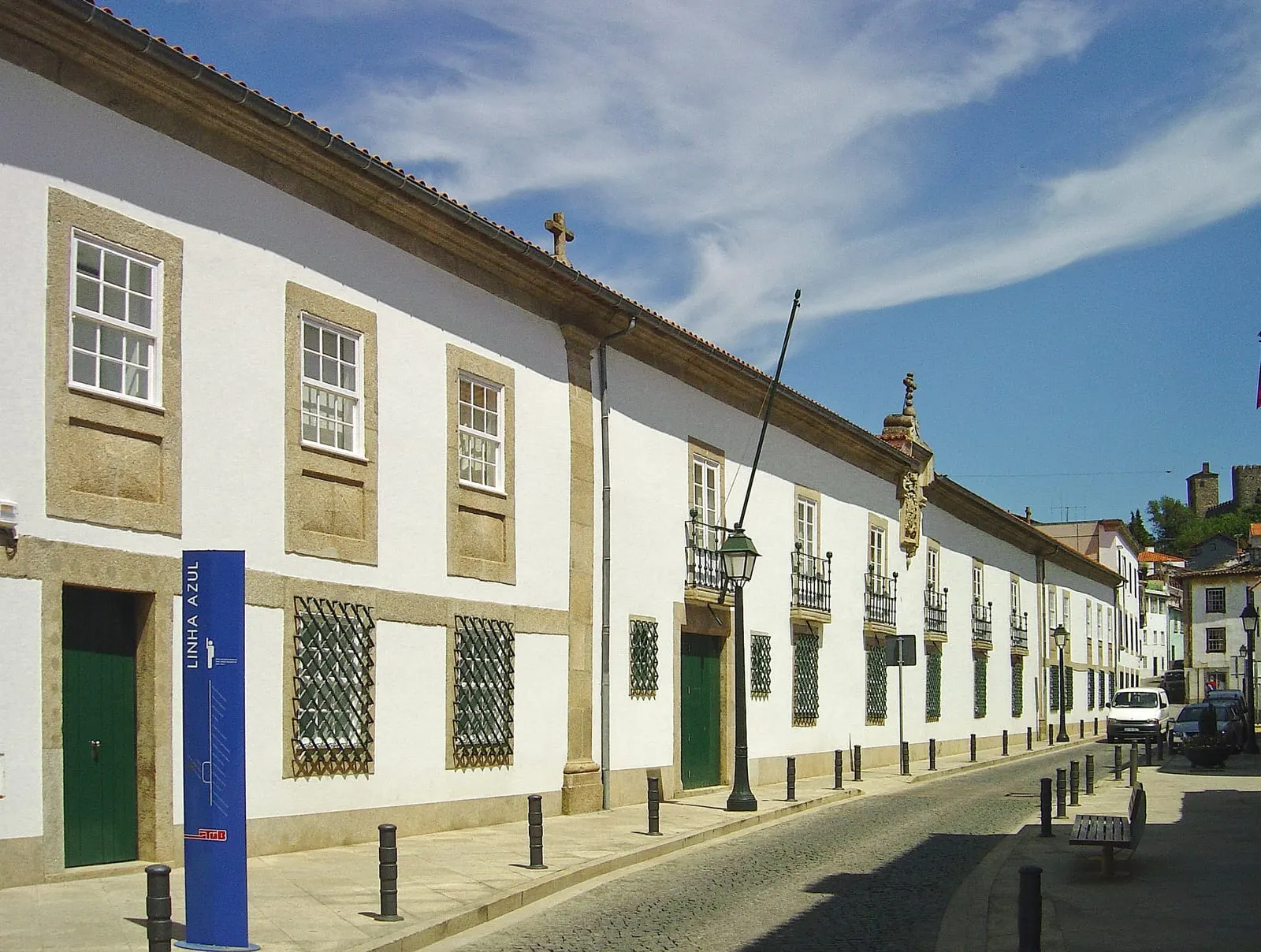
The Abbot of Baçal Museum is an art and archaeology museum managed by Museus e Monumentos de Portugal. It is housed in the former Episcopal Palace of Bragança, on Rua Abílio Beça. The collections tell the story of the region from prehistory onwards: there are Iron Age berrões, Roman funerary stelae, sacred art from the former diocese of Miranda-Bragança, and one of the most significant collections of Portuguese naturalist painting.
An eighteenth-century episcopal palace
According to the museum, the building may partly originate in the former Casas da Mitra and the Colégio de São Pedro, which stood on the site in the seventeenth century. Bishop D. João de Sousa Carvalho (1716–1737) had the residence enlarged and ennobled. In 1734, the master builder João Alves Lagido redefined the present central wing. The bishop’s arms remained on the stone coat of arms of the façade and on the wooden ceiling of the present Sacred Goldsmithing Room.
The most profound reform came with the transfer of the episcopal seat from Miranda do Douro to Bragança, between 1764 and 1776. Under D. Frei Aleixo de Miranda Henriques, the palace received two further bodies. Manuel Caetano Fortuna then painted the perspective ceiling of the chapel. The museum probably dates the main façade, horizontal and of restrained decoration, which is still visible today, to this phase.
The First Republic expropriated the palace in 1912. The building passed to the Câmara Municipal, which installed several state services there, from the District Archive to the Finance offices. Between 1937 and 1940, a campaign of works remodelled the north façade and the interiors. Ceilings coming from the city’s convents and from demolitions were installed, and a French-style box-hedge garden was planted. The 1994 project by António Portugal and Manuel Maria Reis reorganised the permanent exhibition. The works took place in phases until 2006.
From auction to museum
At the end of 1914, a large part of the palace’s contents was about to be sold at public auction. The authorities were alerted in time, and the State acquired part of the holdings. These pieces passed to the Museu Regional de Obras de Arte, Peças Arqueológicas e Numismática de Bragança, formally established on 13 November 1915.
The first director, appointed immediately, came into conflict with the Câmara, and the museum remained closed for years. The turning point came with Francisco Manuel Alves (1865–1947), parish priest of Baçal, who directed the institution between 1925 and 1935. He was the author of the Memórias Arqueológico-Históricas do Distrito de Bragança. During his time donations arrived, along with pieces he himself discovered in the district’s villages, and the museum formally opened to the public in 1927. When the Abbot retired in 1935, the museum received his name.
There followed the directorship of Raul Teixeira (1935–1955), to whom much of the painting collection is owed. Then several bequests arrived:
- Sá Vargas, in 1939;
- Guerra Junqueiro, in the 1950s;
- that of Colonel Ramires, in 1973, with about two thousand Portuguese coins;
- Eduardo Costa, about twenty years later.
What to see
The permanent exhibition occupies fourteen rooms. It begins in the Territory Room, with foral charters of Trás-os-Montes settlements, the papal bull that created the diocese of Miranda do Douro, and watercolours of pillories by Alberto de Sousa. This is followed by the Abbot’s Room, dedicated to the founders.
The rooms of pre-Roman archaeology and of Romanisation hold some of the museum’s most characteristic pieces. They display bronze objects, a gold fibula from Macedo de Cavaleiros and several zoomorphic granite sculptures, the berrões. The museum links them to a culture shared with other peoples of the Meseta. Roman epigraphy is abundant: there are funerary stelae of the Zoelae, the people who inhabited the Bragança region, chiefly from Castro de Avelãs and the Mirandese plateau. There are also milestones from Roman roads. For the Iron Age context, see the page on Castro culture.
On the upper floor, visitors see the chapel of the former palace, with its eighteenth-century ceiling. There follow the rooms of goldsmithing, furniture, faience (Cagigal collection) and numismatics, as well as pieces bought at public auction when the museum was created. The route ends with painting, chiefly naturalist: Silva Porto, Marques de Oliveira, Veloso Salgado, Aurélia de Sousa, José Malhoa, Sarah Affonso, a group of works by Abel Salazar and illustrations by Almada Negreiros.
Outside the building, the garden, the former palace enclosure, covers about four thousand square metres and is free to enter. The present layout, with a box-hedge spiral, a water mirror and a sundial, results from the landscaping work completed at the end of the renovations.
Classification
The register of the Património Cultural, I.P. identifies the building and garden of the former Episcopal Palace as a property of public interest, under Decree no. 1/86, of 3 January 1986. The protection covers the building and the garden. The museum is not inscribed on the World Heritage List nor forms part of any inscribed property.
Preparing your visit
When consulted on 5 November 2026, the museum’s ticketing page indicated:
- Tuesday to Sunday, 9:30–12:30 and 14:00–18:00;
- closed on Mondays and on 1 January, Easter Sunday, 1 May, 22 August and 25 December;
- standard ticket of €5.00 and €2.50 for visitors over 65 and young people aged 13 to 24;
- free admission for children up to 12 years, among other situations.
Portuguese citizens and residents in Portugal have 52 days of free admission per year, as explained in the guide on free admission to museums and monuments. Guided tours for groups require advance booking.
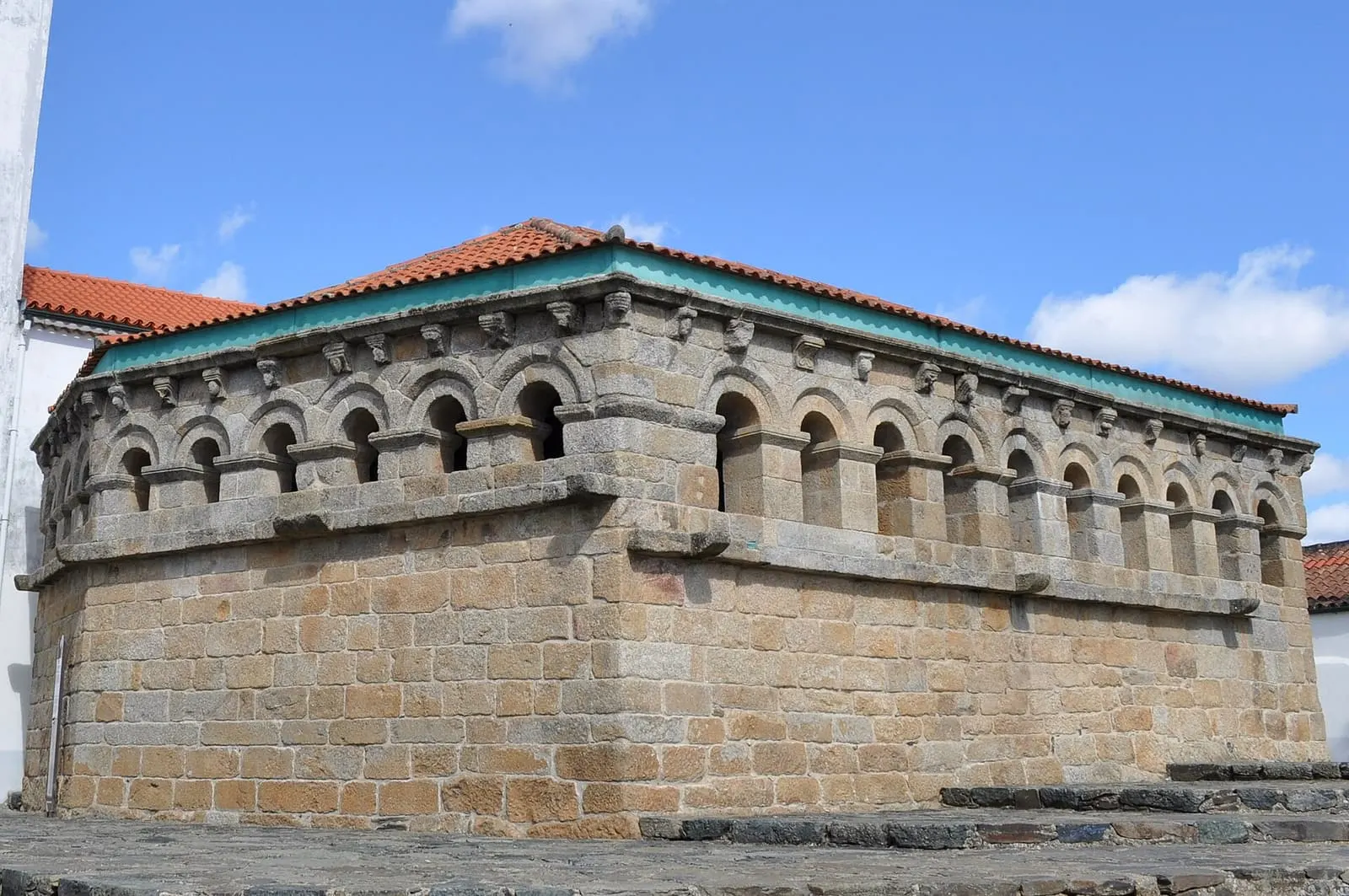
Confirm opening hours and prices on the ticketing page or by telephone at +351 273 331 595. The museum is part of the Museus e Monumentos de Portugal network. On the same visit to Bragança, climb to the citadel to see the castle and the Domus Municipalis, a building whose dating the Abbot of Baçal himself discussed.
Photograph by Vitor Oliveira, dated 2 August 2008. Original on Wikimedia Commons, under CC BY-SA 2.0; resized and compressed for the web, without altering the composition.
Frequently asked questions
- Who was the Abbot of Baçal?
- Francisco Manuel Alves (1865–1947), parish priest of Baçal and researcher of the north-east of Trás-os-Montes, author of the Memórias Arqueológico-Históricas do Distrito de Bragança. He directed the museum between 1925 and 1935, the year in which the museum was named after him.
- When was the museum founded?
- It was formally established on 13 November 1915, under the name Museu Regional de Obras de Arte, Peças Arqueológicas e Numismática de Bragança. It formally opened to the public in 1927.
- Is the building classified?
- Yes. The building and garden of the former Episcopal Palace are a property of public interest under Decree no. 1/86, of 3 January 1986.
- How much does admission cost?
- When consulted on 5 November 2026, the standard ticket cost 5 euros, with discounts and free admission listed on the museum's ticketing page. The garden is free of charge.
Sources
- Museu do Abade de Baçal — Museu (história)
- Museu do Abade de Baçal — Edifício
- Museu do Abade de Baçal — Jardim
- Museu do Abade de Baçal — Exposição permanente
- Museu do Abade de Baçal — Arqueologia / Epigrafia
- Museu do Abade de Baçal — O Abade de Baçal
- Museu do Abade de Baçal — Bilhética
- Museus e Monumentos de Portugal — Museu do Abade de Baçal
- Património Cultural, I.P. — Edifício e jardim do antigo Paço Episcopal, onde se encontra instalado o Museu do Abade de Baçal (74275)
- Diário da República — Decreto n.º 1/86, de 3 de janeiro
- Wikidata — Museu do Abade de Baçal (Q10333875)
Keep exploring
Heritage nearby
More places to discover from here. Approximate straight-line distances, within 50 km.

Resources for research
Find the sources. Follow the story.
Guides to researching buildings, exploring museum collections and understanding heritage protection.
SIPA
Get to know the architectural inventory, building records and documentary archive.
Read the guideMuseum collectionsMatrizNet
Explore the museum catalogue and records of works, materials, authorship and provenance.
Read the guideHeritage protectionHeritage classification
Understand cultural property categories and the levels of national, public and municipal interest.
Read the guide