Monuments
São Carlos National Theatre
Explore São Carlos in Lisbon’s Chiado: opera since 1793, architecture and annexes, National Monument status, documentary heritage and current works.
- Location
- Lisboa, Lisboa
- Built
- 1792–1793
- Style
- Neoclassical
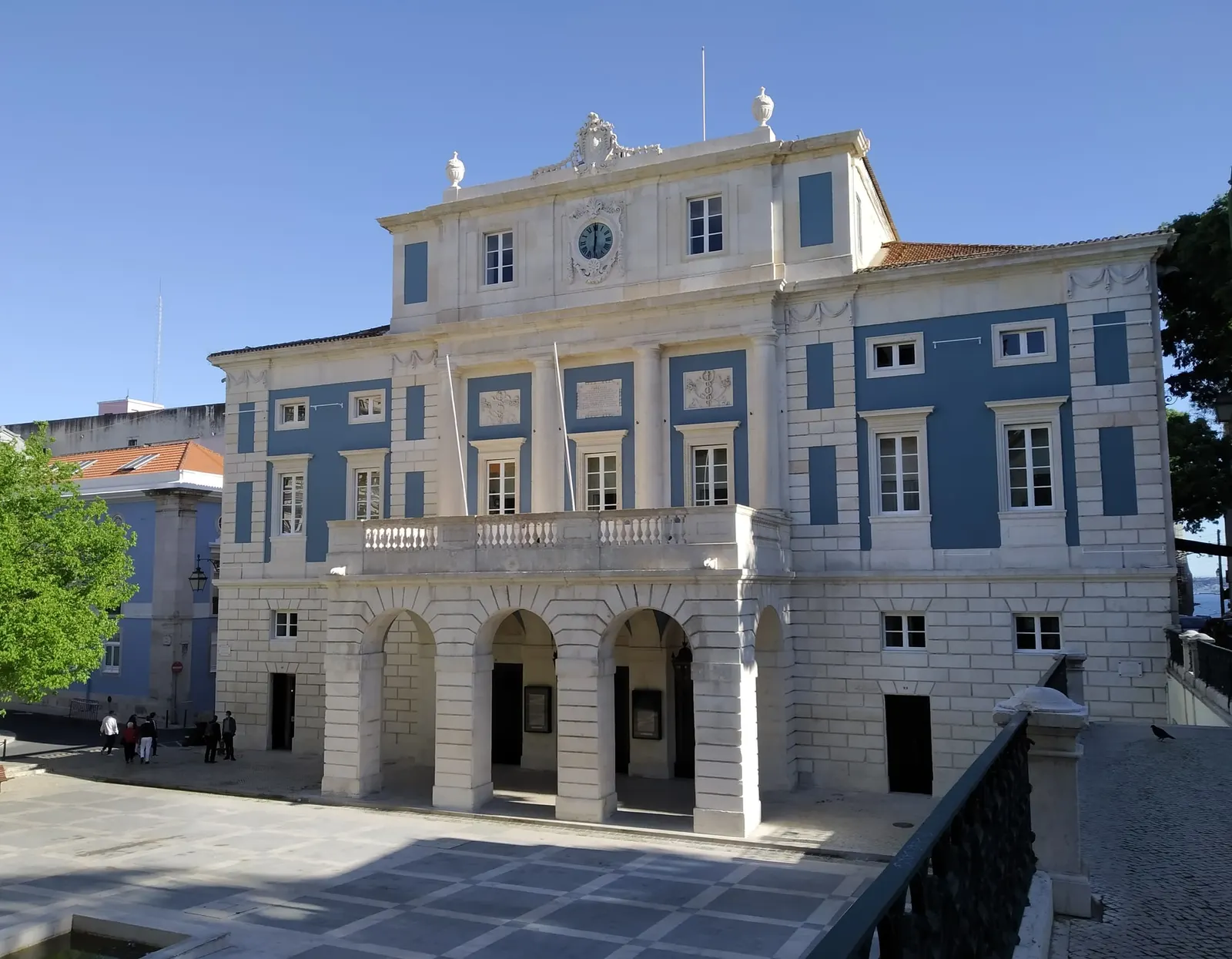
São Carlos National Theatre, in Chiado, brings together opera, architecture and documentary heritage. The historic building is the starting point; its chorus, orchestra, archives and programme are distinct dimensions of the institution.
The opera house of 1793
Designed by José da Costa e Silva, the main building was constructed in 1792–1793 and opened on 30 June 1793. The opening programme included Domenico Cimarosa’s La ballerina amante. Its name is associated with Carlota Joaquina and the courtly setting of late eighteenth-century Lisbon.
Neoclassicism and Italian theatre influences help explain the façade. Look at the three-arched loggia, terrace and central block. Inside, tiers of boxes shape the relationship between stage and audience.
A complex with later additions
The operator distinguishes three buildings: the main theatre, the Duques de Bragança annex incorporated in 1888, and the Serpa Pinto annex in 1933. Not every part dates from 1793. Rehearsal, technical and working spaces show how a theatre extends beyond its public auditorium.
The official record lists public-interest classification in 1928 and reclassification as a National Monument by Decree 2/96, published on 6 March 1996. The institution’s description of its complex does not replace the legal instrument and protected boundary.
Music, collections and archives
The São Carlos National Theatre Chorus and Portuguese Symphony Orchestra are resident artistic ensembles. Their continuing work does not mean every performance takes place in the historic Chiado building.
The São Carlos History and Heritage project opens routes into costumes, scenery, photographs, scores and production history. These records illuminate the collective work behind a performance; do not assume that the entire collection is on display or digitised.
Following the programme during refurbishment
Information checked on 2 October 2026: the official website reports that the theatre has been closed to the public since July 2024 for works. Since September 2025, services and the box office have been based at the former Boa Hora courthouse. An operating box office does not mean the historic auditorium is accessible.
Check the operator’s information and programme, including the venue of each concert or opera. Compare architecture and repertoire with D. Maria II, São João and the theatres and opera houses guide.
Frequently asked questions
- When did São Carlos open?
- It opened on 30 June 1793 to a design by José da Costa e Silva. The main building was constructed in 1792–1793; the Duques de Bragança and Serpa Pinto annexes were incorporated later.
- Can I visit the historic auditorium during the works?
- On 2 October 2026, the operator still reports that the building has been closed to the public for refurbishment since July 2024. Artistic activity may take place elsewhere; check the venue of each event.
- When did it become a National Monument?
- The official record lists public-interest classification in 1928 and reclassification as a National Monument through Decree 2/96, published on 6 March 1996.
Sources
Keep exploring
Heritage nearby
More places to discover from here. Approximate straight-line distances, within 50 km.