Monuments
Alvito Castle
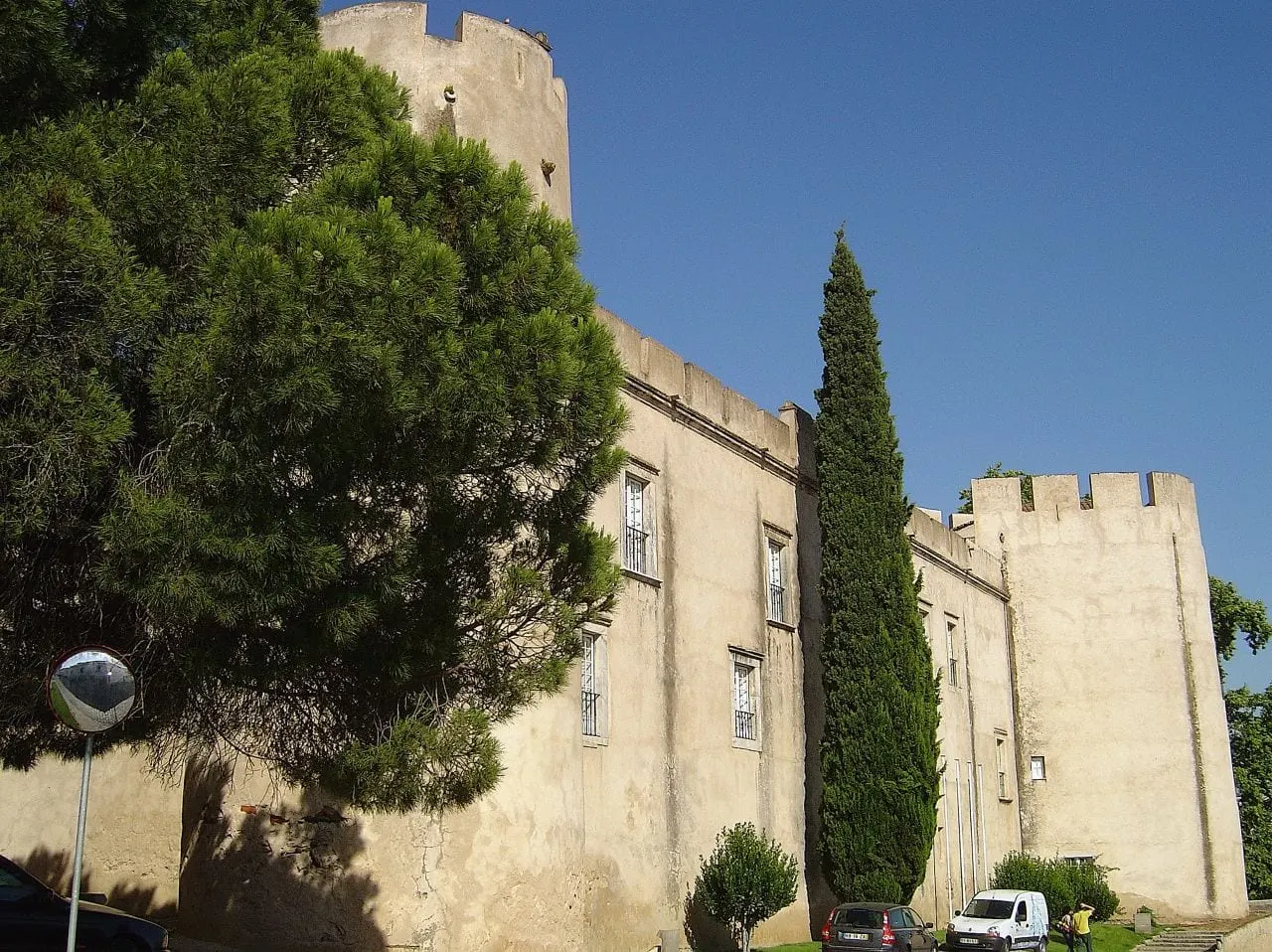
Castelo de Alvito, begun in 1494 as the fortified palace of the Barons of Alvito, has cylindrical towers and Mudéjar windows. Pousada since 1993.
- Location
- Alvito, Beja
- Built
- A partir de 1494 (finais do séc. XV – inícios do séc. XVI)
The Castle of Alvito stands on Largo do Castelo, on a gentle rise above the plains northwest of Beja, in the Lower Alentejo. It has a curtain wall, a keep and crenellated towers, but it is not a border fortress like those of the frontier. It was built at the end of the Middle Ages by a regional noble family as a protected seigniorial residence. The national register of the Cultural Heritage, I.P. calls it a fortified palace or castle-palace. Since 1993 it has operated as a pousada.
The barons of Alvito and the licence to fortify
The castle’s history begins with a title. In 1475, D. Afonso V granted the title of Baron of Alvito to João Fernandes da Silveira, a royal official. His descendants would later become marquesses. In 1482, the baron and his wife were granted a licence to build a castle, with lordship over the town and the surrounding villages. The licence was confirmed by D. João II in 1489 and by D. Manuel in 1497.
The work, however, did not start straight away. According to an inscribed stone placed above the entrance door, cited in the national register, the works only got under way in 1494. By then they were under the charge of the 2nd Baron, D. Diogo Lobo da Silveira. The confirmation charter of 1497 explains the military rationale of the work: the castle overlooked the plain and could offer refuge to the inhabitants in case of danger.
A palace with the look of a castle
The building has a rectangular plan and is organised around an inner courtyard. The keep, square and taller, rises to the northwest, leaning against the curtain wall. The corners of the curtain wall end in cylindrical, crenellated towers, the most characteristic element of the ensemble.
The national register links these towers to the cylindrical buttresses of Alentejo’s fortified churches. It also points to the influence of the castles of Beja and Viana do Alentejo. The courtyard layout also appears in the Castle of Viana do Alentejo, in the manor of Água de Peixes and in the Palace of the Dukes of Cadaval, in Évora. Some authors also relate this type of plan to the origins of the Alentejo monte, which connects the castle to the rural architecture described in Alentejo houses.
The residential character is seen most clearly on the noble floor. The windows and openings have mullions and horseshoe arches made of brick and mortar, a sign of Mudéjar influence. Alongside, some marble elements already show an Italianate taste. This mixture places Alvito within Alentejo architecture of the late fifteenth and early sixteenth centuries, the period of the Manueline style. The register notes that the founders were a family of great regional influence, but without the wealth and military power of the greatest lords of the kingdom. The castle reflects that scale: it is a work of display, yet close to the manor house. The theme continues in manor houses and seigniorial residences.
Classification and protection
The castle is a National Monument under the Decree of 16 June 1910, published in the Diário do Governo no. 136, of 23 June 1910. The national register does not indicate a special protection zone of its own, but the castle falls within the protection zone of the Pillory of Alvito. It is not part of any UNESCO inscription.
From seigniorial palace to pousada
According to the national register, the castle was restored and converted into a Pousada de Portugal, opened in 1993. The pousadas website confirms the opening year. It presents the building as the result of the restoration of a fifteenth-century castle, with Islamic, Gothic and Manueline influences. When consulted on 5 November 2026, the website pousadas.pt listed the pousada within the Pestana Pousadas de Portugal network, with a restaurant. This is commercial information that may change; the pousada itself is the source to confirm with.
Preparing a visit
The castle is in the centre of Alvito, on Largo do Castelo. Access to the interior depends on the pousada. When consulted on 5 November 2026, the pousadas website did not say whether non-guests may visit the courtyard or use the restaurant. The Visit Alentejo listing gave the site as “always open” with guided visits, without further detail. Before going, confirm the conditions with the pousada by telephone at +351 284 480 700.
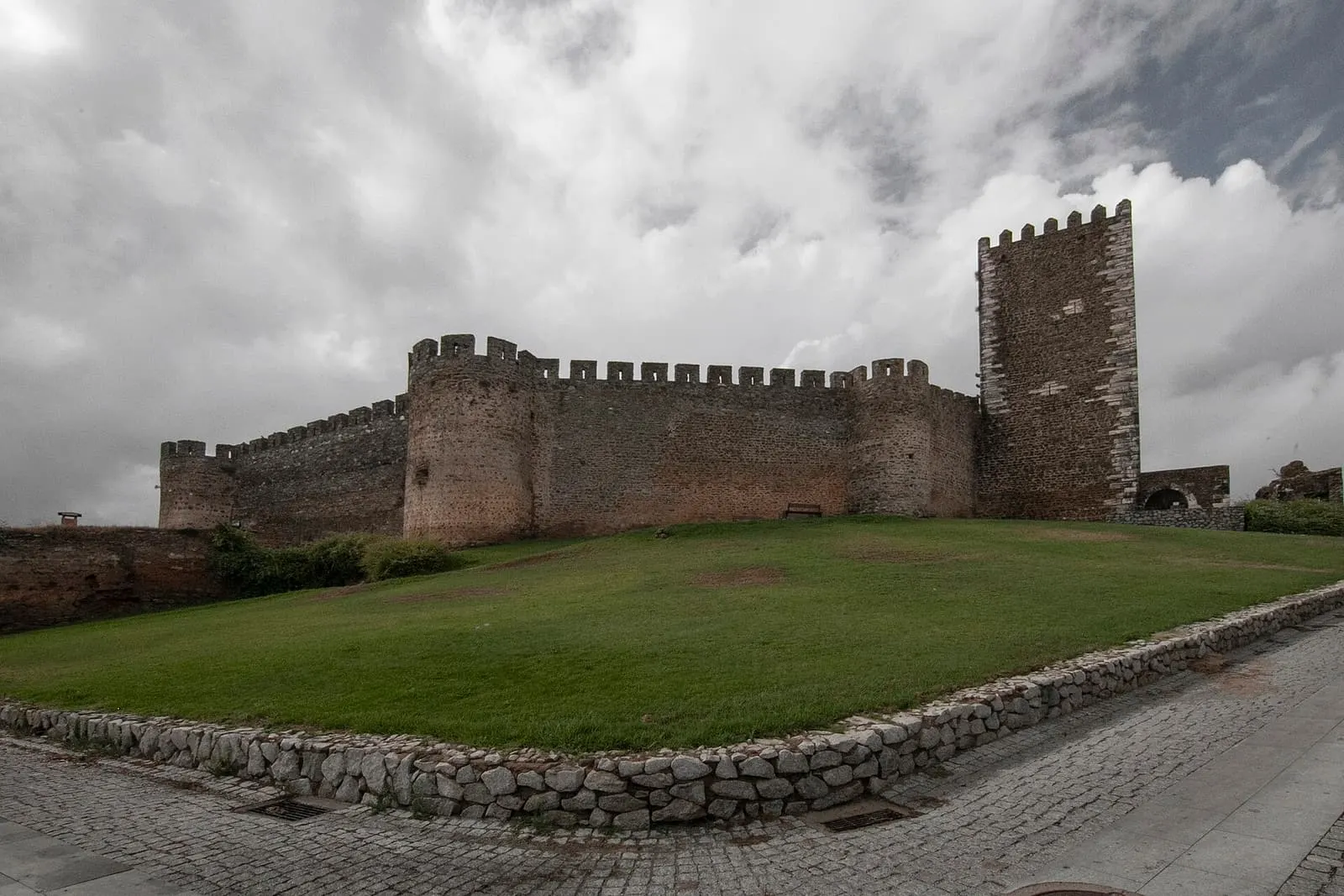
Alvito is near other Alentejo castles worth comparing with it. That of Beja is one of the references cited for the towers, and that of Portel shows a medieval fortress from the same region. For an overview, continue through the castles of Portugal.
Photograph by Vitor Oliveira, dated 22 November 2005. Original on Wikimedia Commons, under CC BY 2.0; compressed for the web, without altering the composition.
Frequently asked questions
- When was the Castle of Alvito built?
- The royal licence to build the castle was granted in 1482, but, according to an inscribed stone above the entrance cited in the national register, work only began in 1494, under the 2nd Baron of Alvito, D. Diogo Lobo da Silveira.
- Is it a castle or a palace?
- It is both. The national register describes it as a fortified palace or castle-palace: it has a curtain wall, a keep and crenellated towers, but it is organised around a residential courtyard, with horseshoe-arched windows of Mudéjar influence.
- Is the castle listed?
- Yes. It is a National Monument under the Decree of 16 June 1910, published in the Diário do Governo no. 136 of 23 June 1910.
- Can it be visited?
- The building has operated as a pousada since 1993. When consulted on 5 November 2026, the pousadas website did not say whether non-guests may visit the interior; please confirm with the pousada by telephone at +351 284 480 700.
Sources
- Património Cultural, I.P. — Castelo de Alvito (70457)
- Património Cultural, I.P. — Atlas do Património Classificado, Castelo de Alvito (NINV 2104)
- Diário do Governo — Decreto de 16 de junho de 1910 (n.º 136, 23-06-1910)
- Pestana Pousadas de Portugal — Pousada Castelo de Alvito
- Visit Alentejo — Castelo de Alvito (atual Pousada)
- Wikidata — Castelo de Alvito (Q4993716)
Keep exploring
Heritage nearby
More places to discover from here. Approximate straight-line distances, within 50 km.