Archaeology
Carenque Artificial Caves
The artificial caves of Carenque, in Amadora: three Chalcolithic tombs cut into rock, a National Monument since 1936, open to the public at weekends.
- Location
- Carenque, Mina de Água, Amadora, Lisboa
- Built
- finais do IV – início do III milénio a.C.
The Carenque Artificial Caves, also called the Carenque Necropolis or the Artificial Caves of Tojal de Vila Chã, are three collective tombs cut into limestone in the parish of Mina de Água, municipality of Amadora. It is a prehistoric National Monument and has a museological nucleus open to the public.
Three caves in limestone
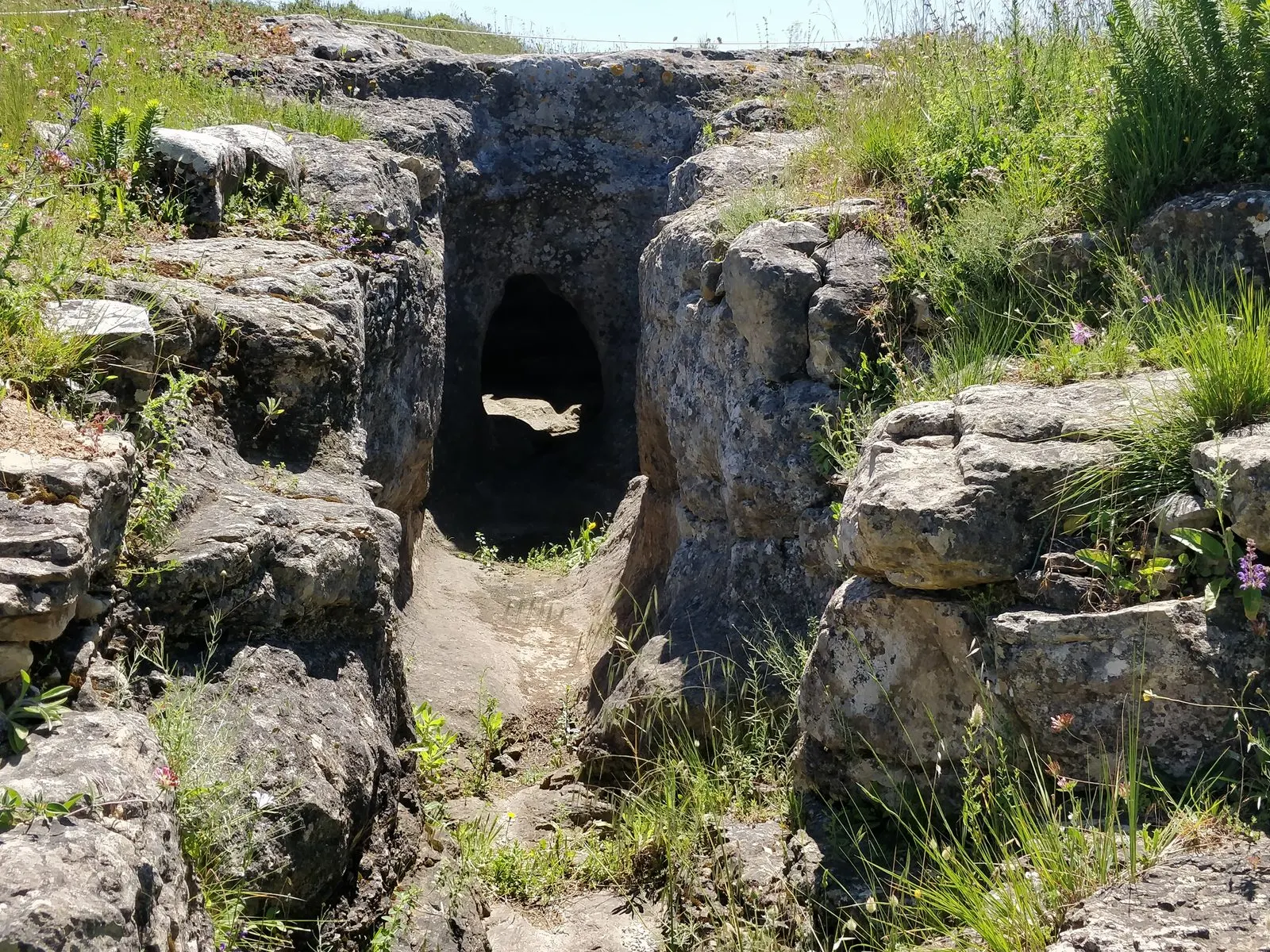
The register of the Património Cultural, I.P. describes three artificial caves opened in soft limestone. The Câmara Municipal da Amadora numbers them I, II and III, from east to west, at Tojal de Vila Chã, between Carenque and the Moinhos da Funcheira. All three share the same layout: an access corridor, a small portal and a funerary chamber of roughly subcircular plan, crowned by a skylight carved into the top of the same outcrop. The corridor and the skylight were covered by large limestone slabs, which sealed the structure from the outside.
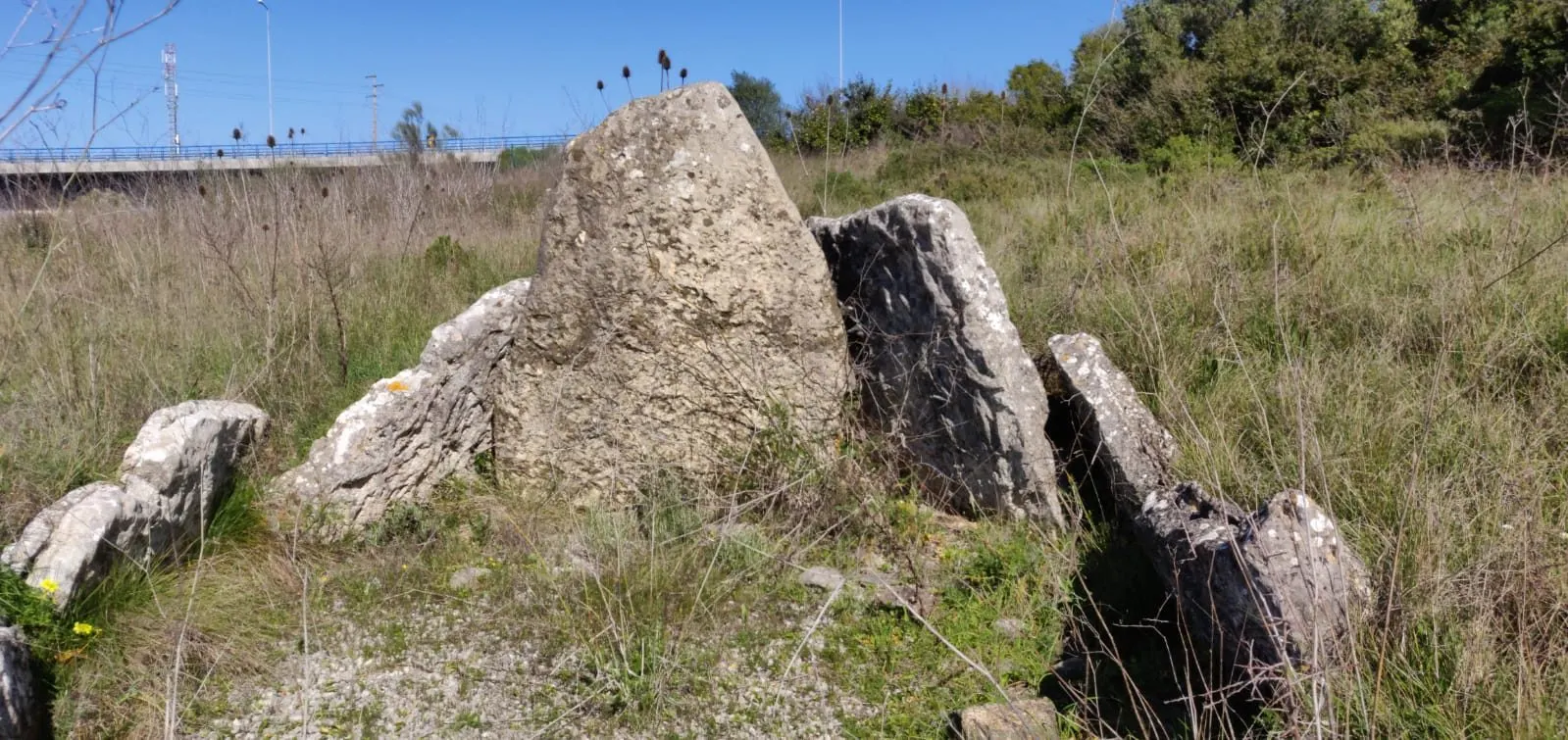
According to the municipality, these caves belong to a Mediterranean funerary tradition, with features of their own in the Tagus estuary region, and in morphology they resemble the antas (dolmens). Among other necropolises of the same type, the register cites the caves of Quinta do Anjo (Palmela), Alapraia and São Pedro do Estoril. For the broader phenomenon, see megalitismo; the municipality notes that there are antas to the west, at Queluz-Monte Abraão, in the municipality of Sintra (see antas de Sintra).
Discovery and chronology
They were discovered and excavated in 1932 by Manuel Heleno, director of the Museu Etnológico do Dr. Leite de Vasconcellos, today the Museu Nacional de Arqueologia, where the materials and human remains are held on deposit. The register recalls that Heleno promptly promoted the site’s classification.
The municipality indicates that the caves were built between the late 4th and early 3rd millennium BC and reused at the end of the 3rd millennium. On another page, the same municipality speaks only of the late Neolithic, in the 3rd millennium. This page therefore uses the more precise dating and attributes it to the municipality; the national register does not propose a construction date, only placing the “megalithic” materials of this type between the 4th and 3rd millennia BC.
The grave goods included human bones, grooved bowls and beakers, Bell Beaker vessels, bone needles and buttons, arrowheads, a blade and daggers, and symbolic objects such as smooth and decorated limestone idols, representations of adzes, slate plaques and crescents (lunulae). The register adds that the corresponding settlements have not been fully identified. The cultural context is described under Calcolítico; a fortified settlement from the same region is Leceia.
Classification
The complex is a National Monument under Decree No. 26 235, Diário do Governo, 1st series, No. 16, of 20 January 1936. It is not part of any UNESCO inscription. The “Galeria de Carenque”, or megalithic monument of Pego Longo, is a different property, in Sintra and with a different classification (property of public interest); it should not be confused with these caves.
Condition and visiting
The Museological Nucleus of the Carenque Necropolis, of the Museu da Amadora, has been open to the public on a permanent basis since 1999. It is located at Serra das Brancas, at the top of Avenida Luís de Sá. When consulted on 5 November 2026, the municipality published two schedules: summer, Saturdays 14:00–18:00 and Sundays 09:00–14:00; winter, Saturdays 13:00–17:00 and Sundays 10:00–15:00, with free admission. The page does not give the dates on which the two schedules change. Guided visits for organised groups require advance booking (telephone 214 369 090). As for the state of conservation, we have not found a public report.
Please confirm opening times and conditions on the municipal page.
Photograph: Roundtheworld, 11 May 2019, NecropolisCarenque1.jpg, licence CC BY-SA 4.0, resized and compressed for the web, composition unchanged.
Frequently asked questions
- What are the Carenque Caves?
- Three collective tombs cut into limestone outcrops at Tojal de Vila Chã, in the parish of Mina de Água, in Amadora. Each cave has a corridor, a small portal and a funerary chamber with a roughly subcircular plan.
- Who discovered them and when?
- They were discovered and excavated in 1932 by Manuel Heleno, then director of the Museu Etnológico do Dr. Leite de Vasconcellos, today the National Museum of Archaeology.
- Can they be visited?
- Yes. The Museological Nucleus of the Carenque Necropolis, part of the Museu da Amadora, has been open to the public since 1999. When consulted on 5 November 2026, the municipality published weekend opening hours with free admission, and asked groups to book in advance.
- Is it a National Monument?
- Yes. The necropolis is classified as a National Monument by Decree No. 26 235, of 20 January 1936.
Sources
- Património Cultural, I.P. — Grutas artificiais do Tojal de Vila Chã ou Carenque (70455)
- Património Cultural, I.P. — Atlas do Património Classificado (NINV 3166)
- Câmara Municipal da Amadora — Necrópole de Carenque (Património: Monumentos Nacionais)
- Câmara Municipal da Amadora — Núcleo Museológico da Necrópole de Carenque (Museu da Amadora)
- Turismo de Lisboa — Necrópole de Carenque
- Wikidata — Necrópole de Carenque (Q10335950)
Keep exploring
Heritage nearby
More places to discover from here. Approximate straight-line distances, within 50 km.