Monuments
Church of Abragão
Igreja de São Pedro de Abragão, Penafiel: Romanesque 13th-century chevet linked to D. Mafalda, 2006 finds, National Monument on the Romanesque Route.
- Location
- Abragão, Penafiel, Porto
- Built
- Cabeceira românica do segundo quartel do século XIII; nave e fachada reedificadas na segunda metade do século XVII (nave em 1668); torre sineira de 1820
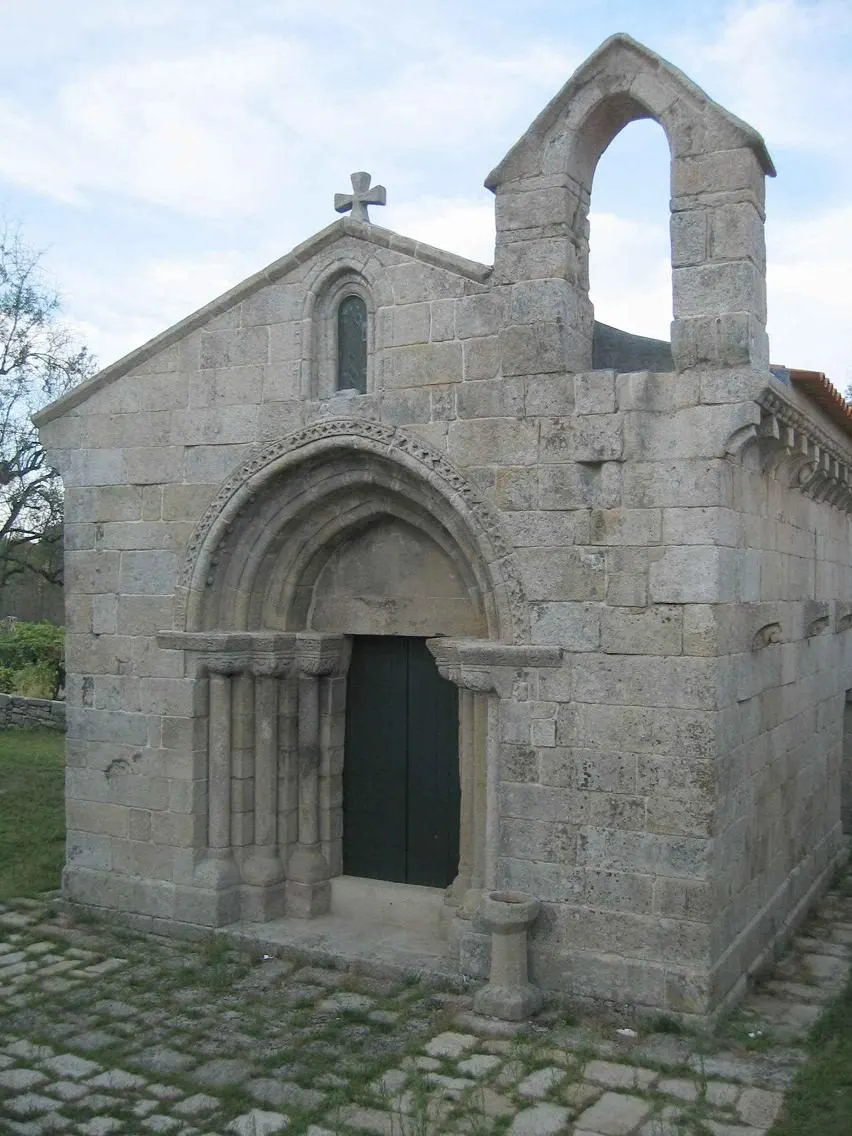
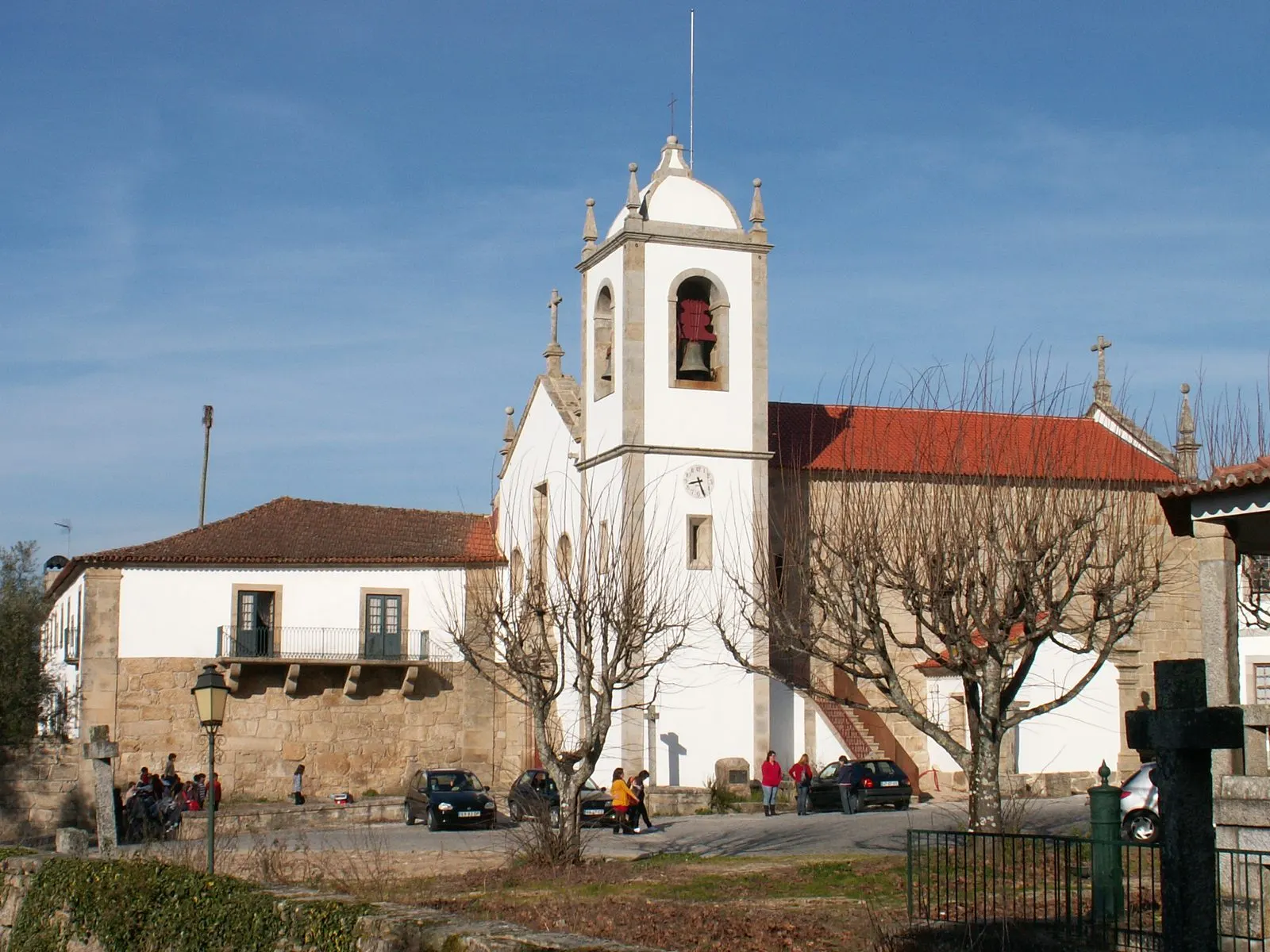
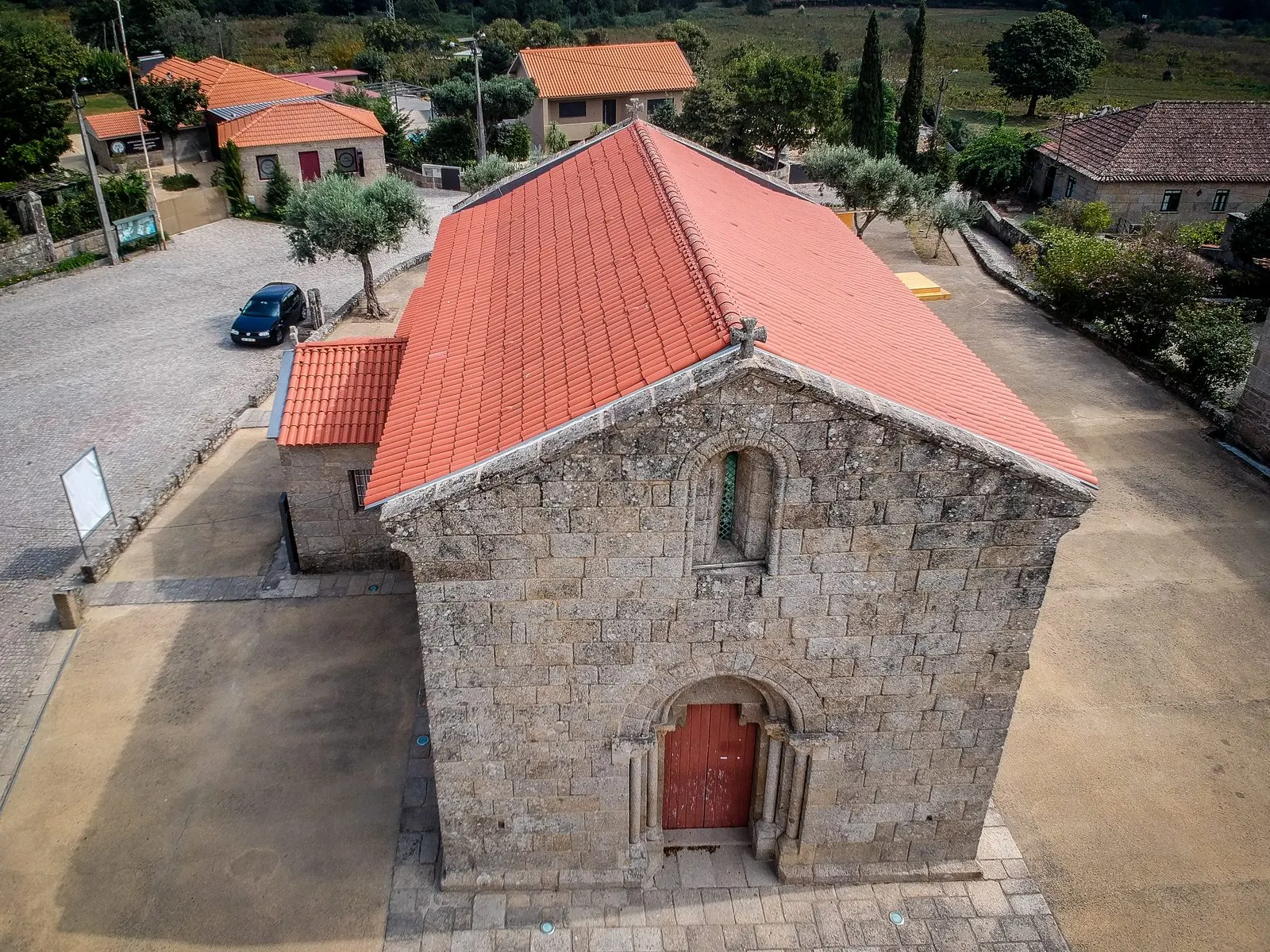
The Church of São Pedro de Abragão stands on Largo Dr. Armando Melo, in the parish of Abragão, in the municipality of Penafiel. Its official designation is “Church of Abragão, including the tombs”. It is a National Monument and one of the monuments of the Romanesque Route, in the Sousa Valley. Of the medieval building, the apse survives, a good example of Romanesque art in the region, and the pieces found in 2006 show that the original church was larger.
Origins
The Romanesque Route reports that the church of Abragão is already mentioned in 1105, as the fourth part of “Sancto Petro de Auregam”, donated to the Monastery of Paço de Sousa. That early building is not the one seen today. The Romanesque apse is dated by the Route to the second quarter of the 13th century and corresponds to a construction that tradition attributes to the initiative of D. Mafalda (1195-1256), daughter of D. Sancho I. The attribution comes from tradition, and we have not confirmed it in documents.
What remains of the Romanesque
The apse is rectangular, of two bays, with stepped buttresses, a solution the Route links to protection against rainwater infiltration. On the exterior, a frieze of geometric motifs recalls that of the Monastery of Paço de Sousa. Inside, a stone vault with pointed arches covers the apse, which houses a retable (the Route describes it as Baroque in the guide and as Mannerist, with paintings of Saint Andrew, Saint Mary Magdalene, Saint James and Saint Martha, on the monument’s page). The main chapel has vegetal sculptural decoration. The triumphal arch is crowned by a rose window in the shape of a five-pointed star, and the capitals, bulky for the low height of the apse, bear themes similar to those of the main portal of the Monastery of Travanca: in one, atlantes at the angles supported by leaves; in the other, birds интertwined by the neck. For the stylistic context, see Romanesque architecture in Portugal.
The 2006 finds
In 2006, during the requalification of the Abragão Civic Centre, a significant series of Romanesque elements from the former nave appeared in the building supporting the Parish Council, which had once been a blacksmith’s workshop: capitals, bases, voussoirs and shafts which, by their size and number, must have belonged to the main portal. The capitals with confronted animals, the bevelled palmettes and the voussoirs with intersecting circles bring the group close to the sculpture of the Church of Boelhe and of Paço de Sousa, both in Penafiel. The pieces are displayed in the Centre for the Interpretation of Romanesque Sculpture, next to the church, and the size of the rose window found suggests, according to the Route’s guide, a nave considerably larger than the apse seen today.
Rebuilding and restoration
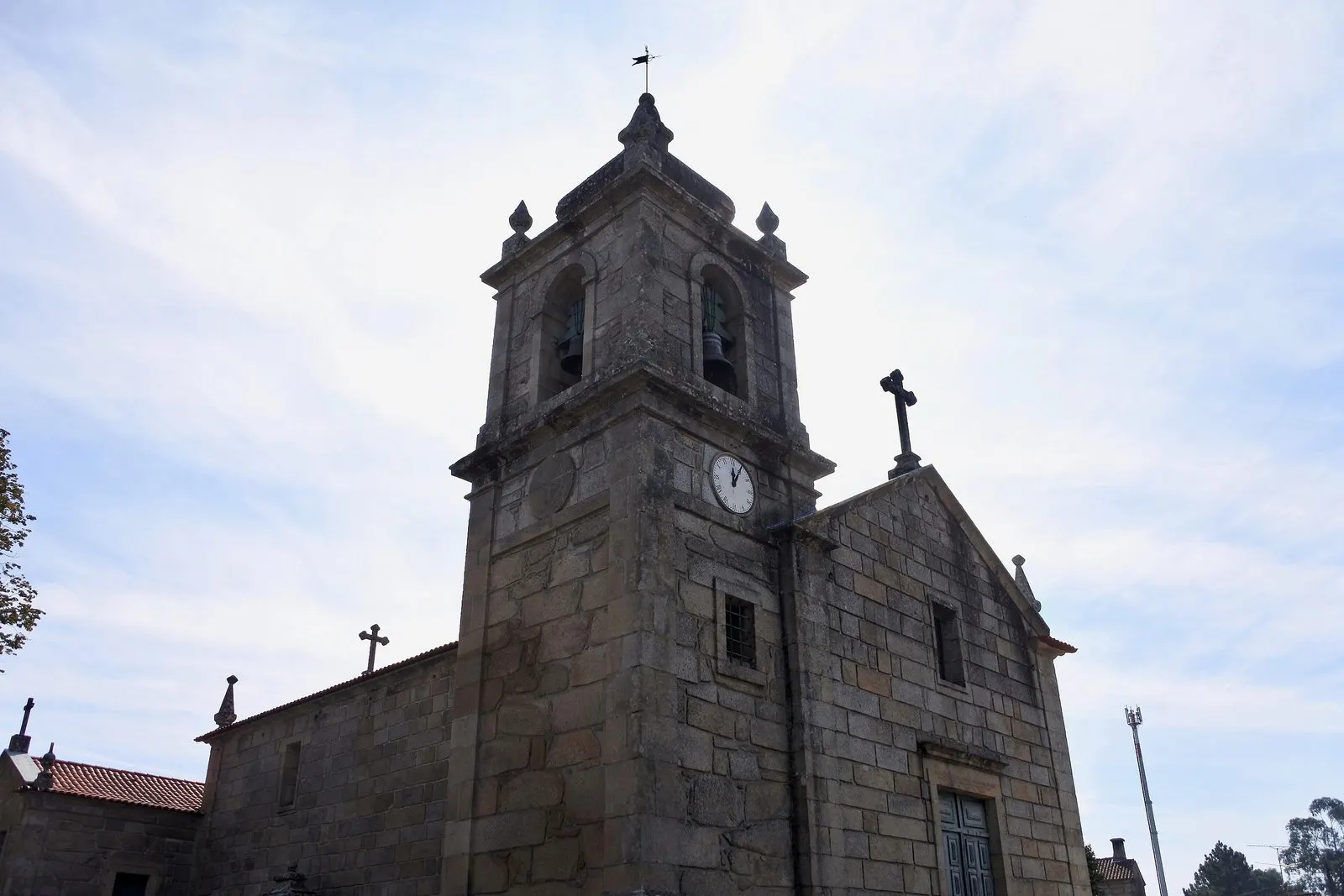
The nave and main façade were rebuilt in the second half of the 17th century; the Route dates the nave work to 1668. The clock bell tower dates from 1820. The Route’s chronology also records the 1975 decision to halt the removal of the floor and preserve the original, the inclusion in the Route in 1998, general conservation works in 2004, and the restoration of the sacristy area and its surroundings in 2006.
Classification
It is a National Monument under Decree No. 129/77, published in the Diário da República, I series, No. 226, of 29 September 1977, under the designation “including the tombs”. The special protection zone was set by Portaria No. 644/2014 (Diário da República, 2nd series, No. 148, of 4 August 2014). We have not found, in the sources we consulted, a description of the tombs to which the title refers, so we make no claims about them. The church is not part of any UNESCO inscription.
Preparing the visit
When consulted on 5 November 2026, the Romanesque Route indicated visits by appointment (telephone +351 255 810 706 and +351 918 116 488; email [email protected]) and, for worship, Mass on Saturdays at 4 pm (winter) or 5 pm (summer), and on Sundays at 7 am and 11 am. The page indicated full or partial accessibility for people with reduced mobility, and the feast of the patron saint, Saint Peter, on 29 June. These details may change: confirm them on the official monument page before travelling. For other churches on the same route, see the Church of São Vicente de Sousa.
Photograph by FF Mira, dated 7 October 2016. Original on Wikimedia Commons, under CC BY-SA 2.0; resized and compressed for the web, without altering the composition.
Frequently asked questions
- What remains of the Romanesque in the Church of Abragão?
- Only the apse and its triumphal arch. The Romanesque Route dates the apse to the second quarter of the 13th century; the nave and façade are a rebuilding from the second half of the 17th century.
- What is the church's connection to D. Mafalda?
- The Romanesque Route states that the 13th-century construction resulted from an initiative of D. Mafalda (1195-1256), daughter of D. Sancho I, according to tradition. This attribution comes from tradition, which we have not been able to confirm in documentation.
- Can it be visited?
- When consulted on 5 November 2026, the Romanesque Route indicated visits by appointment, with contacts published on the monument's page. Always confirm before going.
- What is its classification?
- National Monument, including the tombs, by Decree No. 129/77, published in the Diário da República, I series, No. 226, of 29 September 1977. The special protection zone was set by Portaria No. 644/2014.
Sources
- Património Cultural, I.P. — Atlas do Património Classificado e em Vias de Classificação (NINV 3690)
- Diário da República — Decreto n.º 129/77, de 29 de setembro de 1977 (I série, n.º 226)
- Rota do Românico — Church of Saint Peter of Abragão
- Rota do Românico — Guia: 20. Igreja de São Pedro de Abragão
- Wikidata — Igreja de São Pedro (Abragão) (Q5994292)
Keep exploring
Heritage nearby
More places to discover from here. Approximate straight-line distances, within 50 km.