Monuments
Church of Vila Boa do Bispo
Vila Boa do Bispo Church, Marco de Canaveses: a former monastery with a 1141 couto, Saint Augustine canons, Romanesque traces and medieval tombs.
- Location
- Vila Boa do Bispo, Marco de Canaveses, Porto
- Built
- Séculos XII–XIII (vestígios românicos); grande transformação barroca nos séculos XVII–XVIII
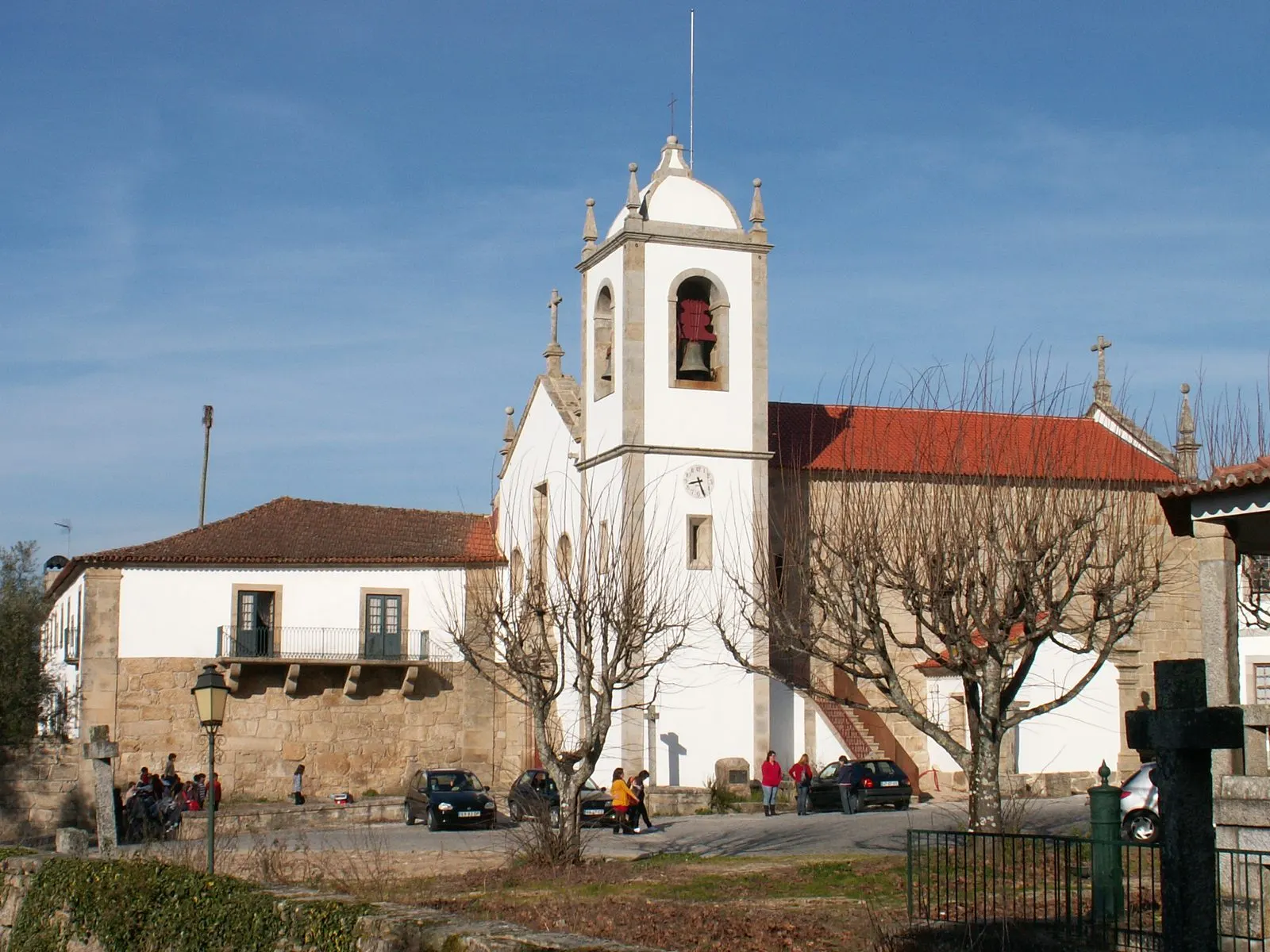
The Church of Vila Boa do Bispo is the church of the former Monastery of Santa Maria de Vila Boa do Bispo, on a slope on the left bank of the Tâmega, in the municipality of Marco de Canaveses. The Rota do Românico, which has included it since 2010, speaks of a monumentality explained by the monastery’s importance in the Middle Ages and the Early Modern period, linked to the Gascos (or Ribadouros) lineage. What is seen today is a heavily transformed ensemble, in which the Romanesque remains coexist with a Baroque interior.
From the 11th century to the charter of couto
The tradition, cited by the Rota, attributes the foundation to the time of D. Sisnando (c. 990–1022), brother of Monio Viegas. The first documentary reference to the «Monasterio S. Mariae Villaebonae» dates from 1012, and a funerary inscription of 1022, engraved on a sarcophagus lid found in the cloister, mentions D. Monio Viegas and two sons, D. Egas Moniz and D. Gomes Moniz.
On 12 February 1141, the prior D. Egas, the brother D. Monio and the monks received from D. Afonso Henriques the charter of couto. By 1143 the presence of Augustinian regular canons is already recorded; a brief of Lucius II (1144–1145) allowed the priors to use the mitre, and a bull of Anastasius IV (1153–1154) added the crozier. In 1297, Boniface VIII confirmed the Rule of St Augustine. The commendam began in 1475 and ended in the mid-16th century; in 1593 the monastery was incorporated into the Congregation of Santa Cruz de Coimbra.
What survives of the Romanesque
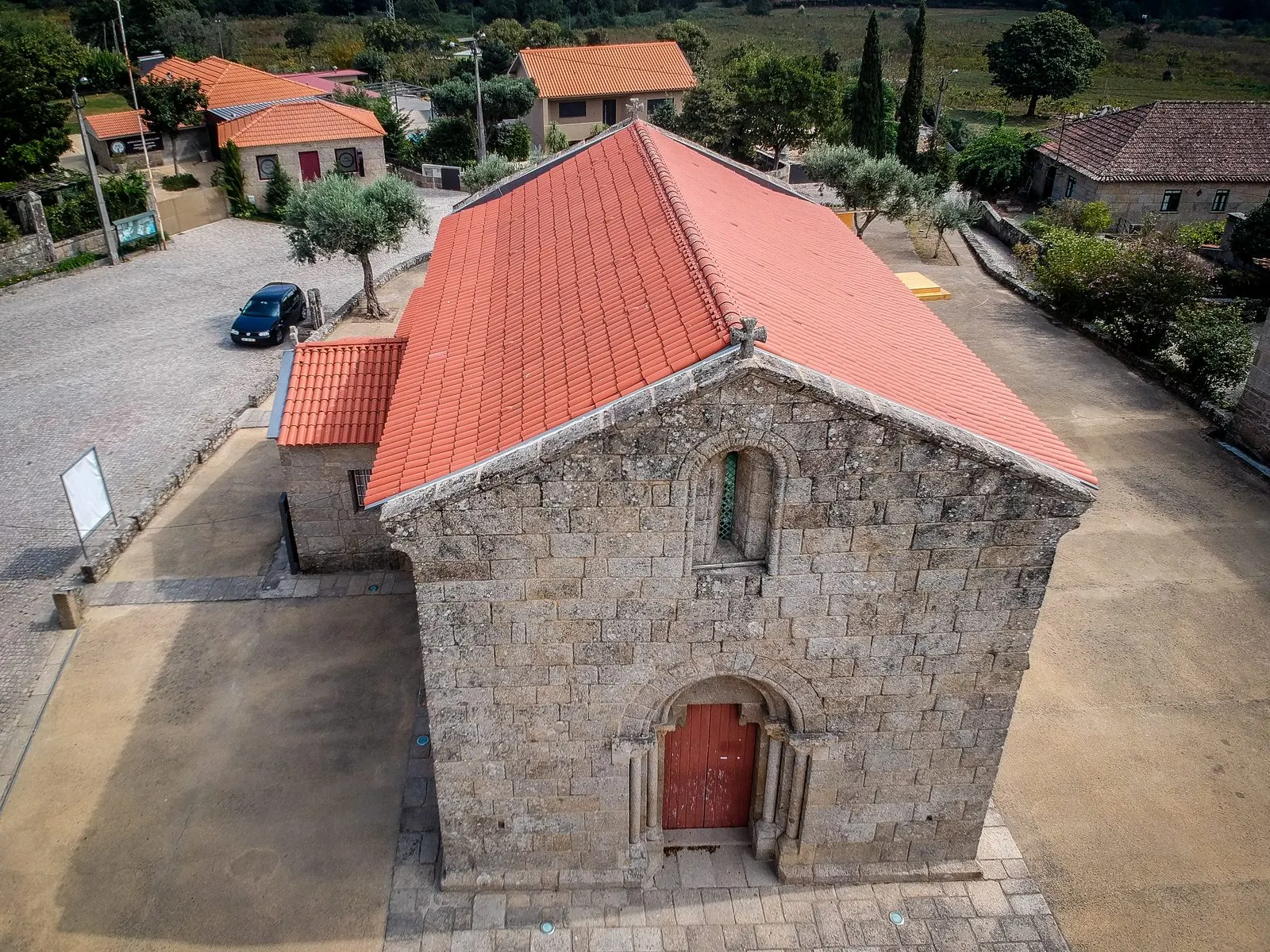
On the main façade, the two blind arcades flanking the portal stand out, very original and with a composition typical of the Romanesque of the Braga–Rates axis, according to the Rota. These and other scattered elements place the Romanesque construction between the 12th and 13th centuries. From the presence of buttresses, it is likely that the original chancel was square and vaulted.
Another medieval legacy is the tombs, which attest to burials in the 13th and 14th centuries and link the monastery to the regional nobility. The Rota’s chronology mentions, among others, the tomb of D. Salvado Pires, that of D. Nicolau Martins (prior, inscription dated 25 November 1348) and that of D. Júrio Geraldes (with inscription dated 30 January 1381), mordomo-mor of D. Fernando for Entre-Douro-e-Minho, who commissioned the last two from the same workshop. The tombs are included in the classification designation.
The modern transformation
The building was profoundly altered in the Early Modern period: the Rota places the transformation of the Romanesque church in the second half of the 17th century, with a sacristy possibly dating from 1686, and a Baroque intervention in the interior in the first half of the 18th century. Azulejos are recorded in the baptistery (1650–1660) and in the chancel (1740). According to the Memórias Paroquiais, by 1758 the building already had the appearance seen today. The bell tower was dismantled and rebuilt between 1882 and 1888.
The interior is marked by the Baroque spirit: the Rota speaks of a luminous and monumental space, achieved through various techniques and materials. Beneath the coffered ceiling of the chancel a set of mural paintings was identified, which the Rota attributes to the 16th century, linked to the culture of the regular canons; the same source’s chronology records, in 2012, an intervention on the vault that revealed a seventeenth-century mural painting, after the ceiling was removed. The dating of the paintings should therefore be read with reservation.
Classification
The church, including the tombs, is a National Monument under Decree No. 129/77 of 29 September 1977 (Diário da República, I series, No. 226). The same decree classified the Monastery of Vila Boa do Bispo (the area of the former monastery) as a Property of Public Interest, according to the Atlas do Património Classificado. It is not included in any UNESCO inscription. Since 1997 there have been works to restore the interior and exterior renders, according to the Rota.
Preparing a visit
According to the consultation of 5 November 2026, the Rota do Românico indicated visits by appointment, Mass on Sundays at 11:30, and the monument as not accessible to people with reduced mobility. The address given is Avenida Padre António da Cunha Machado, in Vila Boa do Bispo, and bookings are made through the Rota’s contacts (+351 255 810 706 or +351 918 116 488, [email protected]). Please confirm on the Rota do Românico website before going.
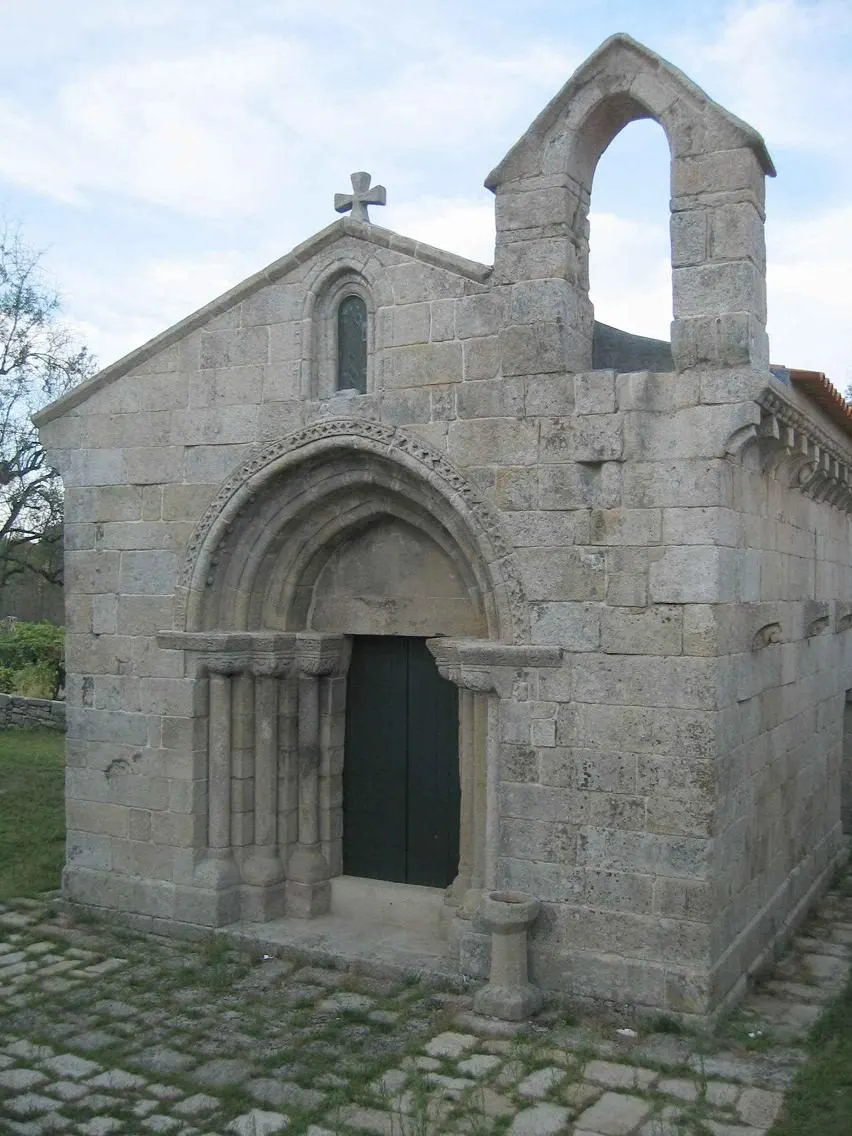
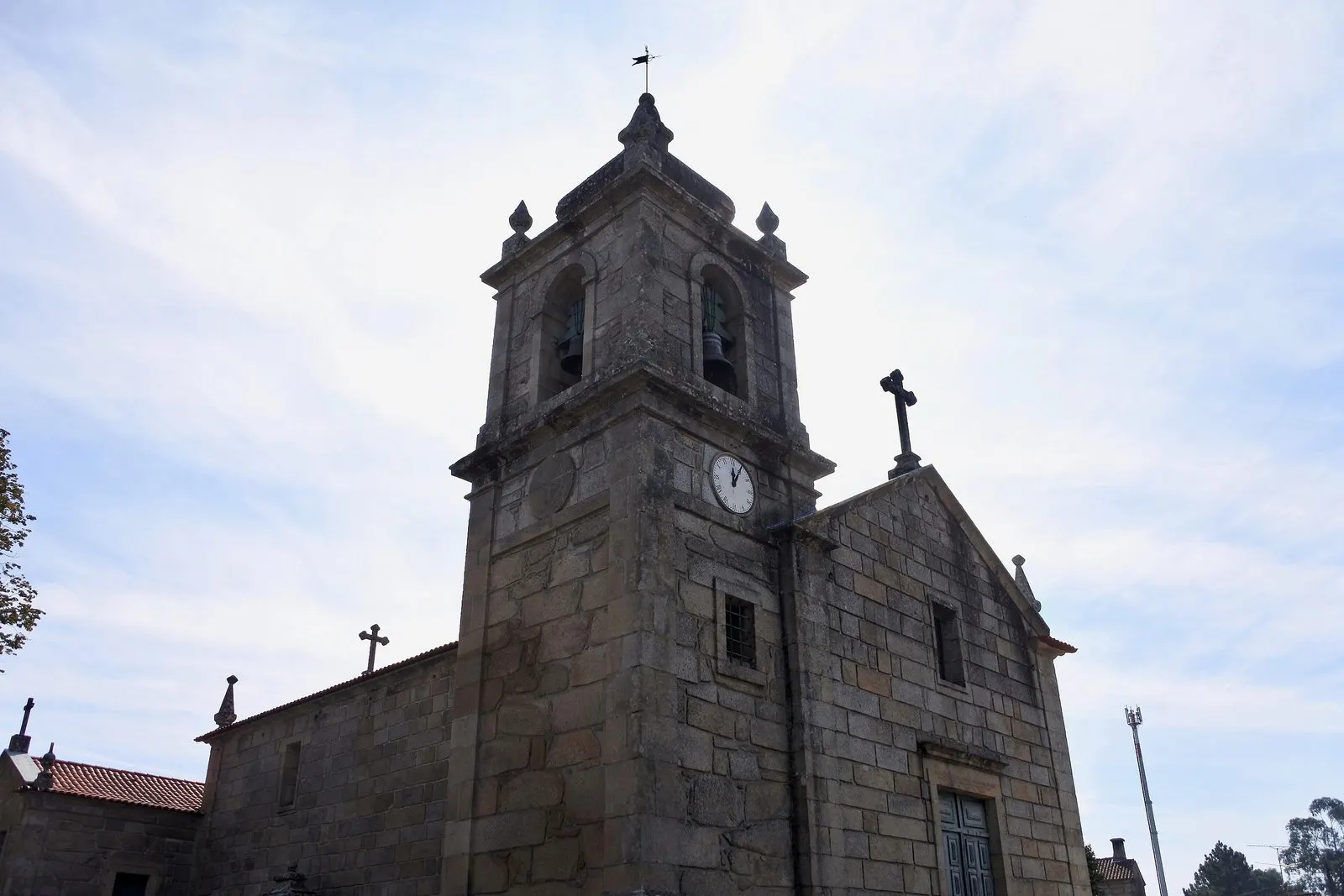
To see the wider ensemble of which it is part, consult the Rota do Românico. In the same municipality are the Church of Vila Boa de Quires and the Church of Santo Isidoro, and, in the neighbouring municipality of Amarante, the Monastery of Travanca, also linked to the Gascos lineage.
Photograph by Pedro from Maia (Porto), Portugal, dated 14 February 2009. Original on Wikimedia Commons, under CC BY 2.0; resized and compressed for the web, without altering the composition.
Frequently asked questions
- Is the Church of Vila Boa do Bispo Romanesque?
- In part. The Rota do Românico dates the surviving Romanesque elements to between the 12th and 13th centuries, such as the two blind arcades flanking the portal of the main façade, but the building was profoundly altered in the Early Modern period and its interior is of Baroque spirit.
- Why is it called "do Bispo"?
- The name appears as "Villa Bona Episcopi" in documents of 1141, when D. Afonso Henriques granted the monastery a charter of couto. The sources consulted do not explain the origin of the name.
- What is its classification?
- The church, including the tombs, is a National Monument under Decree No. 129/77 of 29 September 1977 (Diário da República, I series, No. 226). The same decree classifies the Monastery of Vila Boa do Bispo as a Property of Public Interest.
- Can I visit it?
- According to the Rota do Românico as consulted on 5 November 2026, visits are by appointment, Mass is held on Sundays at 11:30, and the monument is not accessible to people with reduced mobility.
Sources
- Património Cultural, I.P. — Atlas do Património Classificado e em Vias de Classificação (NINV 3644 e 3649)
- Diário da República — Decreto n.º 129/77, de 29 de setembro (I série, n.º 226)
- Rota do Românico — Mosteiro de Santa Maria de Vila Boa do Bispo
- Rota do Românico — Roteiro: Mosteiro de Vila Boa do Bispo (guia em PDF)
- Wikidata — Igreja de Vila Boa do Bispo (Q48871683)
Keep exploring
Heritage nearby
More places to discover from here. Approximate straight-line distances, within 50 km.