Monuments
Church of Santa Maria de Almacave
Santa Maria de Almacave Church, Lamego: Romanesque temple documented in 1145, rebuilt in the 13th century, with later gilded woodwork. Classified in 1910.
- Location
- Almacave, Lamego, Viseu
- Built
- Documentada em 1145 (séc. XII); refeita no séc. XIII
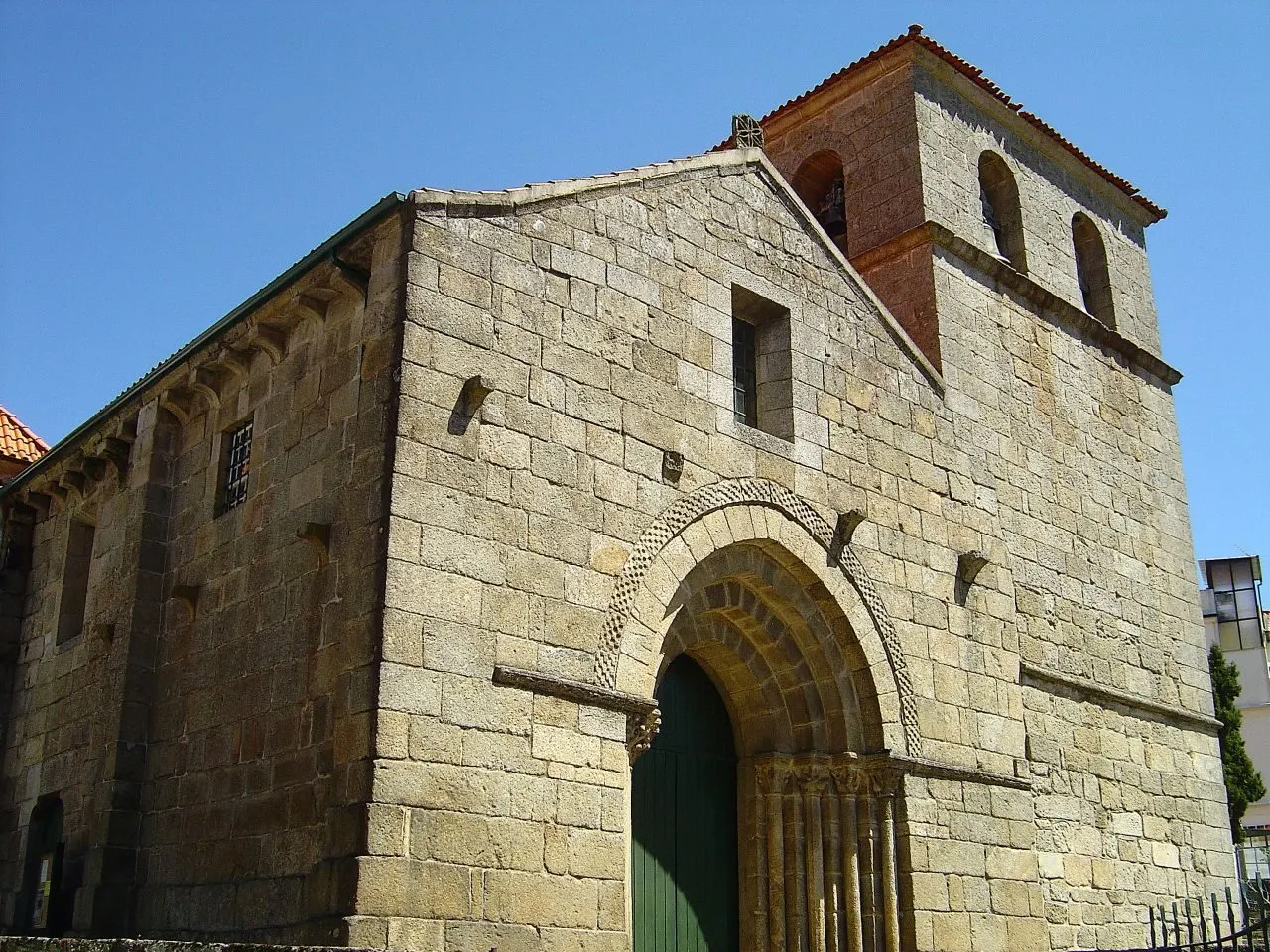
The Church of Santa Maria de Almacave, in Lamego, is the former parish church of the Almacave quarter. It is one of the most important Romanesque churches in the region: the Património Cultural, I.P. register considers it a notable testimony to the exceptionality of Romanesque architecture in the Lamego area, whose small variations of plan and volume form, in its words, «a regional dialect of undeniable relevance». It belongs to the wider context of Romanesque architecture in Portugal.
Origins
The register places the church over a former Roman villa, similar to an important group of Romanesque churches in the Chaves and Lamego areas. The medieval construction incorporates materials from that occupation, namely two funerary cippi, and other remains appeared while exploring the foundations of the chapel of the Holy Spirit, notably a set of coins of the Late Empire.
The Romanesque church was built in the first half of the 12th century and is documented in 1145, the year in which a certain João Martins was rector. Little more is known of this first phase: some time later, the building was entirely rebuilt, and the register, citing Carlos Alberto Ferreira de Almeida (2001), points to a chronology well within the 13th century for the work seen today.
Architecture
It is a longitudinal building with a single nave and chancel. On the right side is a bell tower of square plan, built long after the Romanesque work was completed; the chapel of the Most Holy Sacrament, attached to the east wall of the nave on the south side, is also later. The main portal has a pointed arch and three archivolts.
The interior is spacious and, through the discreet use of columns with capitals of classicising taste, characteristic of the Early Modern period, suggests the existence of three naves. The chancel, by contrast, is perfectly adapted to the Romanesque vocabulary: two bays, the first straight and the last semicircular. In elevation, the transition between the bays is reinforced by buttresses, and the final bay includes engaged columns that allowed narrow pointed-arched windows to be opened on each wall, in careful symmetry.
16th to 18th centuries and the restoration of the 1940s
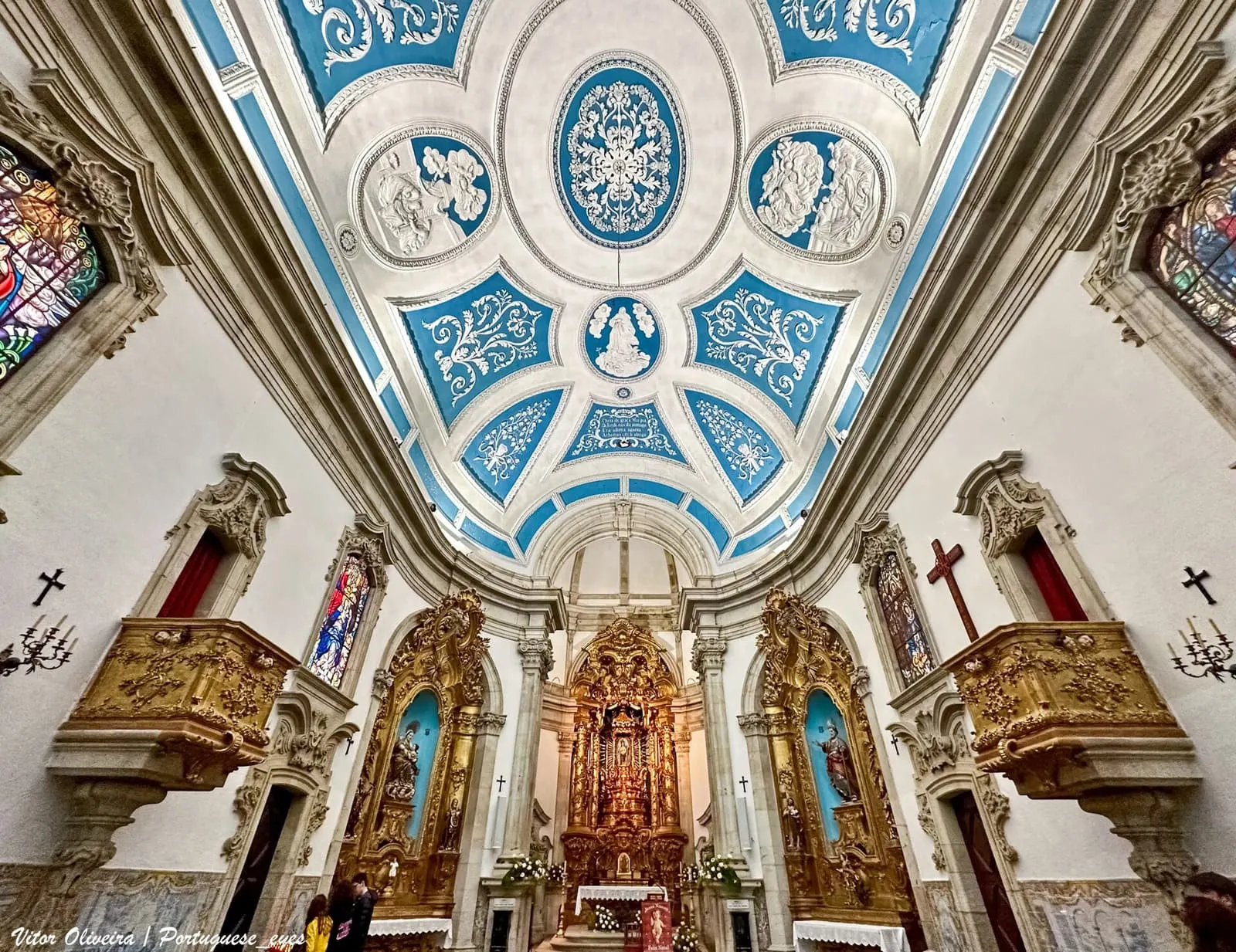
The church was much altered between the 16th and 18th centuries. It was then that the chapel of the Most Holy Sacrament was opened, the gilded woodwork «máquinas» de talha dourada was made, and the upper choir was given its form, among other works. Many of these interventions were removed in the restoration of the 1940s, according to the register, which does not specify which. Visitors should therefore expect an interior that mixes a regularised Romanesque structure with elements from later periods, rather than an intact medieval church.
Classification
It has been a National Monument since the Decree of 16 June 1910 (Diário do Governo no. 136, of 23 June 1910), where it appears, in the district of Viseu, as «Lamego — Igreja de Santa Maria de Almacave». A ministerial order of 16 April 1953 (Diário do Governo, II series, no. 146, of 24 June 1953) fixed the special protection zone, with a non aedificandi zone. The register indicates that the church falls within the special protection zone of the Alto Douro Vinhateiro, but not that it forms part of the property inscribed by UNESCO. For the city’s cathedral, see the Sé de Lamego.
Planning a visit
The church is on Rua das Cortes, in Lamego, in the parish of Lamego (Almacave e Sé). When consulted on 5 November 2026, we did not find visiting hours or prices published in an official source we could read, so we do not list them. Please confirm with the Parish or the Câmara Municipal de Lamego, especially on days of worship. Some tourist sources associate the church with a tradition about the first Cortes, but we have not confirmed it in a primary source and therefore do not treat it as fact.
Photograph by Vitor Oliveira (Torres Vedras), dated 5 November 2007. Original on Wikimedia Commons, under CC BY-SA 2.0; resized and compressed for the web, without altering the composition.
Frequently asked questions
- When was the Church of Almacave built?
- The Património Cultural, I.P. register indicates a Romanesque church built in the first half of the 12th century, documented in 1145, when the rector was João Martins, and entirely rebuilt, according to Carlos Alberto Ferreira de Almeida, in the 13th century.
- What survives from the Romanesque period?
- The main portal, with a pointed arch and three archivolts, and the two-bay chancel, the first straight and the second semicircular, with buttresses and pointed-arched windows between engaged columns.
- Is it a National Monument?
- Yes, since the Decree of 16 June 1910 (Diário do Governo no. 136, of 23 June 1910). The special protection zone and the non aedificandi zone were set by ministerial order of 16 April 1953.
- How can I visit?
- When consulted on 5 November 2026, we did not find visiting hours published in an official source we could read. It is a parish church, so it is advisable to confirm with the parish or the Câmara Municipal de Lamego.
Sources
Keep exploring
Heritage nearby
More places to discover from here. Approximate straight-line distances, within 50 km.