Monuments
Lamego Castle
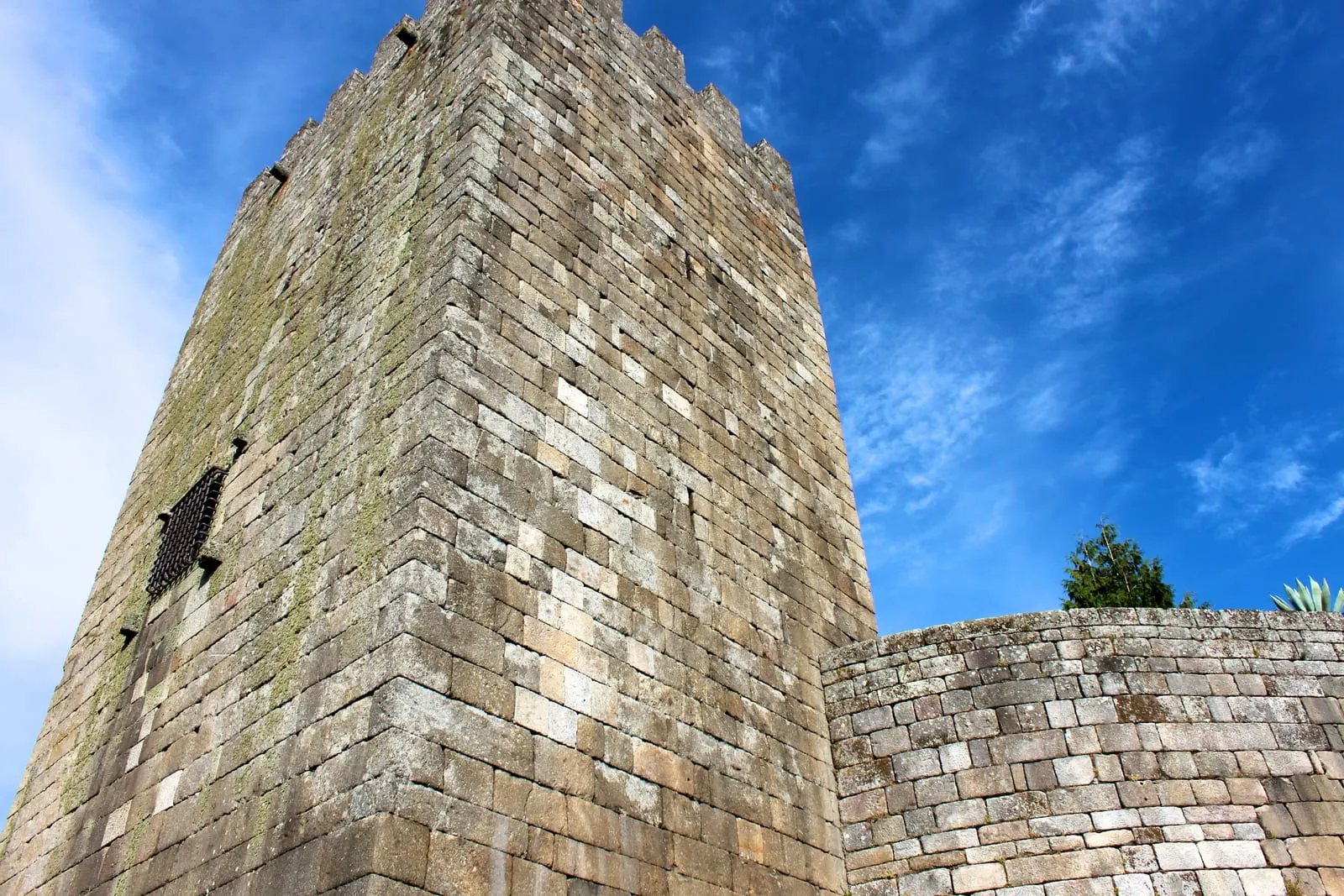
Lamego Castle and vaulted medieval cistern: keep tower, town walls and Memory Centre opened in 2013. National Monument (1910; cistern in 1951).
- Location
- Lamego, Viseu
- Built
- Séculos XII–XIII (torre de menagem e cisterna)
Lamego Castle occupies the highest point of the city, at about 543 metres above sea level, according to the Municipal Council. Around it extends the Castle Quarter, the former walled borough. The classified complex has two main elements: the castle proper, dominated by a square keep, and a vaulted medieval cistern, considered one of the finest of its kind in Portugal. It is a good starting point for exploring Lamego, before descending to the Cathedral and the centre.
Origins: from a Leonese outpost to a Portuguese castle
The national register of Cultural Heritage, I.P. describes Lamego as an important strategic centre since at least the Early Middle Ages. The territory bears traces of Asturian-Leonese settlement from the late 9th and early 10th centuries. The first documentary mention is later: in the mid-11th century, Fernando Magno (Ferdinand the Great) conquered the city during his campaign in the Beiras. The military works carried out then left no significant traces.
The Municipal Council notes that many authors attribute the first castle to the Muslims, before the founding of the kingdom. The national register places the construction of the present castle in the 12th century, already under Portuguese rule. Tradition assigns the keep and the general layout of the citadel to the mid-century. The register admits, however, that the tower may already be Gothic, since it stands at one end of the enclosure and plays an active role in defending the walls. The Council dates the tower to the 12th century and the cistern to the 13th century.
The keep and the parade ground
The keep has a square plan, three storeys and a raised doorway at the level of the second floor. According to the Municipal Council, it stands about twenty metres high. Some arrow slits were widened in the 16th century and turned into windows, by order of D. Francisco Coutinho, last Count of Marialva, perhaps to make the tower habitable.
The parade ground is an irregular hexagon. The wall, with a perimeter of about ninety metres, has a wall-walk, reached by a stair on the north side. The main entrance faces east. Between 1939 and 1940, during the centenary celebrations of the Foundation and the Restoration, the castle was restored. The bell openings and bells at the top of the tower were then removed, and the tower received its present battlements.
The town walls
The defensive system was extended with a second line of walls, protecting the early settlement. According to the national register, it was built over the 13th century and perhaps into the 14th century. The Porta da Vila, also called Porta dos Figos or dos Fogos, and also Porta do Aguião, has a pointed arch between two large square towers, a solution typical of the time of King D. Dinis. It led to the old Rua Direita, the main axis within the walls, which ran to the Porta do Sol, facing south and also Gothic.
Near the Porta dos Figos, the Municipal Council installed an Archaeological Centre. It displays traces of Roman and Suevic-Visigothic occupation, a cemetery from the 9th to 11th centuries, and the 12th–13th century wall that succeeded them.
The cistern
The cistern is the most distinctive element of the complex. It lies within the town walls, beside a stretch of wall, but outside the castle’s parade ground. The 1951 Decree places it about 120 metres from the castle. It is built of large ashlar blocks, with many mason’s marks. The vault is supported by four pointed arches, and entry is through a side door with a stair linked to the wall. The Municipal Council gives its dimensions as about twenty metres long and ten wide. It also cites the former Directorate-General for Buildings and National Monuments, which considered it “one of the best examples of cisterns in Portuguese castles”.
In November 2013, after requalification works, the cistern reopened as a Memory Centre. Images, texts and a sound design projected onto the stones evoke eight centuries of the city’s everyday sounds: the bell, the rooster, the mason, the town crier, the procession.
Decline and classification
Once its military function was lost, the castle was progressively dismantled. The national register notes that the Council allowed houses to be built against the walls in 1824 and a tower to be demolished for its stone in 1834. The Tower House, to the north, served as the seat of the Council until 1834 and is now used by the Portuguese Scouts Corps, according to the municipality.
The castle has been a National Monument since the Decree of 16 June 1910, published in the Diário do Governo No. 136, of 23 June 1910. Decree No. 38 491, of 6 November 1951, classified the cistern as a national monument together with the castle. In the national register, the complex is now designated “Lamego Castle and cistern”. The register states that the complex lies within the protection zone associated with the Alto Douro Wine Region. This does not make the castle a component of the property inscribed on the World Heritage List.
Planning the visit
The castle is reached on foot, through the streets of the Castle Quarter. The cistern is on Rua da Cisterna and the castle on Rua do Castelo. When consulted on 5 November 2026, the municipal page on the castle and cistern did not publish opening hours or prices. Please confirm visiting conditions with the Municipal Council of Lamego before going.
A visit can be completed with the Cathedral, the Museu de Lamego and the Sanctuary of Nossa Senhora dos Remédios. For other fortresses in the North, see the castles of Portugal and the Norte region.
Photograph by Nmmacedo, of 12 September 2010. Original on Wikimedia Commons, under CC BY-SA 3.0; resized and compressed for the web, without altering the composition.
Frequently asked questions
- What is the cistern of Lamego Castle?
- It is a vaulted medieval reservoir, about 20 metres long and 10 wide, supported by pointed arches. It lies within the town walls, about 120 metres from the castle. It reopened in November 2013 as a Memory Centre, with projections and sound.
- How old is the castle?
- The Municipal Council dates the keep to the 12th century and the cistern to the 13th century. The national register places the start of the present castle in the 12th century, already under Portuguese rule, but admits that the tower may be Gothic, given its position at one end of the walls.
- How is it classified?
- The castle has been a National Monument since the Decree of 16 June 1910. Decree No. 38 491, of 6 November 1951, added the cistern, located beside a stretch of wall about 120 metres from the castle.
- Is the castle part of the Alto Douro Wine Region?
- Not as a component of the inscribed property. The national register states that the castle lies within the protection zone associated with the Alto Douro Wine Region, which is different from being part of the UNESCO-listed property.
Sources
- Património Cultural, I.P. — Castelo de Lamego e cisterna (70699)
- Património Cultural, I.P. — Atlas do Património Classificado, Castelo de Lamego e cisterna (NINV 4272)
- Diário do Governo — Decreto de 16 de junho de 1910 (n.º 136, 23-06-1910)
- Diário do Governo — Decreto n.º 38 491, de 6 de novembro de 1951 (I Série, n.º 230)
- Câmara Municipal de Lamego — Castelo e Cisterna
- Câmara Municipal de Lamego — Núcleo Arqueológico da Porta dos Figos
- Wikidata — Castelo de Lamego (Q5049783)
Keep exploring
Heritage nearby
More places to discover from here. Approximate straight-line distances, within 50 km.