Monuments
Grijó Monastery
Monastery of São Salvador de Grijó, in Vila Nova de Gaia: a house of Augustinian Canons Regular with a Mannerist church and cloister.
- Location
- Grijó, Vila Nova de Gaia, Porto
- Built
- 1574–1629 (igreja maneirista)
- Style
- Maneirismo
The Grijó Monastery, also known as the Monastery of São Salvador de Grijó, is a former cenobitic house of the Augustinian Canons Regular located in the village of Grijó, in the municipality of Vila Nova de Gaia, district of Porto. Its origins go back to the beginning of the 10th century — tradition points to a foundation in 922 by two clerics, Guterre and Ausindo Soares — but the complex that survives today results chiefly from the great reconstruction campaign begun at the end of the 16th century, which made it one of the most remarkable examples of Mannerist architecture in northern Portugal.
History and foundation
Following its early medieval foundation, the community adopted the Rule of Saint Augustine and, in 1112, moved to its present site, where the church of the new monastery was consecrated in 1235. Throughout the Middle Ages, Grijó established itself as an important regular canons’ house in the region between the Douro and the Vouga, benefiting from royal and seigneurial donations. At the beginning of the 16th century the convent was in ruins, which prompted, in 1535, an attempt to transfer the community to Serra de São Nicolau, in Gaia; the dispute between the two houses was only resolved in 1566, when Pope Pius V separated them definitively.
The reconstruction of the building then took place on the original site. Work on the new church began in 1574, under the priorate of D. Pedro do Salvador, according to a design attributed to Francisco Velásquez, at that time master builder of the Cathedral of Miranda do Douro. The undertaking extended through the first half of the 17th century, with the choir vault completed in 1629.
Mannerist church and cloister
The church façade presents a tabernacle-type model that emphasises verticality and the superimposition of architectural orders, in a characteristically Mannerist ambiguity. The interior unfolds as a single nave covered by a coffered vault, with intercommunicating side chapels furnished with carved altarpieces; the triumphal arch is flanked by Corinthian pilasters and crowned by a decorated entablature. This vocabulary places the church within the language of Mannerism in Portugal, close to the so-called plain architecture (arquitetura chã) disseminated throughout the Porto region.
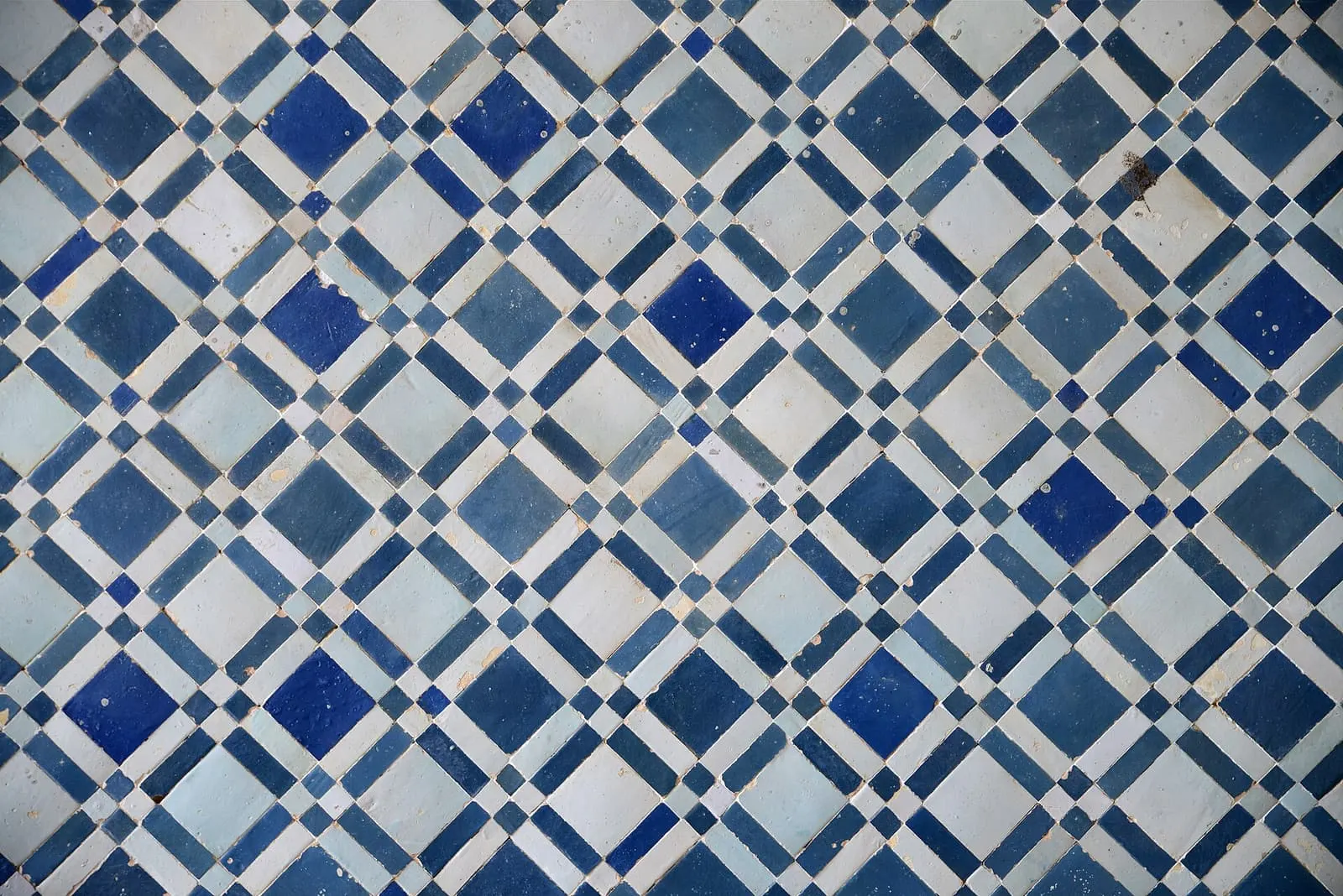
Adjoining the church rises the cloister, square in plan and of two levels — the lower in the Ionic order and the upper in the Corinthian order — completed at the turn of the 16th century. It is lined with polychrome azulejo panels depicting apostles and Doctors of the Church, and at its centre it preserves a fountain in Flemish taste adorned with masks and scrollwork motifs. Beside the church stands also the Gothic tomb of D. Rodrigo Sanches, son of D. Sancho I, with a recumbent effigy produced in Coimbra workshops and considered one of the oldest Portuguese funerary monuments of this type.
Classification and visits
The tomb of D. Rodrigo Sanches has been classified as a National Monument since 1910, while the monastic complex was classified as a Property of Public Interest in 1938. Grijó is today included in the regional routes of monastic heritage, alongside houses such as the Paço de Sousa Monastery, and it is also a waypoint on the Portuguese Way of Saint James. Together with other monasteries in the North, it bears witness to the long presence of the regular canons and to the artistic renewal carried out in the 16th and 17th centuries.
Frequently asked questions
- Where is Grijó Monastery located?
- It lies in the village of Grijó, in the parish of Grijó e Sermonde, in the municipality of Vila Nova de Gaia, district of Porto, south of the city of Porto.
- To which religious order did Grijó Monastery belong?
- It belonged to the Order of Augustinian Canons Regular, a rule the community is said to have adopted as early as the 10th century.
- Who is buried in Grijó Monastery?
- It houses the tomb of D. Rodrigo Sanches, son of D. Sancho I, with a 13th-century recumbent effigy, classified as a National Monument since 1910.
Sources
Keep exploring
Heritage nearby
More places to discover from here. Approximate straight-line distances, within 50 km.