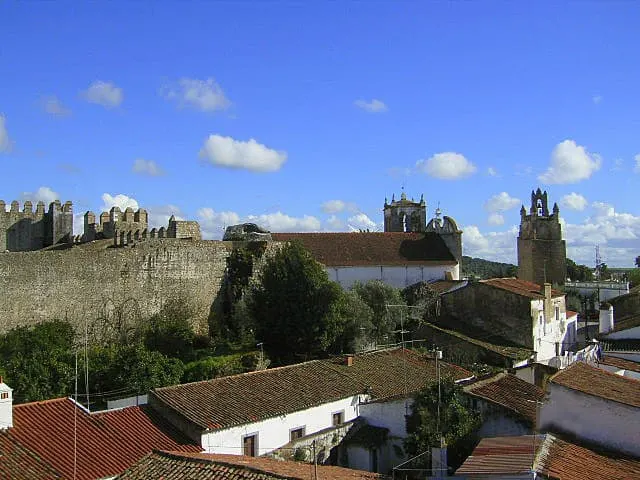
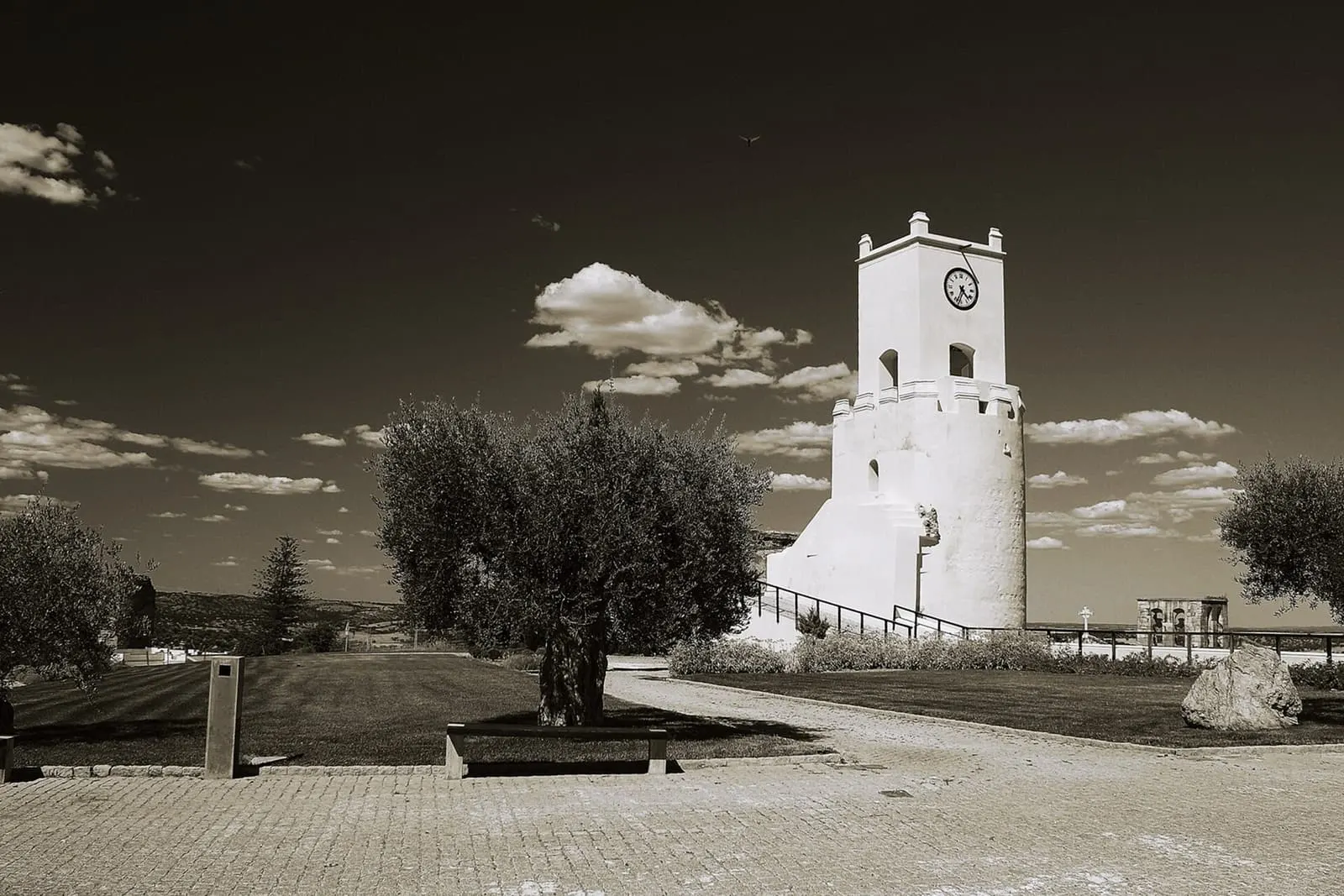
Monuments
Ficalho Palace (Serpa)
Palácio Ficalho in Serpa, a Melo family manor built against the town walls. Seventeenth-century rooms, a garden, National Monument since 2007; by appointment.
- Location
- Serpa, Beja
- Built
- final do século XVI / século XVII (datação segundo as fontes)
- Style
- Maneirista / arquitetura chã
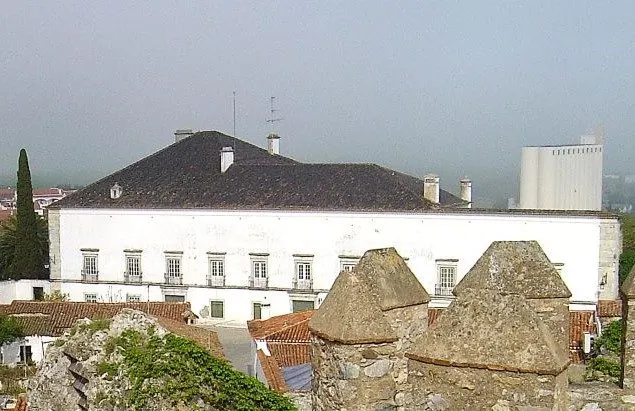
The Palácio Ficalho, also known as the Casa do Castelo or Palace of the Counts of Ficalho, is a noble residence leaning against the medieval walls of Serpa. On its eastern side it presents a long white façade of aligned windows; on its western side it rises above the curtain wall, incorporating two towers. It still belongs to the family that built it, the Melo, and since 2021 it has opened for guided visits.
The Melo, alcaides of Serpa
The classification decree defines the palace as one of the most important noble houses of Serpa, evoking the family of the town’s alcaides in the early modern period, the Melo, an “unavoidable lineage” in the history of eastern Alentejo between the sixteenth and twentieth centuries. According to the decree, it was commissioned by D. Francisco de Melo, lord of Ficalho, at the end of the sixteenth century, and substantially remodelled in the seventeenth century. At the close of that century the bishop of Guarda, D. Martim Afonso de Melo, lived there.
The sources differ on dating. The palace’s official page describes a noble house of the second half of the seventeenth century, with the design attributed to the architect Mateus do Couto, Sobrinho; the 2021 news item on the reopening attributes its construction to the brothers Pedro and Martim Afonso de Mello in that period, on a house already existing within the walls in the fifteenth century. The most cautious reading is that the house visible today results from seventeenth-century work on earlier structures, in a process still to be clarified.
Architecture and interiors
The decree describes a Mannerist ensemble of relative quality, with sober and austere aesthetic values, and a long façade of rectangular windows in symmetrical succession. The house makes use of two towers of the medieval enclosure, which makes it an essential element for understanding the urban evolution of Serpa. The official page places it within the so-called arquitetura chã, derived from Italian Mannerism, and speaks of an architecture that is monumental yet restrained, designed to shelter from heat and light.
Inside, the decree highlights the Archeiros and Espanhóis rooms, which preserve seventeenth-century artistic elements, in particular a series of paintings alluding to hunting, an activity the family practised in the region, and some seventeenth-century tile panels. For the general context of these coverings, see azulejo.
The garden and the water
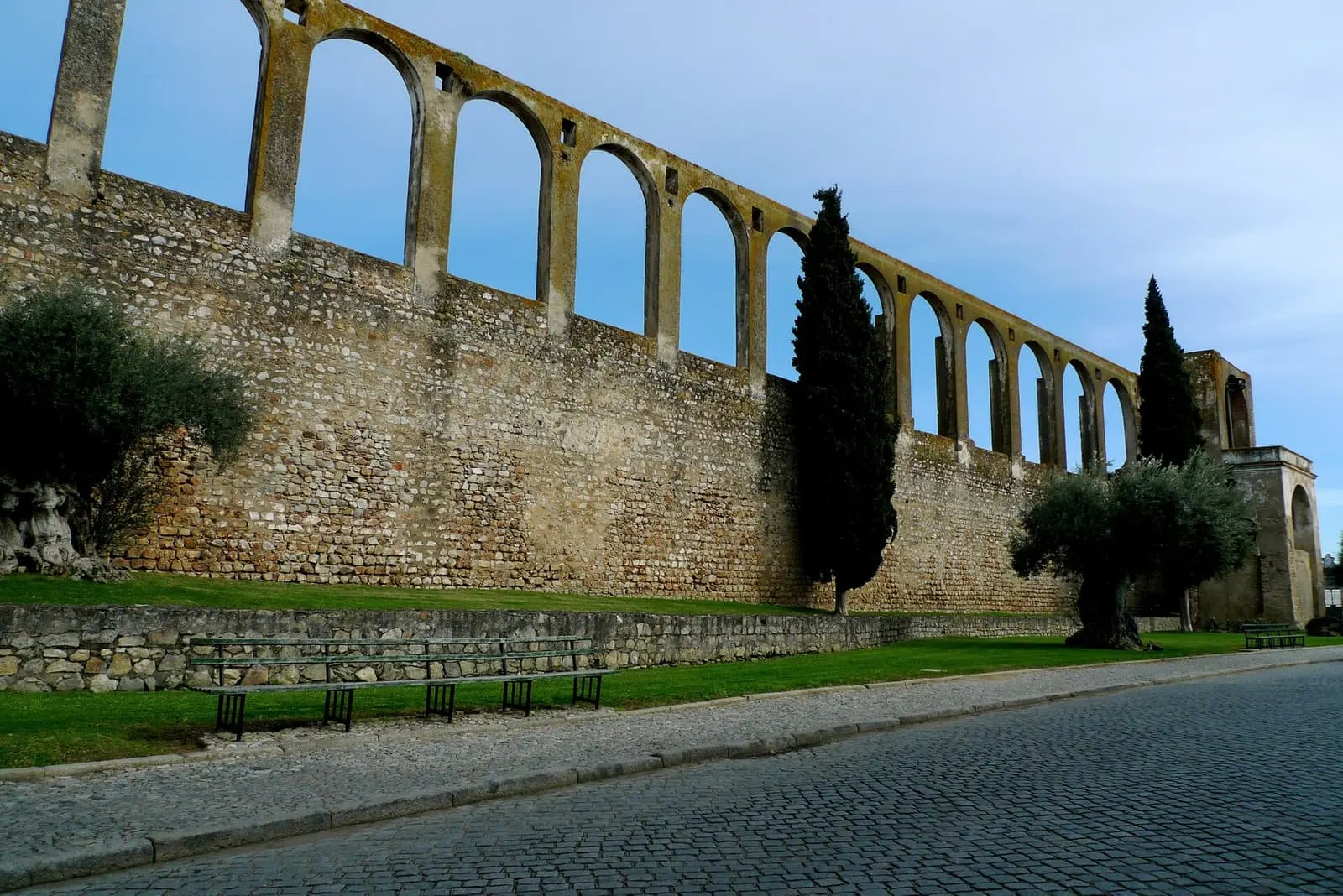
The garden, now laid out following an intervention from the 1950s carried out by the last marchioness of Ficalho and by the forestry engineer José Pulido Garcia, from Serpa, consists of a grove and an orange orchard enclosed by box hedges and some cypresses. Water comes from a noria installed in one of the wall towers and reaches the palace by an aqueduct built solely to supply it, a feature the palace regards as its most emblematic characteristic; the decree also mentions the well and other elements of the water supply system. The route of the aqueduct and the noria is described on the page of the Castelo de Serpa. The family itself acknowledges that the garden’s history remains to be written. See also jardins históricos.
Damage, restoration and classification
The decree recalls that the property played an important role in the liberal wars of the first half of the nineteenth century and was one of the most damaged heritage ensembles in the region, losing part of its collections and documentary holdings. Partial restoration began in 1946, on the initiative of António Martim de Melo; the official page indicates works between 1946 and 1973, and the intervention was honoured in 1984 by the Institut International des Châteaux Historiques.
The palace was classified as a National Monument by Decree No. 6/2007, published in the Diário da República, 1st series, No. 78, of 20 April 2007. The special protection zone was to be set by ordinance once that of the intramural core of the town of Serpa is defined. The property is privately owned.
Visiting
The family’s opening project began in 2021, with guided visits by appointment. When consulted on 5 November 2026, the official page indicated that the visits include the historic area of the house, the garden and part of the wall, are conducted in the company of the current owner, last 60 minutes and require booking at least 48 hours in advance. The prices given were 7.50 euros for adults, 4.00 euros for children aged 5 to 12, and a 25% discount for groups of more than ten people.
The address is Largo dos Condes de Ficalho, s/n, 7830-451 Serpa; bookings can be made by telephone (+351 926 241 073), by email ([email protected]) or through the form on the palace’s website. The website also presents accommodation in the palace, a service distinct from the visit. For a complete itinerary in the town, combine with the Castelo de Serpa and the text on the Alentejo; the context of noble houses is in solares e casas senhoriais.
Photograph by Vitor Oliveira, dated 20 April 2006. Original on Wikimedia Commons, under CC BY-SA 4.0; resized and compressed for the web, without altering the composition.
Frequently asked questions
- Who commissioned the Palácio Ficalho?
- The classification decree attributes it to D. Francisco de Melo, lord of Ficalho, at the end of the sixteenth century, with important remodelling in the seventeenth century. The palace's official page places the seventeenth-century house in the second half of the seventeenth century and attributes the design to Mateus do Couto, Sobrinho.
- Is the Palácio Ficalho a National Monument?
- Yes. It was classified by Decree No. 6/2007, published in the Diário da República, 1st series, No. 78, of 20 April 2007.
- Can it be visited?
- Yes, through guided visits by appointment. When consulted on 5 November 2026, the official page indicated a duration of 60 minutes, booking at least 48 hours in advance and an adult ticket at 7.50 euros.
- Is the palace publicly owned?
- No. It remains in the possession of the Mello family, which began a project to open it to the public in 2021.
Sources
- Património Cultural, I.P. — Atlas do Património Classificado: Palácio Ficalho (NINV 1183)
- Diário da República — Decreto n.º 6/2007, de 20 de abril
- Palácio Ficalho — A Casa
- Palácio Ficalho — O Jardim
- Palácio Ficalho — Visitas guiadas
- Palácio Ficalho — Contactos
- Echo Boomer — Palácio Ficalho abre renovado ao público ainda este mês (17-05-2021)
- Wikidata — Palácio Ficalho (Q10344068)
Keep exploring
Heritage nearby
More places to discover from here. Approximate straight-line distances, within 50 km.