Monuments
Chapel of São Pedro de Balsemão
Lamego's Chapel of São Pedro de Balsemão: debated early medieval origin (6th–7th or 9th–10th century), 14th-century sarcophagus, 17th-century renovation.
- Location
- Balsemão, Lamego, Viseu
- Built
- Origem altimedieval com datação debatida (séc. VI–VII ou IX–X); reforma no séc. XVII
The Chapel of São Pedro de Balsemão stands in the locality of Balsemão, on the outskirts of Lamego. It is considered one of the oldest churches in the country and one of the most difficult to date: scholars are divided between the Visigothic period and the time of the Asturian expansion, and the building visitors see today is, for the most part, a 17th-century reconstruction. This page explains what is known, what is debated and what can be seen.
A monument of disputed chronology
The register of the Património Cultural, I.P. begins by stating that the chapel is «as scientifically relevant as its original chronology and form are problematic». Over the last hundred years, historiography has divided into two proposals: the Visigothic period (6th–7th centuries) and the expansion of the Asturian kingdom (9th–10th centuries). Neither has been confirmed.
For those who favour a Visigothic chronology, the argument rests on a funerary slab dated 588, found in the city, together with the archaic form of the triumphal arch and the basilican plan; an idea repeated by authors such as Schlunk, Fernando de Almeida and Hauschild, according to the register. The opposing proposal comes from Joaquim de Vasconcelos, who, about a hundred years ago, by analogy with the church of São Pedro de Lourosa, dated to 912, argued for the late 9th or the 10th century. It remained in the shadows for a long time and was taken up again by Real, Ferreira de Almeida, Barroca and Teixeira, among others. The evidence invoked includes a clípeo (medallion), an altar foot bearing the traditional Asturian cross, a fragment of a moulded ajimez and roll-shaped imposts decorated with cordiform motifs. The register further notes that the classicism of the forms, evident in the reuse of late antique Corinthian capitals, brings Balsemão closer to Lourosa and other early medieval buildings.
Consensus is far from reached. The register points to two details that complicate the reading: the suggestion of a single rectangular apse, more characteristic of the Visigothic period, and the appearance, on an ashlar block, of the emblem of the counts of Portucale, at the turn of the 12th century. The debate can be compared with that of the chapel of São Frutuoso de Montélios and placed within Visigothic art, Asturian and pre-Romanesque art and Mozarabic art.
A former Roman villa
The site, or a point very close to it, seems to have been occupied by a Roman villa: some inscriptions, a terminus augustalis from the time of Claudius and altars reused as supports are the evidence cited by the register, which refers to the work of Jorge de Alarcão (1990). If a link between the villa and the church is ever confirmed, it will be one more case of the continuity of occupation observed at a considerable number of sites in the country.
From the 14th to the 17th century
In the following centuries the church was profoundly transformed. In the 14th century, the bishop of Porto, D. Afonso Pires, chose it as his funerary chapel and, to that end, is said to have «remade the whole church». Apart from the sarcophagus, now in the middle of the central nave, no clear traces of this reform survive. In 1643, Luís Pinto de Sousa Coutinho incorporated it into his manor house.
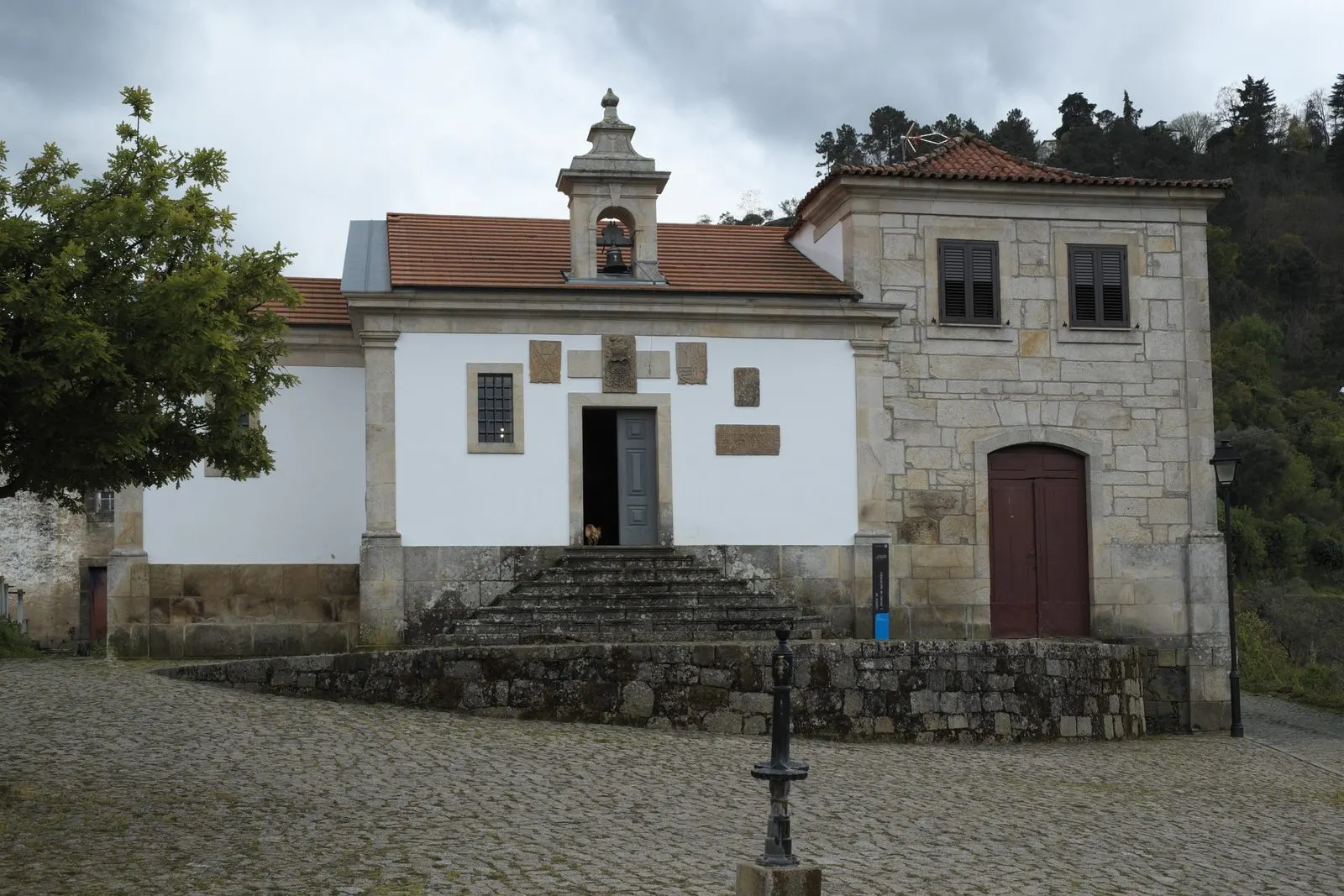
The great reform that gave the chapel its present appearance dates from the 17th century. The west door was closed off, and the south door, monumentalised with some slabs and a staircase, became the main entrance. The chancel and large sections of the nave were rebuilt, so that, as the register summarises, what is recognisable today is a 17th-century building that reused some early medieval elements. This is what the photograph shows: whitewash, stone dressings, staircase and bellcote, and not an intact early medieval church.
What to see
Inside, the register highlights the reused late antique Corinthian capitals and the sarcophagus of Bishop D. Afonso Pires, in the middle of the central nave. The chancel and large sections of the nave are 17th-century reconstructions. According to the page we dedicate to it, the Museu de Lamego holds a collection of wooden sculpture from São Pedro de Balsemão.
Classification
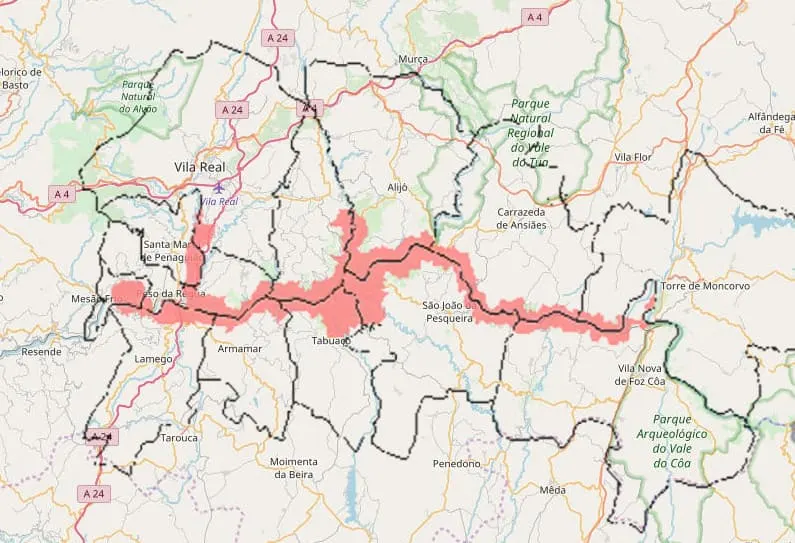
It is a National Monument, classified by Decree No. 7 586 of 8 July 1921 (Diário do Governo, I series, No. 138), which listed as national monuments the castle and walls of Trancoso, the chapel of S. Pedro in Balsemão, «outskirts of Lamego», and the parish church of Santa Marinha de Trevões. The register names the Património Cultural, I.P. as the entity responsible for the property and notes that the chapel falls within the special protection zone of the Alto Douro Wine Region. The register does not list it as part of the property inscribed by UNESCO.
Planning a visit
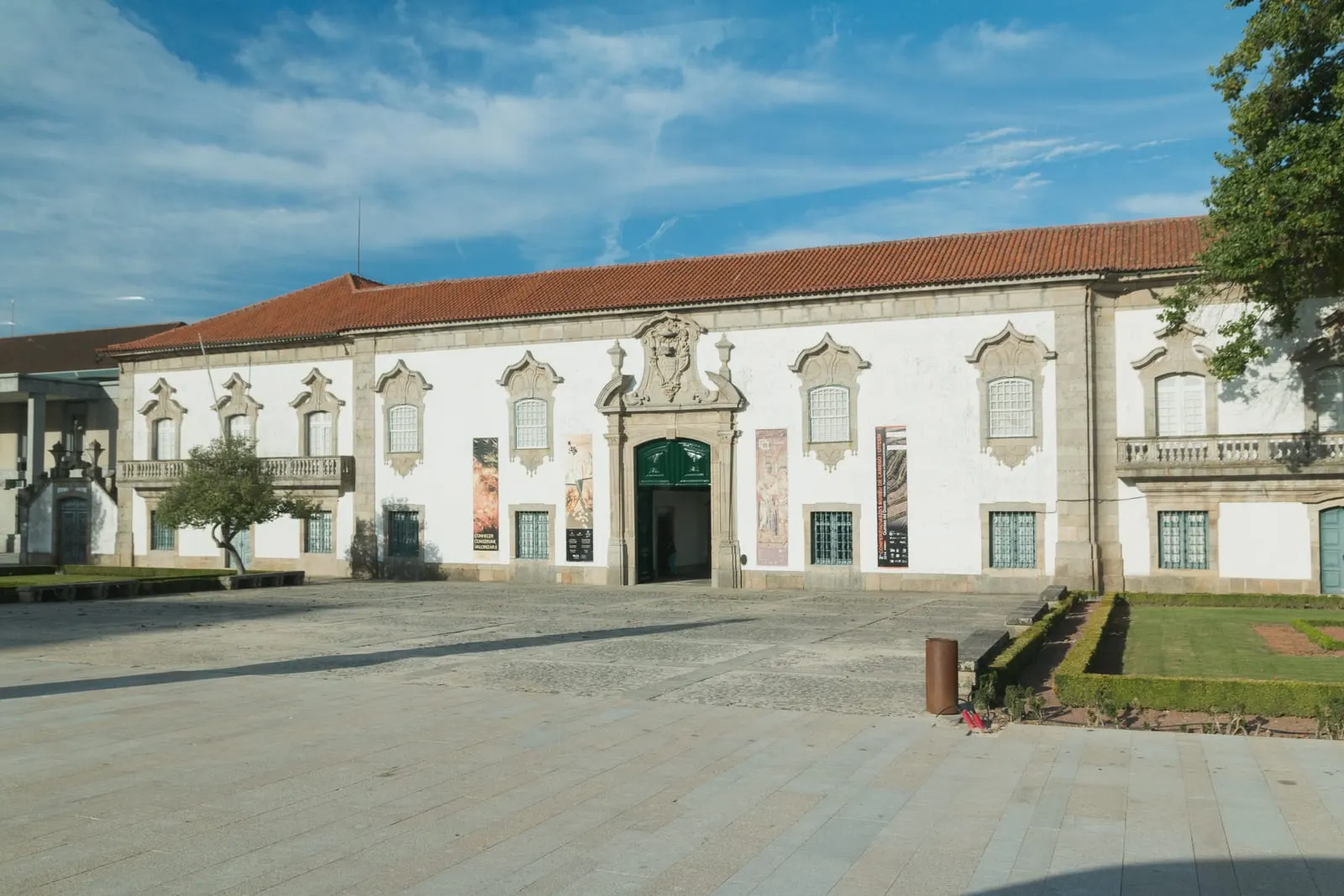
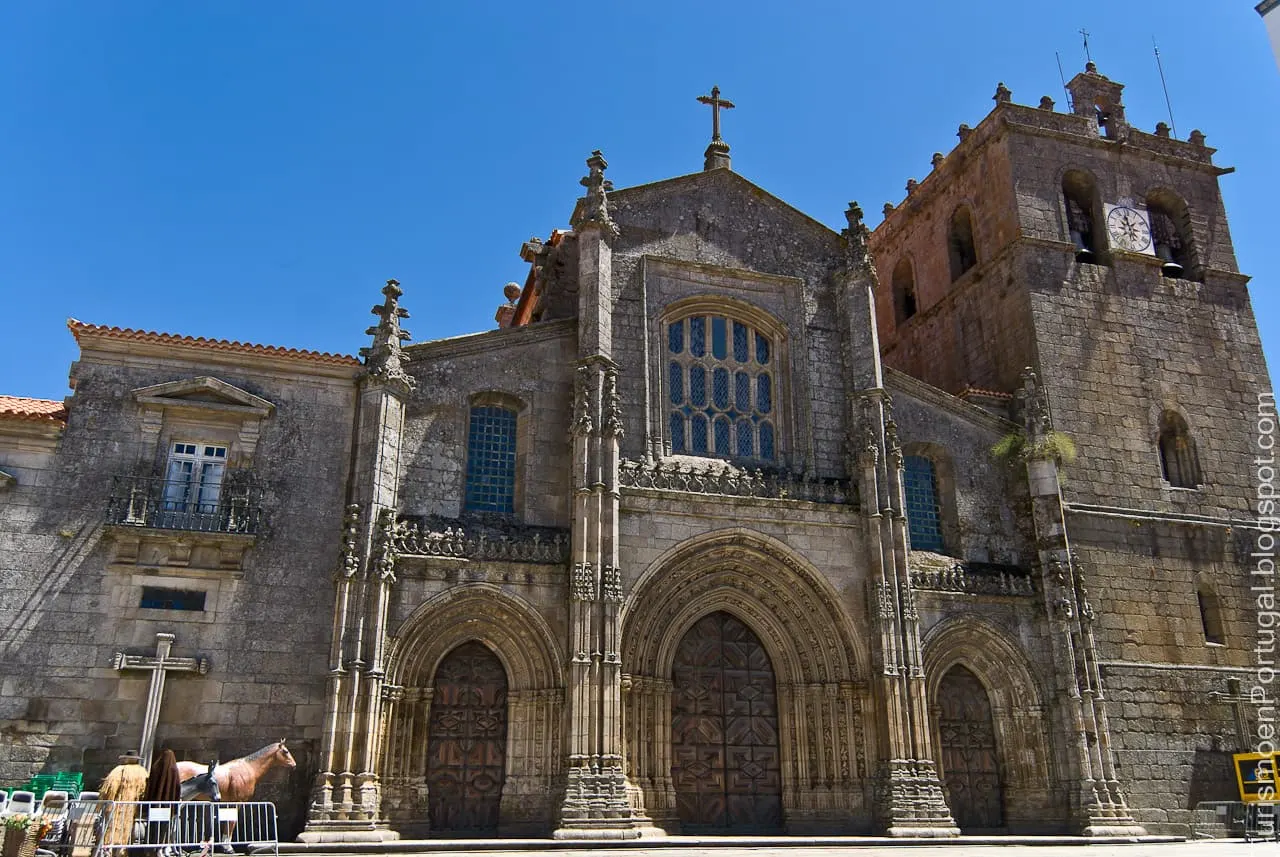
The chapel is in Balsemão, a few kilometres from the centre of Lamego, with access via Rua Cardoso Avelino and Largo do Desterro, according to the address in the register. When consulted on 5 November 2026, we did not find a timetable or price published in an official source that we could access, so we do not give them here. On the same date, the website of the Museu de Lamego indicated that the museum had been closed since 24 May 2025 for requalification works (PRR); please confirm the current status directly. For visiting the chapel, consult the Património Cultural, I.P. (patrimoniocultural.gov.pt) or the Câmara Municipal de Lamego. The Sé de Lamego is a natural complement in the city centre.
Photograph by GFreihalter, 13 April 2016. Original on Wikimedia Commons, under CC BY-SA 3.0; resized and compressed for the web, without altering the composition.
Frequently asked questions
- When was the Chapel of São Pedro de Balsemão built?
- It is not known for certain. The register of the Património Cultural, I.P. states that historiography is divided between the Visigothic period (6th–7th centuries) and the expansion of the Asturian kingdom (9th–10th centuries), and that, to date, neither hypothesis has been confirmed.
- Is the present building the original?
- No. According to the national register, the major reform that gives the building its present appearance dates from the 17th century; the building is 17th-century and reused some early medieval elements.
- What is its classification?
- National Monument, by Decree No. 7 586 of 8 July 1921 (Diário do Governo, I series, No. 138). The register indicates that it falls within the special protection zone of the Alto Douro Wine Region, but not as part of the property inscribed by UNESCO.
- Are there visiting hours?
- When consulted on 5 November 2026, we did not find an official timetable published in a source we could access. Please confirm with the Património Cultural, I.P., which is listed as the managing entity, or with the Câmara Municipal de Lamego.
Sources
- Património Cultural, I.P. — Capela de São Pedro de Balsemão (71135)
- Património Cultural, I.P. — Atlas do Património Classificado e em Vias de Classificação (NINV 4270)
- Diário do Governo — Decreto n.º 7 586, de 8 de julho de 1921 (I série, n.º 138)
- Museu de Lamego — Visitar (aviso de encerramento para obras)
- Wikidata — Capela de São Pedro de Balsemão (Q1601334)
Keep exploring
Heritage nearby
More places to discover from here. Approximate straight-line distances, within 50 km.