Monuments
Arnoia Castle
Castle of Arnoia, in Celorico de Basto: a Romanesque fortress that was the seat of the Land of Basto, with a keep and a cistern. National Monument since 1946.
- Location
- Castelo, Arnoia, Celorico de Basto, Braga
- Built
- sécs. X–XI (primeira fortificação, segundo o registo nacional); estrutura românica dos sécs. XII–XIII
The Castle of Arnoia stands on the summit of a hill above the village of Castelo, in the parish of Arnoia, municipality of Celorico de Basto. For centuries it was the seat of the Land of Basto. Today it is a small and clearly legible castle, with an irregular enclosure, a cistern and a three-storey keep. It is part of the Romanesque Route, along the Tâmega Valley itinerary.
Origins and early centuries
The sources do not agree on the date of foundation. The national register of the Portuguese Cultural Heritage, I.P. states that historiography places its construction between the late 10th and early 11th century. It links the fortress to the defence of the Monastery of São Bento de Arnoia and names Múnio Muniz as its first alcaide. The Romanesque Route mentions a tradition of foundation in the second half of the 10th century, and gives 1064 as the first documentary reference to the fortification. According to the same Route, the Romanesque structure seen today belongs to a second phase of occupation, in the 12th and 13th centuries.
The castle, the Route notes, belongs to the movement of incastellamento that shaped Europe between the 10th and 12th centuries. Its importance lay in being the administrative and military seat of a territory, rather than in its size.
Alcaides, lords and council
After independence, the alcaidaria passed through several noble families. The national register records that, in 1284, King D. Dinis leased the domains and the castle to the residents of Celorico de Basto themselves. He did so after a serious conflict with the alcaide Martim Vasques da Cunha, who had taken the side of the infante D. Afonso against the king. Under D. João I, lordship over the Lands of Basto returned to the Vasques da Cunha family, in 1402.
In King Manuel’s reform of the foral charters, Arnoia received a new foral in 1520 and became a seat of municipal council. The alcaides continued to come from the local nobility, and during the Philippine period the office passed to the Castro family.
Abandonment
The two sources also diverge here. According to the national register, D. João V decreed in 1719 that the seat of the council should move to the place of Freixieiro, renamed Vila Nova do Freixieiro, which gave rise to the present town of Celorico de Basto. The Romanesque Route dates the move to 1717, to the parish of Britelo, where Celorico de Basto stands today. In either case, the loss of the seat hastened the castle’s decline. The Parish Memoirs of 1758 already describe it in ruins.
The memory of the small town of Basto survives in the village of Castelo. The Romanesque Route notes that the pillory, the audience hall and the apothecary mark the old street of the settlement. The Pillory of Castelo has been a Property of Public Interest since 1933, according to the Atlas of Classified Heritage.
What can be seen
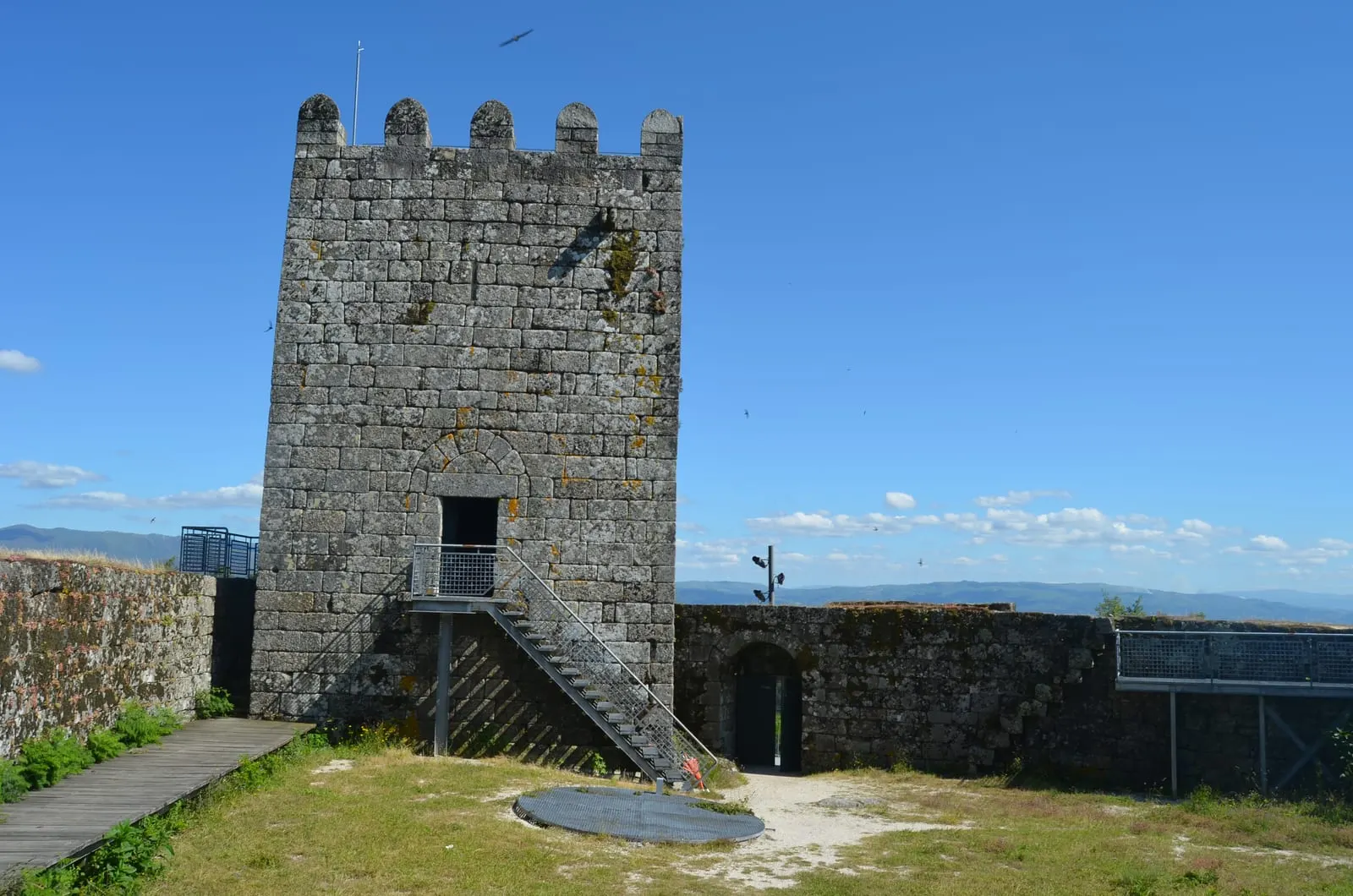
The plan is polygonal and irregular, because the curtain wall follows the unevenness of the ground. The national register describes a stretch of wall with a wall-walk running all the way round and reinforced on the north face by a bastion. In the centre of the parade ground lies the cistern. At one end rises the keep, of square section and topped with merlons. The door, with a straight frame, opens at the top of a flight of steps, and the interior is divided into three floors linked by an internal staircase.
The Romanesque Route highlights four defensive elements: the keep, the square tower, a single door and the cistern. It also notes that the keep’s top floor and battlements were reconstructed in the 20th century. The Route refers to archaeological evidence of occupation of the fortress between the 14th and 16th centuries, and to soundings inside the castle in 2002. By then, according to the Route, the castle was already mainly a symbol of administrative organisation and seigneurial power.
Restoration and management
In the first quarter of the 20th century, the castle was in a very degraded state. The national register places the restoration and consolidation campaigns from 1961 onward. The Romanesque Route’s chronology refers to works by the DGEMN between 1960 and 1963. The Interpretation Centre was installed in 2004, and the castle entered the Romanesque Route in 2010. Works in the surroundings followed in 2014, and conservation work in 2015. In 2020, the State transferred management, enhancement and conservation of the monument to the Municipality of Celorico de Basto. The Municipality carried out further conservation works in 2024.
Classification and protection
The castle is a National Monument under Decree No. 35 532, published in the Diário do Governo, I Series, No. 55, of 15 March 1946. Article 1 of the decree classifies the castle, which is located in the district of Braga and the municipality of Celorico de Basto. The national register does not indicate a special protection zone. The castle is not part of any World Heritage property.
Planning a visit
When consulted on 5 November 2026, the Romanesque Route’s page indicated free access and free entry to the castle. It also warned that the monument is not accessible to visitors with reduced mobility. The national register describes access by the road from Celorico de Basto to Felgueiras: one reaches the village of Castelo and continues on foot to the monument.
The Interpretation Centre of the Castle of Arnoia operates in the village’s former primary school and serves as the information centre of the Romanesque Route. The national register describes an exhibition on the history of the castle and the Land of Basto, with archaeological data, models and audiovisual panels. The Route states that visits to the centre should be arranged through the Interactive Tourist Office of Celorico de Basto. Please check the castle’s page on the Romanesque Route before you go.
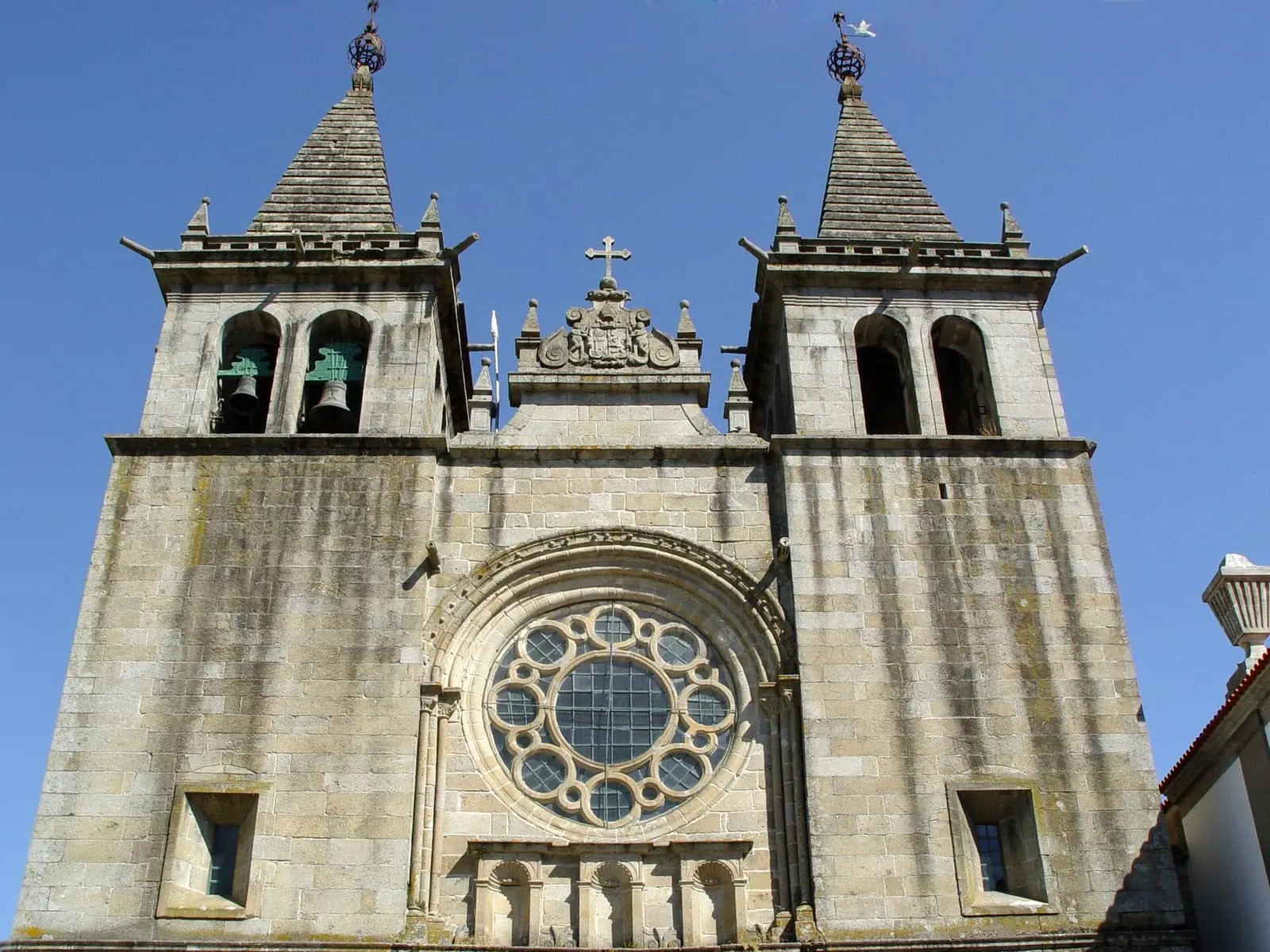
The Monastery of Pombeiro, in Felgueiras, is also part of the Romanesque Route, and the town of Amarante is the nearest gateway by motorway, according to the Route’s access directions. The Castle of Guimarães shows another castle of Entre-Douro-e-Minho with origins in the same period. To continue, see Norte and the network of castles of Portugal.
Photograph by Pedro from Maia (Porto), Portugal, dated 20 June 2020. Original on Wikimedia Commons, under CC BY 2.0; resized and compressed for the web, without altering the composition.
Frequently asked questions
- When was the Castle of Arnoia built?
- The national register of the Portuguese Cultural Heritage, I.P. dates its construction to between the late 10th and early 11th century. The Romanesque Route gives 1064 as the first documentary reference to the fortification and attributes the Romanesque structure visible today to the 12th and 13th centuries.
- What can be seen at the castle?
- An irregular polygonal enclosure with a wall-walk, a bastion on the north face, the cistern in the centre of the parade ground, and a square three-storey keep. The keep's top floor and its battlements were reconstructed in the 20th century.
- Is the Castle of Arnoia classified?
- Yes. It is a National Monument under Decree No. 35 532, published in the Diário do Governo, I Series, No. 55, of 15 March 1946.
- Is there an admission fee?
- When consulted on 5 November 2026, the Romanesque Route indicated free access and free entry to the castle. Visits to the Interpretation Centre, in the village of Castelo, should be arranged through the Interactive Tourist Office of Celorico de Basto.
Sources
- Património Cultural, I.P. — Castelo de Arnóia (70274)
- Património Cultural, I.P. — Atlas do Património Classificado, Castelo de Arnóia (NINV 2240)
- Diário do Governo — Decreto n.º 35 532, de 15 de março de 1946
- Rota do Românico — Castelo de Arnoia
- Rota do Românico — Centro Interpretativo do Castelo de Arnoia
- Wikidata — Castelo de Arnoia (Q5049748)
Keep exploring
Heritage nearby
More places to discover from here. Approximate straight-line distances, within 50 km.