Monuments
Monção Castle
Monção Castle: from the D. Dinis curtain wall to the bastioned 17th-century fortress on the Minho River, with the Salvaterra and Rosal gates. National Monument.
- Location
- Monção, Viana do Castelo
- Built
- Século XIV (cerca de D. Dinis); praça abaluartada a partir de 1656
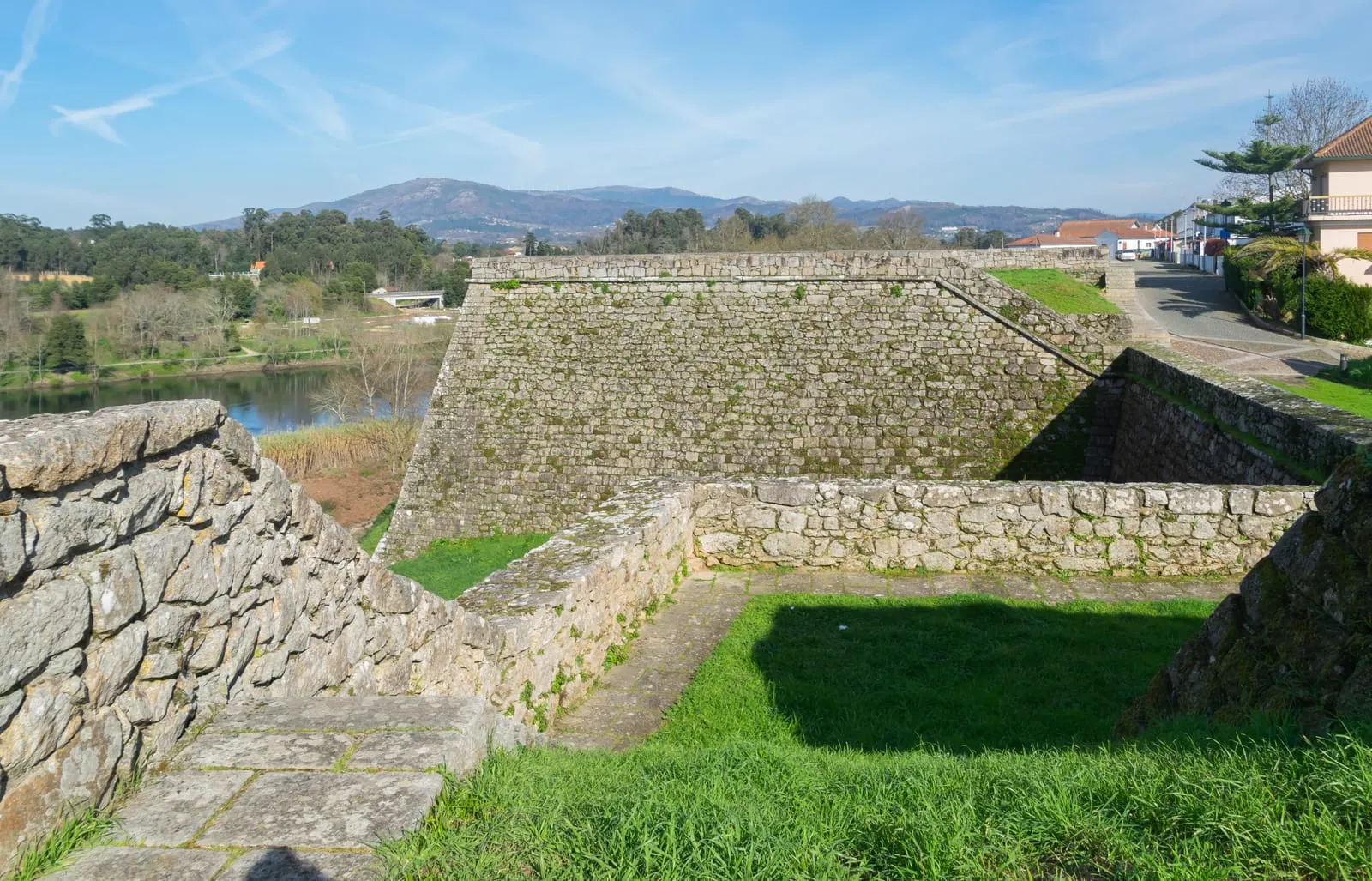
Monção Castle is today, above all, a fortress: a perimeter of low walls and bastions enclosing the historic centre of the town, on the left bank of the Minho River. Across the river, already in Galicia, lies Salvaterra de Miño. Little of the medieval castle survives, but the complex shows well how a frontier town of Alto Minho was fortified first in the Middle Ages and then adapted to the artillery warfare of the 17th century. It is classified as a National Monument under the name Castelo de Monção.
A fortified town in the 13th century
The national register of Cultural Heritage, I.P. considers the origins of Monção obscure. The most accepted hypothesis is that it was a terra reguenga of little importance in the early days of the kingdom. The documents of D. Afonso Henriques for Alto Minho mention the castles of Pena da Rainha, Froião, Valadares and Melgaço, but not Monção.
The town asserted itself later. In the Inquirições of D. Afonso III, in 1258, Monção already appears as a town. Three years later, in 1261, it received a charter (foral). That same year, a reference to the miles de Monçom shows that the settlement was already fortified by the mid-13th century. At the beginning of the 14th century it received a fair charter and construction began on the parish church.
The castle of D. Dinis
The typology of the medieval castle is clearly Gothic. The register describes an enclosure of oval, almost circular outline, with the keep associated with one of the gates and streets laid out in an orthogonal grid. The memory recorded by Rui de Pina in the early 16th century attributed to D. Dinis the construction or complete reform of the fortress. The Câmara Municipal dates the work to 1306, in a period of prolonged war with Castile, and describes a castle with a keep and a curtain wall surrounding the town.
The enclosure had only two gates. The main one, defended by the tower, opened onto the fair square. The other, smaller, led to the riverside area. The straight street linked the two entrances and the parish church. In the 15th century, perhaps during the reign of D. João I, a couraça was added: parallel walls protecting the approaches to the interior.
The Restoration fortress
The great military reform of Monção took place during the Restoration Wars. According to the national register, work began in 1656, to a design by Miguel de l’Escole and under the direction of master builder João Alves do Rego. They were not enough to halt the Spanish attack of 1659. The new fortress reused and transformed part of the medieval walls, especially on the river front. In essence, however, it was a new project, conceived to enclose a town that had long since outgrown the medieval core.
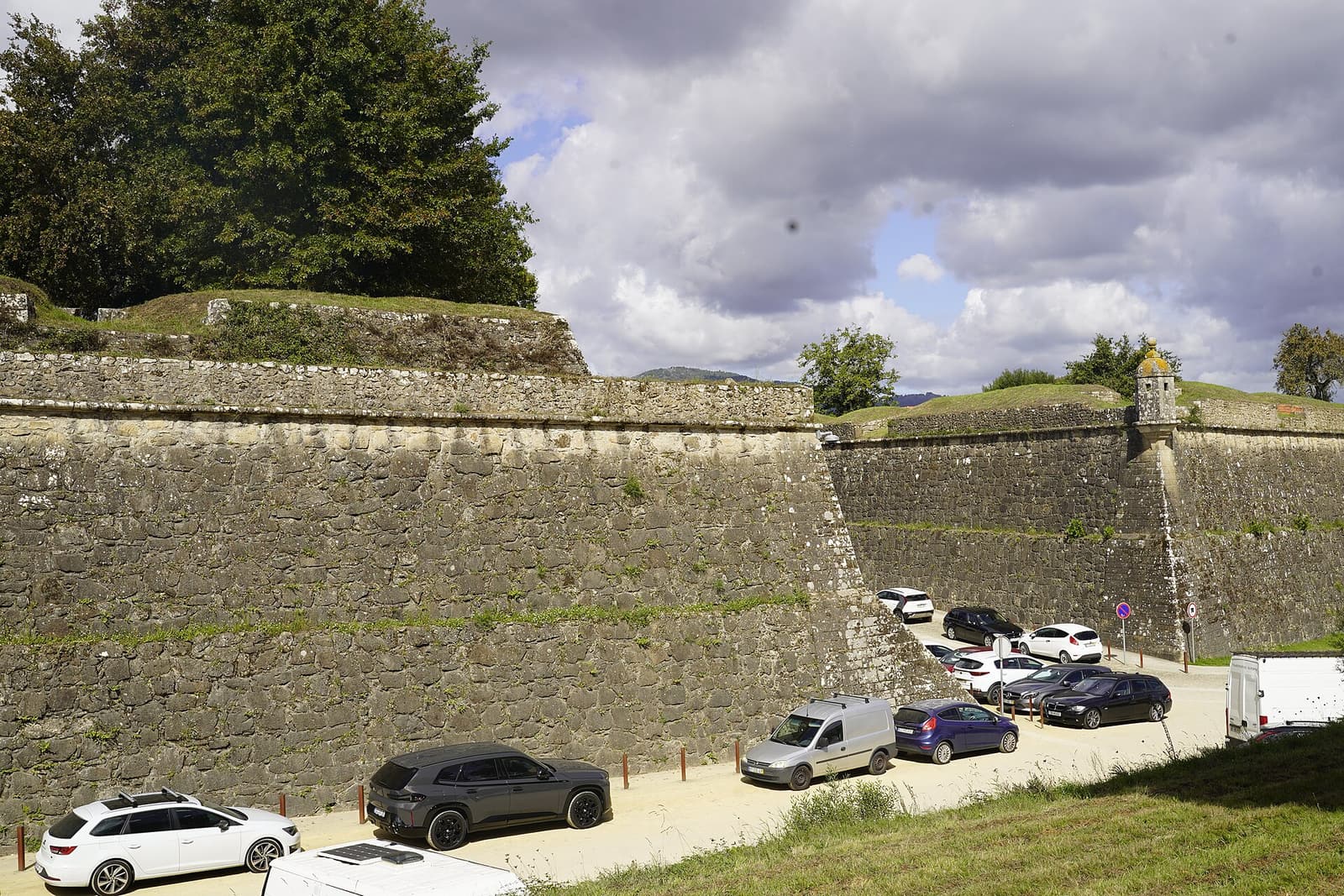
The new perimeter had nine bastions, most of them arrowhead-shaped, and five gates. The most notable is the Porta de Salvaterra, bearing the national arms. Inside the walls remained wide open spaces, useful for moving troops, and a new centre: the rossio, where the pillory and the Misericórdia church were later erected. This logic of bastioned fortification is the same as at Valença, downriver. It is explained in bastioned fortresses.
What can be seen today
The Câmara Municipal summarises the current state: of the castle of D. Dinis only a stretch beside the Néris promenade is visible. Nearby stands the paiol (powder magazine), covered with slabs and surrounded by a high wall. The Porta de Salvaterra and the Porta do Rosal survive. The walk along the perimeter of the walls offers views over the river, the riverside area, the thermal park and the Galician bank.
Deu-la-Deu Martins
The figure most associated with the walls is Deu-la-Deu Martins, the legendary heroine of the town. According to the Câmara Municipal, she was the wife of the captain-major Vasco Gomes de Abreu and defended Monção against the Castilians in the 14th century, during the wars between D. Fernando and D. Henrique of Castile. Her memory is present at several points in the historic centre. In 1869, the coat of arms of Monção bearing her figure was placed on the Danaide fountain, dating from 1837, in Praça Deu-la-Deu. Since 2008, a sculpture by João Cutileiro at the Néris lookout has depicted her leaning over the river. The parish church has a chapel in her memory.
Classification and protection
Monção Castle is a National Monument under the Decree of 16 June 1910, published in the Diário do Governo no. 136, of 23 June 1910. The Atlas of Classified Heritage does not indicate a special protection zone of its own. It is not part of any UNESCO inscription.
Preparing the visit
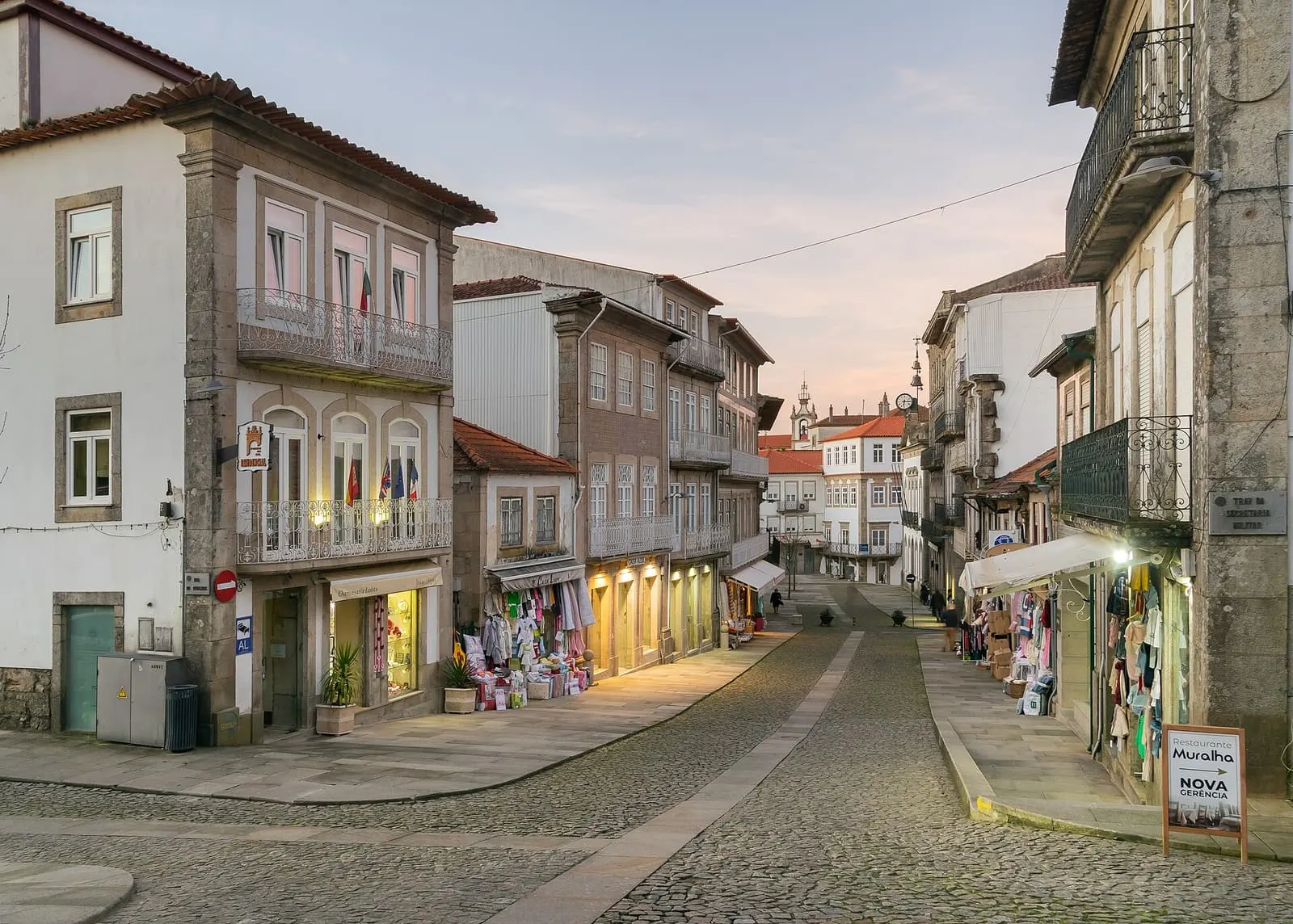
The walls form part of the town’s public space and are walked on foot. We found no indication of opening hours or tickets for the complex. The municipal itinerary of the historic centre proposes a route linking the Interactive Tourism Office, the Alvarinho Museum, Praça Deu-la-Deu, the Cutileiro sculpture and the parish church. When consulted on 5 November 2026, this itinerary was available on the Câmara Municipal de Monção website.
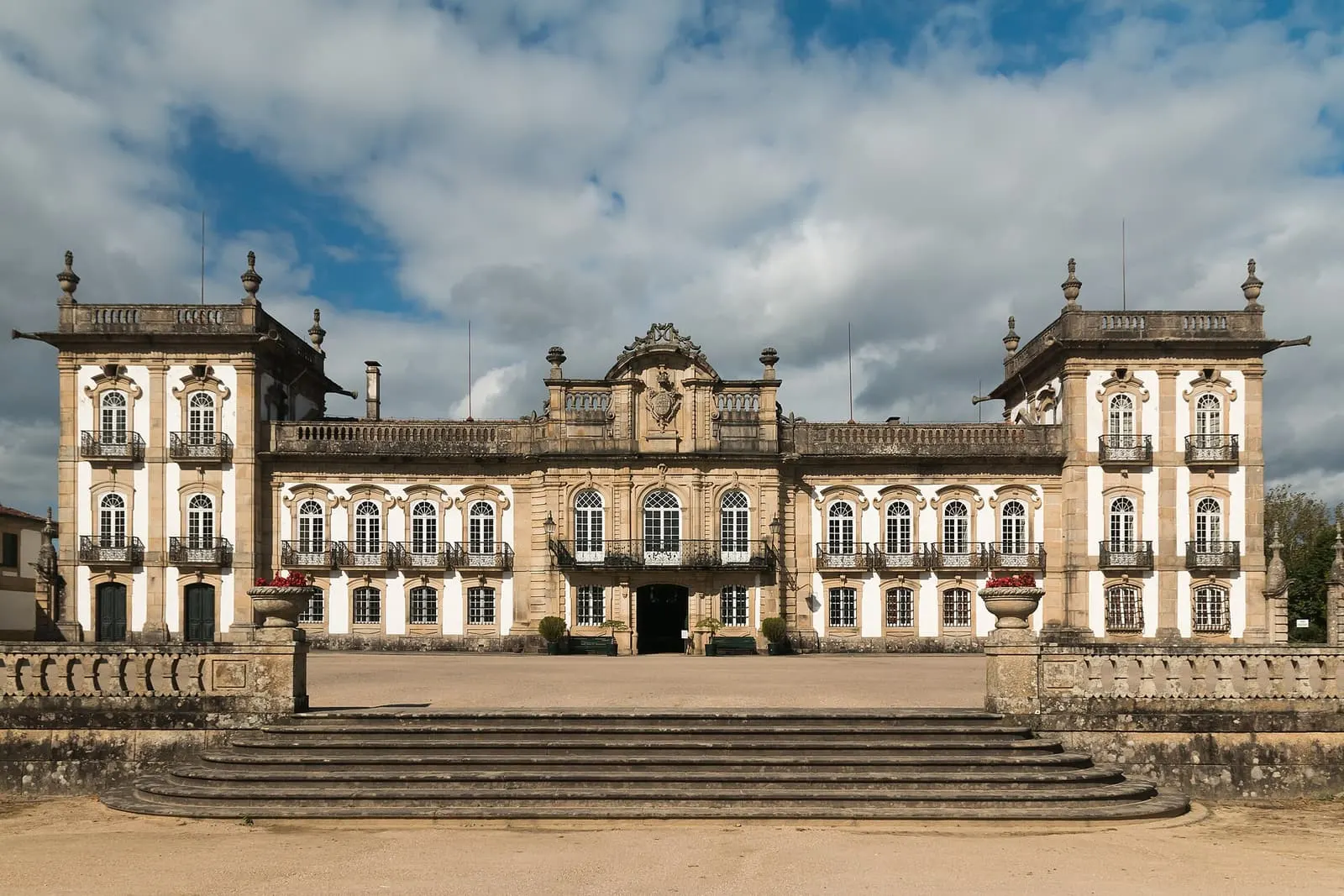
Monção gives its name, together with Melgaço, to a sub-region of Vinho Verde known for Alvarinho, and the visit can continue at the Palácio da Brejoeira. For other examples of the Minho and Trás-os-Montes frontier, see the castles of Portugal and the Norte region.
Photograph by Krzysztof Golik, dated 19 February 2020. Original on Wikimedia Commons, under CC BY-SA 4.0; resized and compressed for the web, without altering the composition.
Frequently asked questions
- What remains of the medieval castle of Monção?
- Little. According to the Câmara Municipal, only a stretch beside the Néris promenade is visible from the castle of D. Dinis. What one walks today is mainly the bastioned fortress built from 1656, which reused part of the medieval walls.
- Who built the bastioned fortress?
- According to the national register, work began in 1656, during the Restoration Wars, to a design by Miguel de l'Escole and under the direction of master builder João Alves do Rego. The new perimeter had nine bastions and five gates.
- Is Monção Castle classified?
- Yes. It is a National Monument under the Decree of 16 June 1910, published in the Diário do Governo no. 136, of 23 June 1910.
- Who was Deu-la-Deu Martins?
- She is the legendary heroine of Monção. According to the Câmara Municipal, she was the wife of the captain-major Vasco Gomes de Abreu and defended the town against the Castilians in the 14th century, during the wars between D. Fernando and D. Henrique of Castile. Her figure appears on the town's coat of arms and in a sculpture by João Cutileiro.
Sources
- Património Cultural, I.P. — Castelo de Monção (70678)
- Património Cultural, I.P. — Atlas do Património Classificado, Castelo de Monção (NINV 4133)
- Diário do Governo — Decreto de 16 de junho de 1910 (n.º 136, 23-06-1910)
- Câmara Municipal de Monção — Fortaleza de Monção
- Câmara Municipal de Monção — Praça Deu-la-Deu
- Câmara Municipal de Monção — Escultura a Deu-la-Deu Martins
- Câmara Municipal de Monção — Estátua da Danaide/Brasão Deu-la-Deu Martins
- Câmara Municipal de Monção — Roteiro Centro Histórico de Monção
- Wikidata — Castelo de Monção (Q5049797)
Keep exploring
Heritage nearby
More places to discover from here. Approximate straight-line distances, within 50 km.