Monuments
Pinhel Castle
A National Monument, Pinhel Castle has a six-gate oval wall, a 1189 foral and two towers with machicolations and Manueline windows. Interpretive centre.
- Location
- Pinhel, Guarda
- Built
- Finais do séc. XII – séc. XIV; obras manuelinas c. 1510 e da Guerra da Restauração
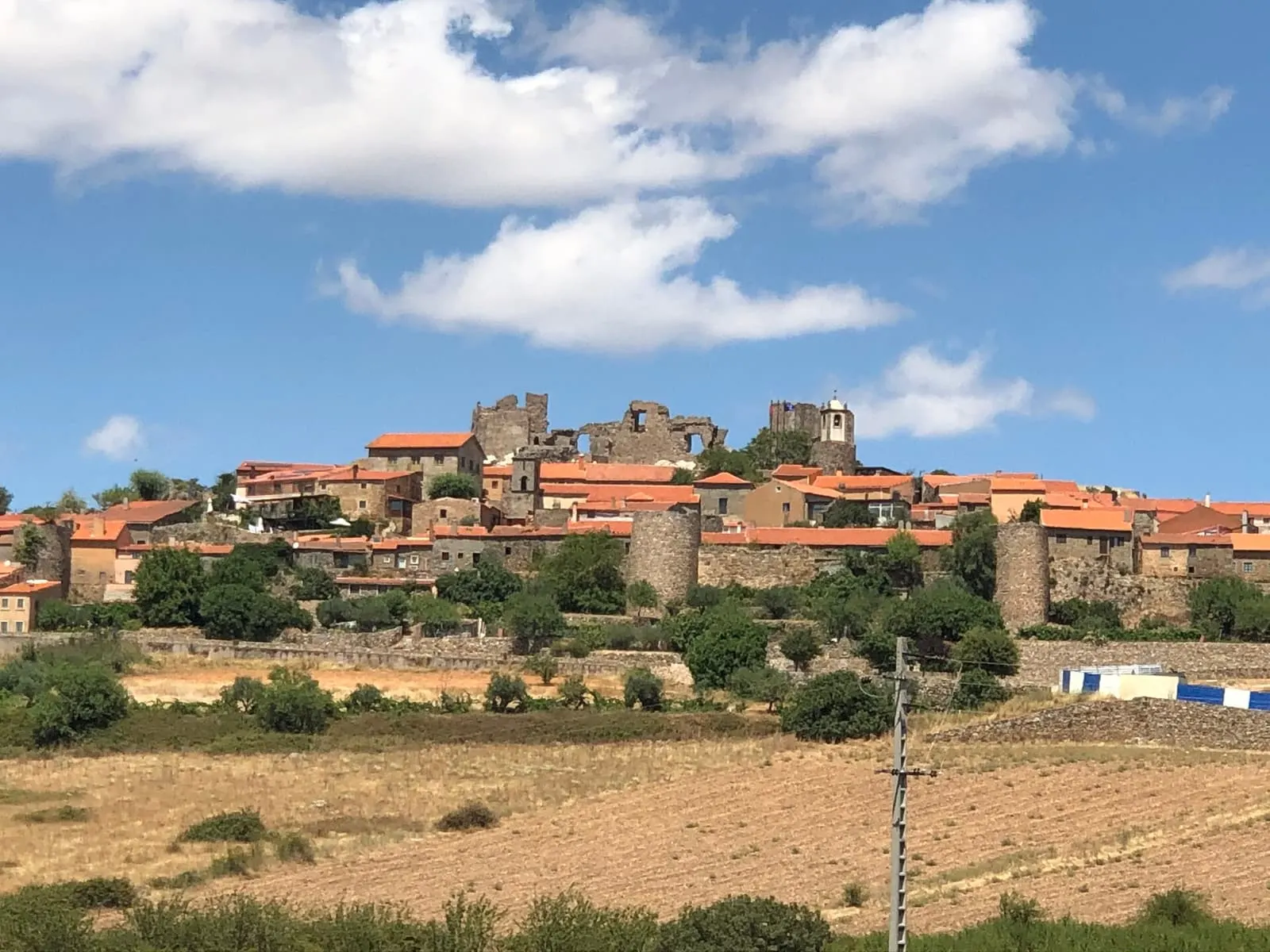
In Pinhel, in the district of Guarda, two medieval granite towers rise above the historic centre. They are the most visible feature of Pinhel Castle, a fortress on the Beira frontier that for centuries guarded the route to the crossing of the River Côa, when the river marked the border between Portugal and León. The castle was not merely a stronghold: it was an urban enclosure with an oval plan and six gates, and its layout still organises the upper part of the town.
From the pre-Roman enclosure to the 1189 charter
According to the National Register of Cultural Heritage, I.P., a fortified enclosure has existed on the site since the pre-Roman period. Under D. Afonso Henriques the area gained importance in the Reconquest. D. Sancho I recognised this significance by granting Pinhel a charter in 1189, after which the castle was built. Work continued during the reign of D. Afonso II. Under D. Dinis, the complex was rebuilt and enlarged, and the surrounding wall was restored.
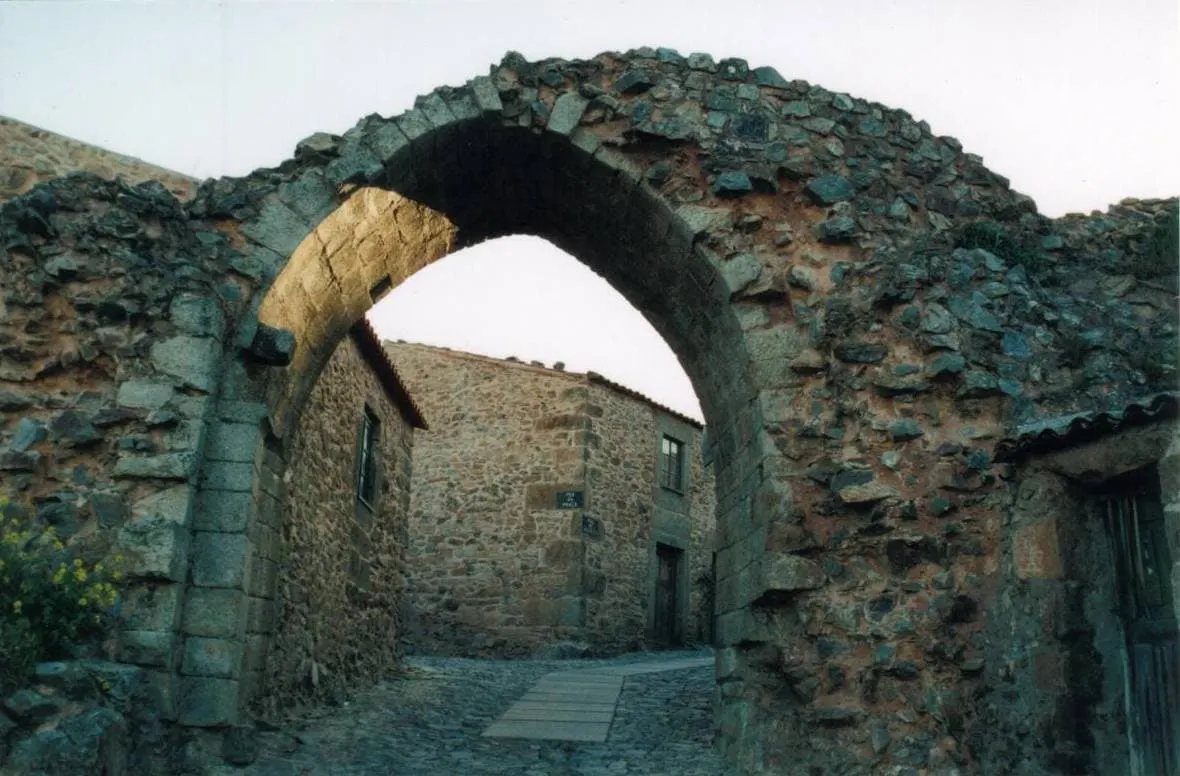
The register summarises the early phase thus: between the last quarter of the twelfth century and the first quarter of the thirteenth, six square-plan towers were built, corresponding to six entrances with round and pointed arches. The gates were the Porta da Vila and the gates of Santiago, Marrocos, São João, Alvacar and Marialva. The last points towards Marialva Castle, another stronghold in this frontier network.
The Manueline castle
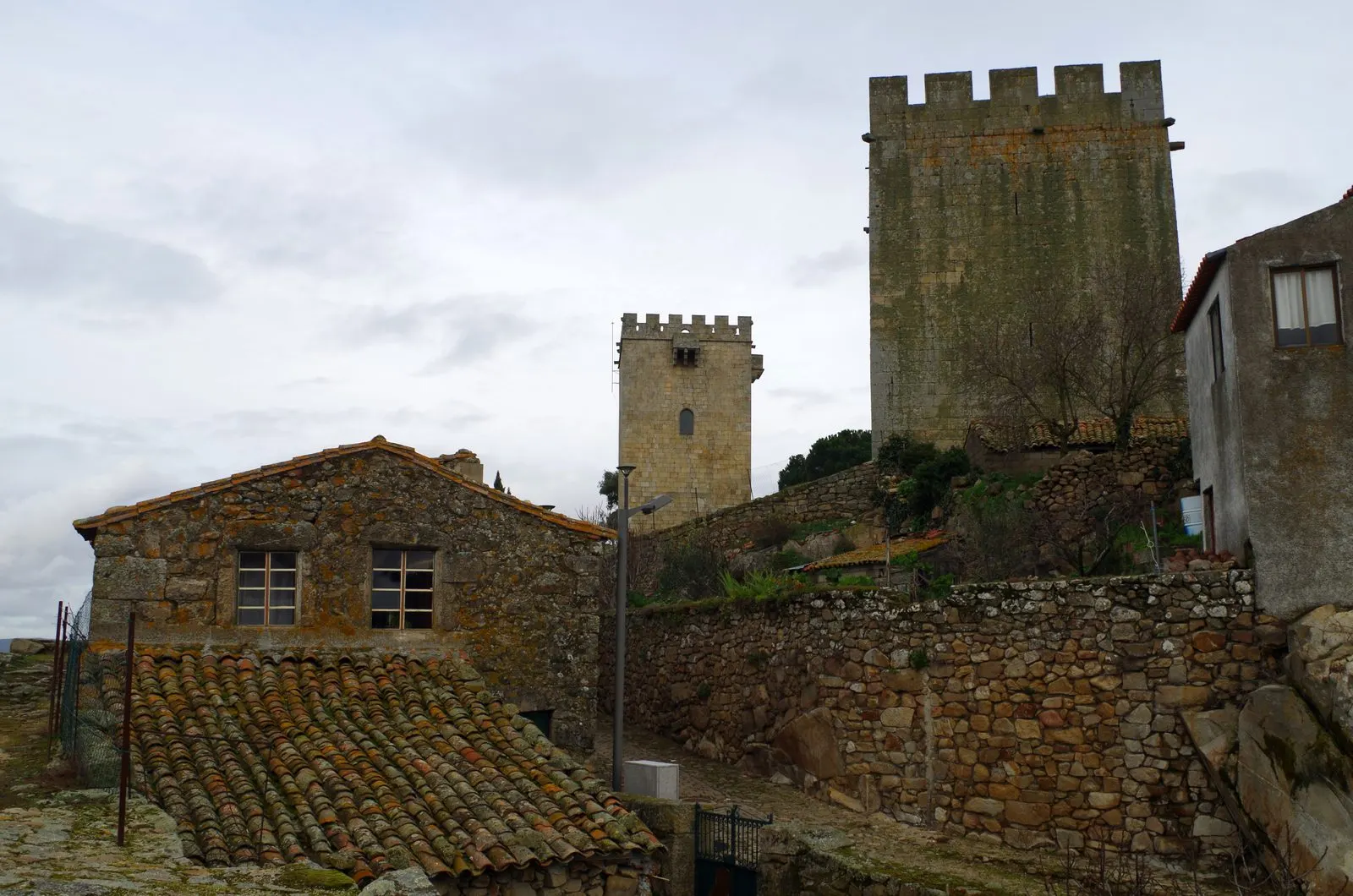
When D. Manuel confirmed Pinhel’s charter in 1510, the towers were consolidated. For this reason, according to the register, the oval-plan construction now shows mainly a Manueline idiom. The two towers that survive within the citadel enclosure, one of them the keep, have machicolations and windows cut in that period: one mullioned window and one with a straight lintel. In the context of the War of Restoration, the castle again received improvement works.
The listing includes an attached house, of rustic character, built against one of the towers. This is an uncommon case: the house was protected together with the monument. The national register does not give a date for its construction.
Classification and protection
Pinhel Castle and an attached house are a National Monument under Decree No. 37 801, published in the Diário do Governo, I Série, No. 78, on 2 May 1950. The special protection zone was set by ordinance of 15 December 1962, published in the Diário do Governo, II Série, No. 8, of 10 January 1963. The register describes it as a ZEP without restrictions.
The castle is not part of any UNESCO inscription. The Atlas of Classified Heritage does, however, record the Complex of Archaeological Sites in the Côa Valley, a National Monument and World Heritage Site, in the municipalities of Vila Nova de Foz Côa, Figueira de Castelo Rodrigo and Pinhel. See the Côa Valley Archaeological Site. Pinhel also does not belong to the network of Historic Villages of Portugal. For comparison with another frontier fortress, see Castelo Rodrigo Castle.
The Interpretive Centre in the towers
On 25 August 2021, the municipality opened the Interpretive Centre of the Castle and Territories of Pinhel in the towers. The route uses both towers. Panels explain the origin and evolution of the castle and its regional importance. A short film tells the Legend of the Falcon, which depicts the part played by the people of Pinhel at the battle of Aljubarrota. The municipality presents Pinhel as “Falcon City”. There are also references to the archaeological and natural heritage of the Côa valley.
In the Manueline Tower, the exhibition addresses Pinhel’s defensive system and the control the castle exercised over the route to the Côa crossing. A virtual reconstruction shows the castle, with emphasis on the tower’s interior spaces and daily life of the period.
Planning the visit
When consulted on 5 November 2026, the municipal page for the interpretive centre indicated opening from Tuesday to Sunday. From October to March, hours were 10:00 to 12:00 and 14:00 to 17:00; from April to September, 10:00 to 12:00 and 14:00 to 19:00. The centre closed on 1 January, on Easter Sunday and on 25 December.
The page did not list prices. To confirm conditions, the municipality gives the contacts [email protected] and [email protected]. The municipality also provides maps of the historic centre in Portuguese, Spanish and English.
After the castle, it is worth walking the historic centre, with its coats of arms, pillory and manor houses, which the municipality highlights. To place Pinhel within the Beira frontier, consult the Centro de Portugal itinerary and the network of castles of Portugal.
Photograph by David Perez, 31 December 2015. Original on Wikimedia Commons, under CC BY 4.0; resized and compressed for the web, without altering the composition.
Frequently asked questions
- When was Pinhel Castle built?
- The national register links the start of construction to the charter (foral) granted to Pinhel by D. Sancho I in 1189. Work continued under D. Afonso II, and D. Dinis rebuilt and enlarged the complex. There were further works when D. Manuel confirmed the charter in 1510, and during the War of Restoration.
- What are Pinhel's six gates?
- The national register lists the Porta da Vila and the gates of Santiago, Marrocos, São João, Alvacar and Marialva, topped by round and pointed arches.
- Is the castle listed?
- Yes. Pinhel Castle and an attached house are a National Monument under Decree No. 37 801, published in the Diário do Governo on 2 May 1950. The special protection zone was set by ordinance of 15 December 1962.
- How can the towers be visited?
- The two towers house the Interpretive Centre of the Castle and Territories of Pinhel, opened in 2021. When consulted on 5 November 2026, it was open Tuesday to Sunday, with winter and summer hours published by the municipality.
Sources
- Património Cultural, I.P. — Castelo de Pinhel e uma moradia anexa (70409)
- Património Cultural, I.P. — Atlas do Património Classificado, Castelo de Pinhel (NINV 2989)
- Diário do Governo — Decreto n.º 37 801 (I Série, n.º 78, 2-05-1950)
- Município de Pinhel — Centro Interpretativo do Castelo e Territórios de Pinhel
- Município de Pinhel — Descobrir e visitar
- Wikidata — Castelo de Pinhel (Q7195878)
- Aldeias Históricas de Portugal — Página inicial (lista das 12 aldeias)
Keep exploring
Heritage nearby
More places to discover from here. Approximate straight-line distances, within 50 km.