Monuments
Santo Estêvão Castle
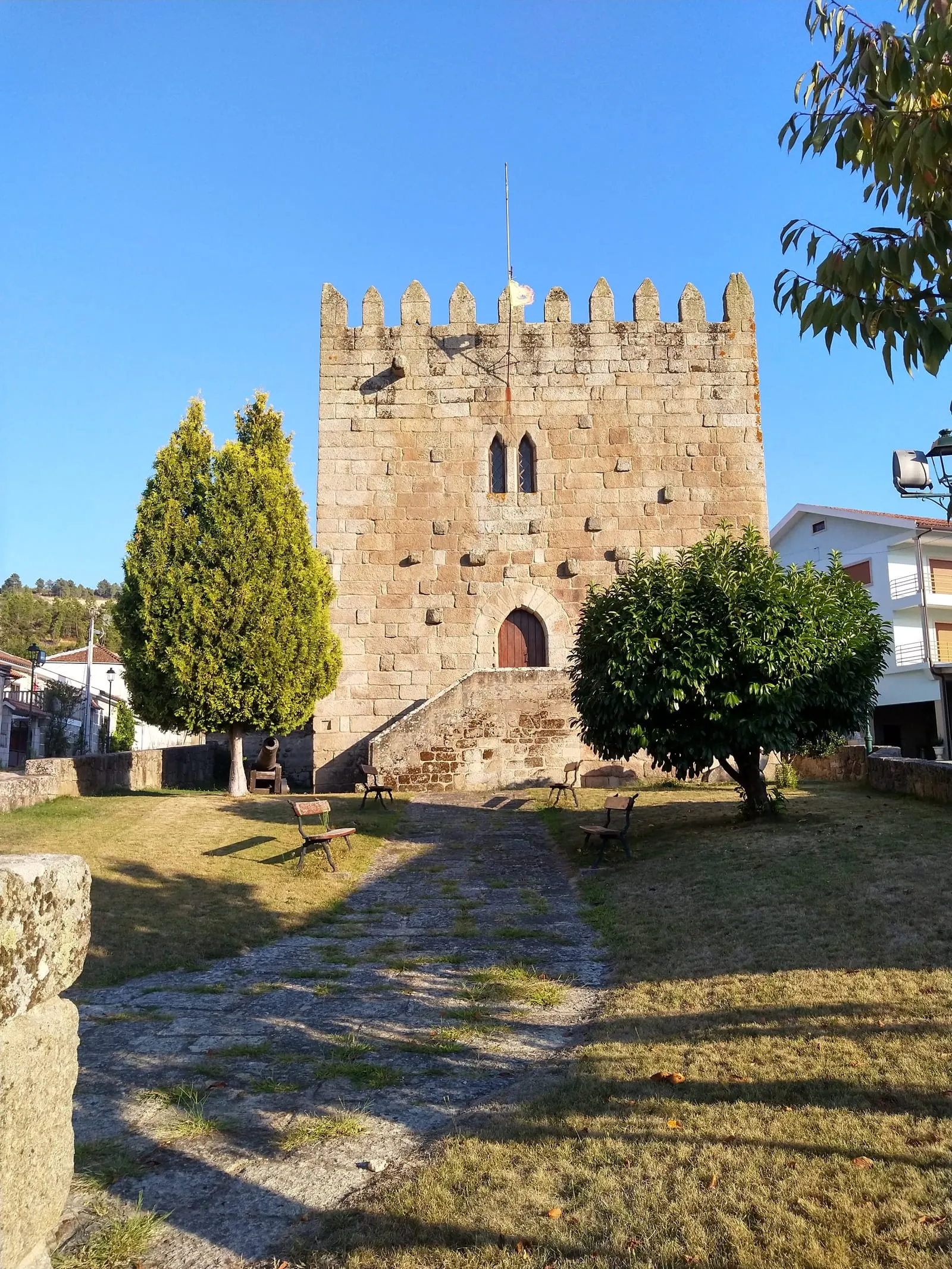
Castle of Santo Estêvão, in Chaves: a crenellated 14th-century seigneurial tower, linked by tradition to the castle taken by León in 1212. National Monument.
- Location
- Santo Estêvão, Chaves, Vila Real
- Built
- séc. XIV (torre senhorial, segundo Mário Barroca); castelo medieval documentado desde 1212
The Castle of Santo Estêvão stands in the village of Santo Estêvão, in the municipality of Chaves, a few metres from the forecourt of the parish church. Despite its name, what can be seen today is not a castle with walls. It is a seigneurial tower of an almost square plan, three storeys and a crenellated crown. The history of the tower and that of the medieval castle documented at Santo Estêvão are intertwined, and official and academic sources urge caution when relating them.
The documented castle
The national register of the Património Cultural, I.P. states that the first references to the site date from the 11th century. They mention a large rural estate, perhaps fortified. By 1212 a castle already existed, as it was conquered that year by Afonso IX of León. According to the historian Mário Barroca, the occupation belongs to the conflict between the Leonese king and D. Afonso II of Portugal. The conflict followed the annulment, by the papacy, of Afonso IX’s marriage to D. Teresa, daughter of D. Sancho I.
The castle remained in Leonese hands for nineteen years. It returned to the Portuguese crown only in 1231, under the peace agreement of Sabugal. Santo Estêvão’s position on the frontier made it a point of contact between the two kingdoms. In 1253, the register recounts, D. Afonso III travelled to the castle to receive his future wife, D. Beatriz.
The tower that stands today
The national register is clear: the building can be considered a castle only through local tradition. It is a seigneurial tower, to which other outbuildings were attached. Support points in the wall show where galleries, since disappeared, once rested. The register adds that doubts remain about the correspondence between this tower and the medieval castle, which only a rigorous archaeological study could clarify.
Mário Barroca, in a 2013 study of the inscriptions of the neighbouring church, calls it a domus fortis: a fortified seigneurial tower-house, built in the 14th century and later altered. According to Barroca, the windows of the top floor reveal this 14th-century chronology. The same author summarises a proposal by the archaeologist Ricardo Teixeira. Teixeira considers it impossible to identify the castle of 1212–1231 with this tower and proposes that it corresponds to the Penedo de Santiago, or Castelo de Eiras, where he identified remains of a medieval fortification.
According to the national register, the tower is about 14 metres high, and according to Barroca it measures 11.40 by 11.50 metres on plan. The crown is formed by a wall walk protected by pyramidal merlons. The main façade, facing west, has a pointed-arch doorway, reached by a flight of steps. Above it opens a twin window with a trilobed arch. The north façade repeats this arrangement. To the south, the most exposed face to attack, there are only three narrow loopholes. Barroca notes that the original entrance lies at first-floor level and was initially reached by a wooden stair, later replaced. Inside, wooden stairs connect the floors, each consisting of a single chamber.
For the register, the tower has parallels in the tower-houses of great Galician nobles of the Late Middle Ages, in the Ourense area.
The church beside it
The parish church of Santo Estêvão was entirely rebuilt in the 16th century, according to Barroca. It nonetheless preserves evidence from several periods: Roman inscriptions and two medieval inscriptions. One dates from 1089 and commemorates the dedication of the church by Bishop D. Pedro of Braga. The other, from 1294, marks its rebuilding.
Classification and protection
The monument is a National Monument under Decree No. 29 604, published in the Diário do Governo, I Série, No. 112, of 16 May 1939. In its first article, the decree lists, in the district of Vila Real and the municipality of Chaves, the “Castelo de Santo Estêvão”. The national register does not indicate a special protection zone. The monument is not part of any World Heritage property.
State of conservation
Resolution of the Assembleia da República No. 183/2025 was approved on 17 October 2025 and published in the Diário da República on 10 December 2025. It recommends that the Government carry out an urgent technical survey of the castle’s state of conservation, identifying structural damage and the risks of imminent collapse. It also calls for a full rehabilitation plan within six months, with structural consolidation, correction of water infiltration, and recovery of roofs and floors. The plan should provide for progressive opening to the public, with a visiting circuit. It is a recommendation, not a decision to carry out works. When consulted on 5 November 2026, it could not be confirmed whether these measures had advanced.
Planning a visit
The tower stands beside the parish church of Santo Estêvão, north-east of the city of Chaves. When consulted on 5 November 2026, the heritage pages of the Municipality of Chaves did not publish information about the tower, opening hours or visits to the interior. Before going, enquire at the Chaves tourist office or with the Junta de Freguesia of Santo Estêvão.
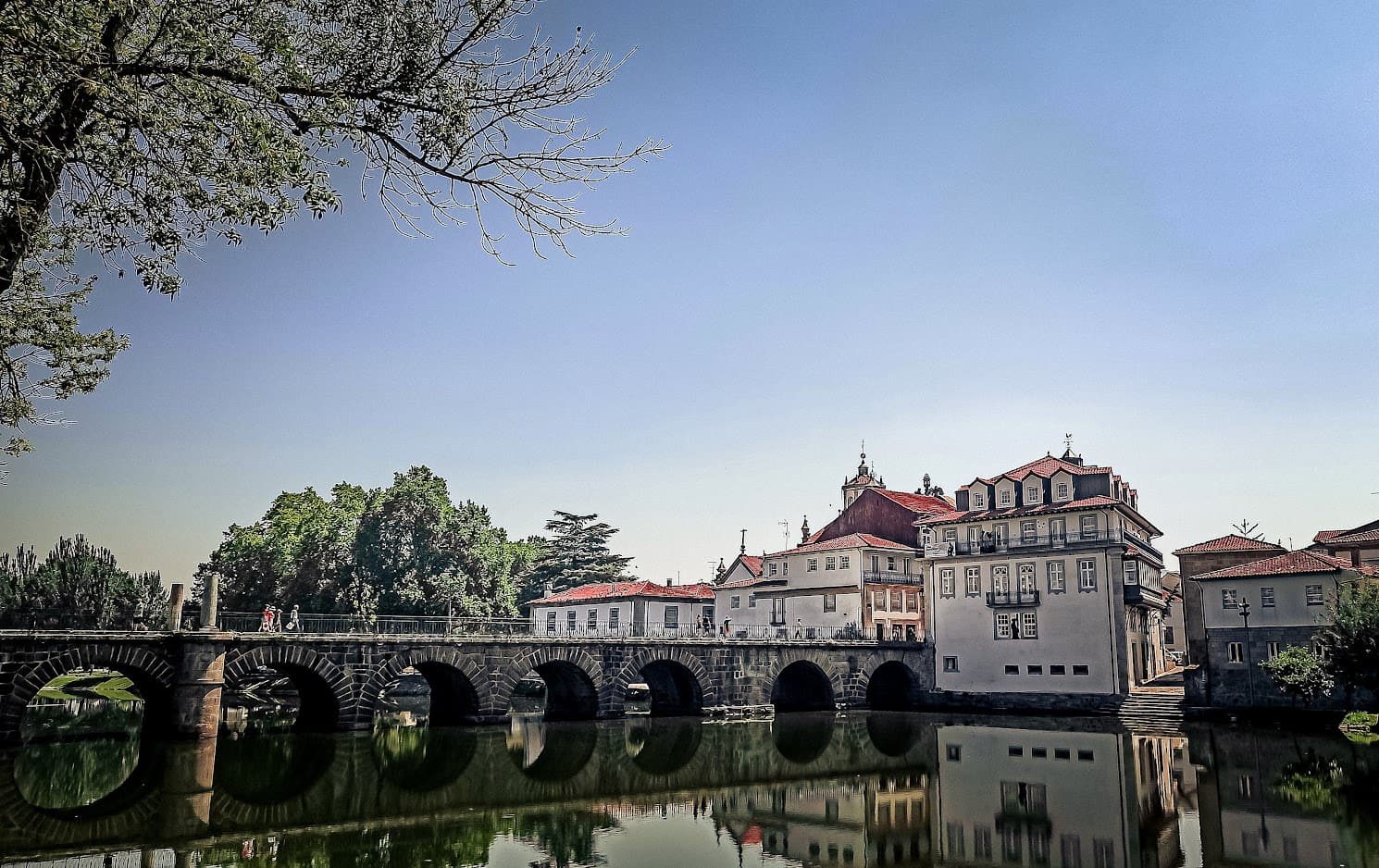
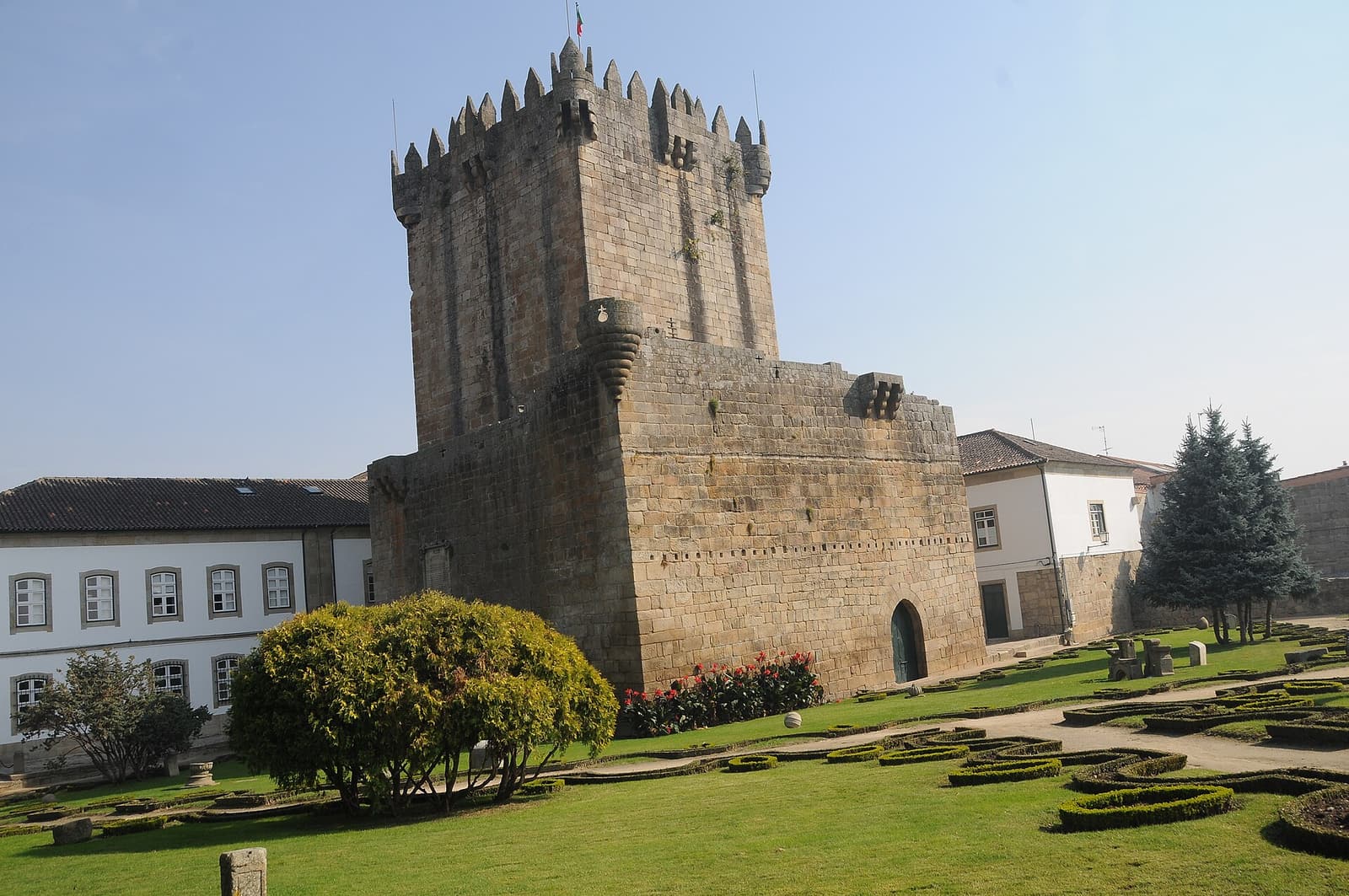
In the city, the Castle of Chaves and the Roman Bridge of Chaves complete the route. In Barroso, the Castle of Montalegre shows another fortress from the same frontier. To continue, see North and the network of castles of Portugal.
Photograph by João Pedro Gonçalves, dated 5 September 2020. Original on Wikimedia Commons, under CC BY-SA 4.0; resized and compressed for the web, without altering the composition.
Frequently asked questions
- Is the Castle of Santo Estêvão a castle?
- The building that can be seen is a fortified seigneurial tower, not a castle with a curtain wall. The national register states that only local tradition calls it a castle, and that its relationship to the documented medieval castle is still unclear. The historian Mário Barroca dates the tower to the 14th century.
- What is known of the history of the castle of Santo Estêvão?
- According to the national register, in 1212 the castle was taken by Afonso IX of León and only returned to the Portuguese crown in 1231, with the Peace of Sabugal. In 1253, D. Afonso III went to Santo Estêvão to receive his future wife, D. Beatriz. These accounts refer to the documented castle, which may not correspond to the present tower.
- Is the monument listed?
- Yes. It is a National Monument under Decree No. 29 604, published in the Diário do Governo, I Série, No. 112, of 16 May 1939.
- Can the interior be visited?
- This could not be confirmed. When consulted on 5 November 2026, the heritage pages of the Municipality of Chaves contained no information about visits. A resolution of the Assembleia da República in 2025 recommended that the Government rehabilitate the tower and open it progressively to the public.
Sources
- Património Cultural, I.P. — Castelo de Santo Estêvão (71121)
- Património Cultural, I.P. — Atlas do Património Classificado, Castelo de Santo Estêvão (NINV 4458)
- Diário do Governo — Decreto n.º 29 604, de 16 de maio de 1939
- Diário da República — Resolução da Assembleia da República n.º 183/2025
- Município de Chaves — Património
- Mário Jorge Barroca — Santo Estêvão de Chaves: uma nova inscrição do Bispo D. Pedro (Ciências e Técnicas do Património, vol. XII, 2013)
- Wikidata — Castelo de Santo Estêvão (Q5049825)
Keep exploring
Heritage nearby
More places to discover from here. Approximate straight-line distances, within 50 km.