Monuments
Vinhais Castle
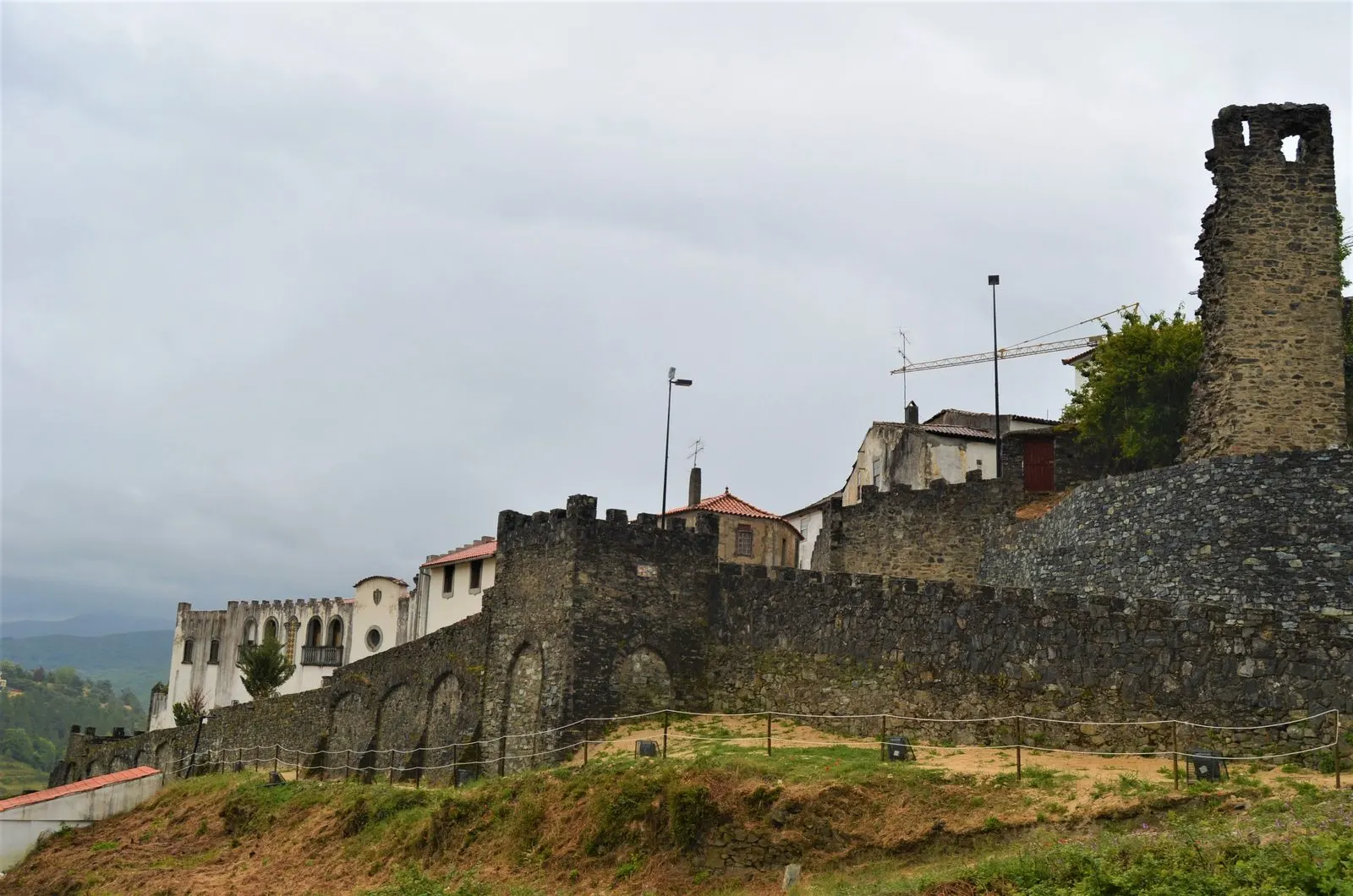
Castelo de Vinhais: Gothic walls, restored gates and towers, and a new border town founded under Afonso III and active under Dinis. National Monument.
- Location
- Vinhais, Bragança
- Built
- 2.ª metade do séc. XIII – séc. XIV; torreões e barbacã do séc. XVI
The Vinhais Castle is not an isolated fortress on a hill, but the enclosure of a town. The walls surround an urban nucleus where the pillory, the former town hall (Paços do Concelho) and the parish church still stand. Vinhais lies in the district of Bragança, near the frontier. The castle arose from a royal policy of founding new towns (vilas novas) and went through sieges, betrayals by alcaides and an attempt at demolition in the twentieth century. What can be seen today, chiefly gates, towers and stretches of curtain wall, is largely the result of the restoration works begun at that time.
A royal new town
The national register of Cultural Heritage, I.P. explains the castle as the product of attempts to organise the Trás-os-Montes territory into new towns, placed directly under the king’s control. The first attempt occurred during the reign of D. Sancho II. Only under D. Afonso III did the town effectively take shape, following a first charter (foral) issued in 1253. The new town was set on a hill facing Crespos, where a settlement already existed around the church of São Facundo.
The construction of the town, with the castle and the mother church, must have been slow. The parish church does not yet appear in the catalogue of 1320–1321. Rita Costa Gomes accepts that the walls may have been completed in the thirteenth century and reformed in the following one. The register does not confirm this hypothesis, but does not rule it out.
The Gothic curtain wall of King Dinis
The register considers it certain that, during the reign of D. Dinis, Vinhais’s military system was in operation. A curtain wall with five or six towers dates from that period. The main gate was flanked by two of them, in a symmetrical composition typical of the Dionysian towns. There was no alcázar: the keep (torre de menagem) was integrated into the curtain wall itself, following the typology of Gothic castles. The oval plan, though slightly irregular, confirms this period of construction. For context, see Gothic architecture in Portugal and the country’s fortified towns.
The Vinhais Municipality’s page summarises the question differently. It states that it is not known when the castle was ordered to be built, nor by which monarch. It adds that some authors attribute it to D. Dinis, since there are references to works and to the building of towers in Vinhais during his reign.
A contested frontier castle
The proximity of Castile, with easy access routes, shaped the castle’s history in the fourteenth century. During the wars of the reign of D. Fernando, Vinhais was occupied by Castilian troops between 1369 and 1371. Some twelve years later, during the crisis that followed the king’s death, the alcaide sided with Castile. The situation recurred in 1397, when the alcaide João Afonso Pimentel rebelled against D. João I. Vinhais only returned to Portuguese possession in 1403.
At the end of the Middle Ages there were several reforms, including works during the reign of D. Afonso V, when the alcaidaria was linked to the counts of Atouguia. The drawing by Duarte de Armas, from the early sixteenth century, is the oldest representation of the ensemble. The notes accompanying it already mention the inner face of the destroyed keep and two other towers with worn foundations.
Decay and restoration
In the modern era a barbican and several complementary towers, the latter from the sixteenth century, were built. Even so, private houses kept leaning against the walls. In 1527 the walls were already partly demolished, and attempts at recovery over the following two centuries failed. The Municipality recounts that, in 1666, during the Restoration wars, the Spanish general D. Baltasar Pantoja attacked the town and was repelled. The episode is narrated in a manuscript cited by Francisco Manuel Alves.
In the early 1960s, according to the national register, the Câmara attempted to destroy what remained of the fortress. The population opposed it. Restoration works by the Direção-Geral dos Edifícios e Monumentos Nacionais (DGEMN) followed, consolidating three gates, two towers and some stretches of curtain wall, partly rebuilt.
Classification
The castle is a National Monument under Decree No. 36 383, published in the Diário do Governo, I Série, No. 147, on 28 June 1947. The national register documents a recent clarification. In 2018, the Câmara requested clarification on the delimitation of the classified property. The Direção Regional de Cultura do Norte proposed that the 1947 classification be limited to the surviving defensive structures, identified by the archaeologist Armando Redentor in a study published in 2008. The Director-General of the DGPC agreed by dispatch of 10 August 2018. The castle is not part of any World Heritage property.
Preparing a visit
The former enclosure is now an urban space. The municipal page describes the interior organised around a square with the pillory, the medieval town hall (Paços Medievais Concelhios) and the parish church of Nossa Senhora da Assunção. Pillories are another chapter of Trás-os-Montes heritage. The Tourist Office is on the Praça do Município. When consulted on 5 November 2026, the Municipality indicated opening hours of Monday to Friday, 09:00 to 12:30 and 14:00 to 17:30, and on Saturdays, Sundays and public holidays, 10:00 to 12:00. Please confirm hours and information on the Tourist Office page.
The city of Bragança, with its castle and citadel, completes a visit to this border region. For other fortresses, consult the castles of Portugal and the guide to the North.
Photograph by Pedro from Maia (Porto), Portugal, dated 12 June 2020. Original on Wikimedia Commons, under CC BY 2.0; resized and compressed for the web, without altering the composition.
Frequently asked questions
- When was Vinhais Castle built?
- The new town of Vinhais was established during the reign of King Afonso III, who granted it a charter (foral) in 1253. According to the national register, the defensive system was operational during the reign of King Dinis, to whom a curtain wall with five or six towers is dated. The Municipality indicates that the date and monarch of the foundation are not known with certainty.
- What remains of the castle?
- Restoration works begun in the 1960s consolidated three gates, two of the surviving towers and some stretches of curtain wall, partly rebuilt. The interior of the former enclosure is now a town quarter, with the pillory (pelourinho), the medieval town hall (Paços do Concelho) and the parish church.
- Is the castle classified?
- Yes. It is a National Monument under Decree No. 36 383, published in the Diário do Governo, I Série, No. 147, on 28 June 1947. In 2018, the DGPC agreed to a proposal to limit this classification to the surviving defensive structures.
- Where can I get information for a visit?
- At the Vinhais Tourist Office, on Praça do Município. When consulted on 5 November 2026, the Municipality indicated opening hours of Monday to Friday, 09:00 to 12:30 and 14:00 to 17:30, and on Saturdays, Sundays and public holidays, 10:00 to 12:00.
Sources
- Património Cultural, I.P. — Castelo de Vinhais (70570)
- Património Cultural, I.P. — Atlas do Património Classificado, Castelo de Vinhais (NINV 2453)
- Diário do Governo — Decreto n.º 36 383, de 28 de junho de 1947
- Município de Vinhais — Muralha Medieval – Castelo de Vinhais
- Município de Vinhais — Posto de Turismo
- Wikidata — Castelo de Vinhais (Q5049847)
Keep exploring
Heritage nearby
More places to discover from here. Approximate straight-line distances, within 50 km.