Monuments
Castelo dos Mouros (Moorish Castle), Sintra
Castelo dos Mouros in Sintra: Islamic-era fortress, São Pedro de Canaferrim church, King Fernando II's Romantic restoration, and visitor information.
- Location
- Sintra, Lisboa
- Built
- séc. X (fundação islâmica); cisterna do séc. XIII; restauro romântico no séc. XIX
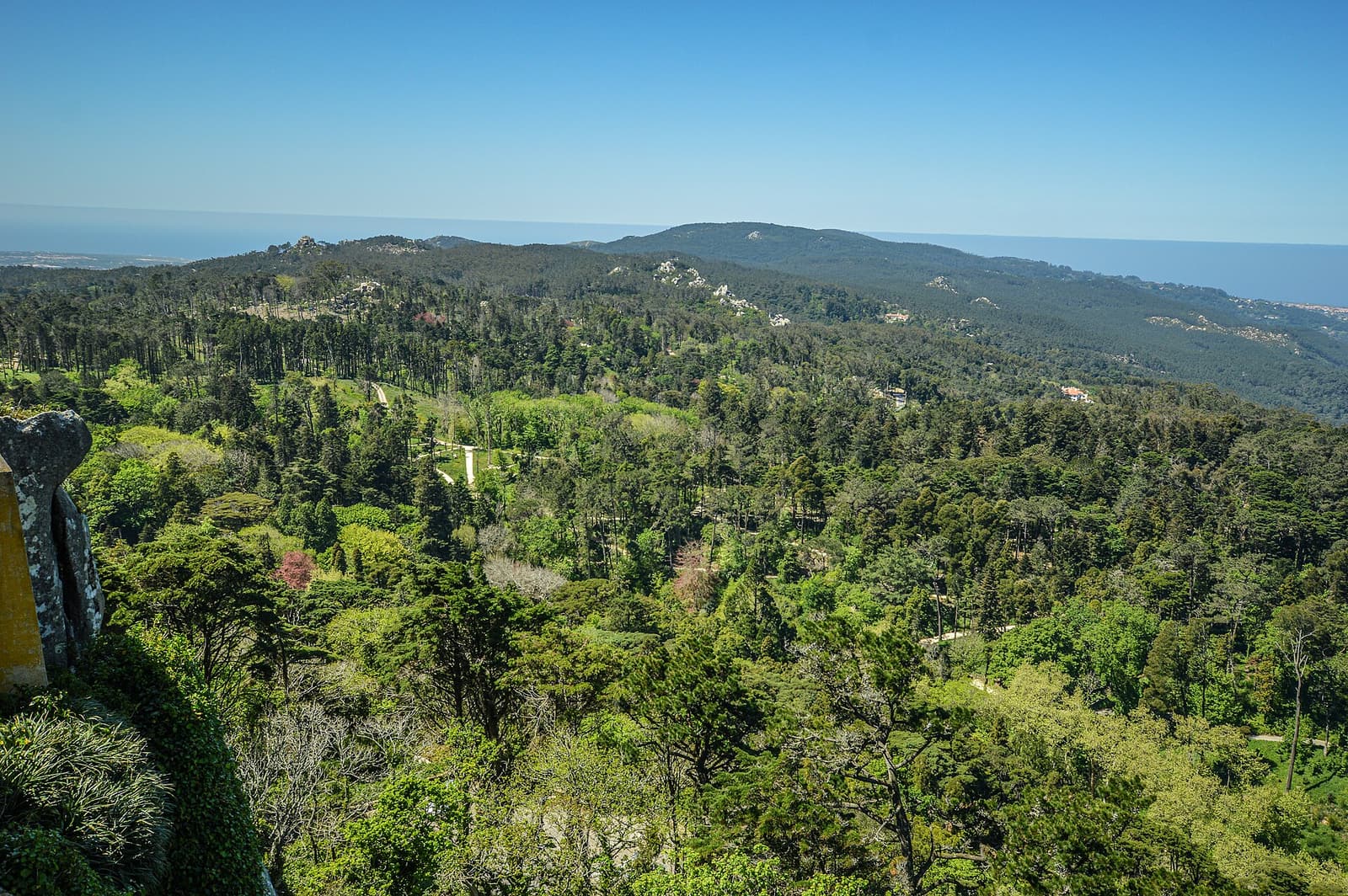
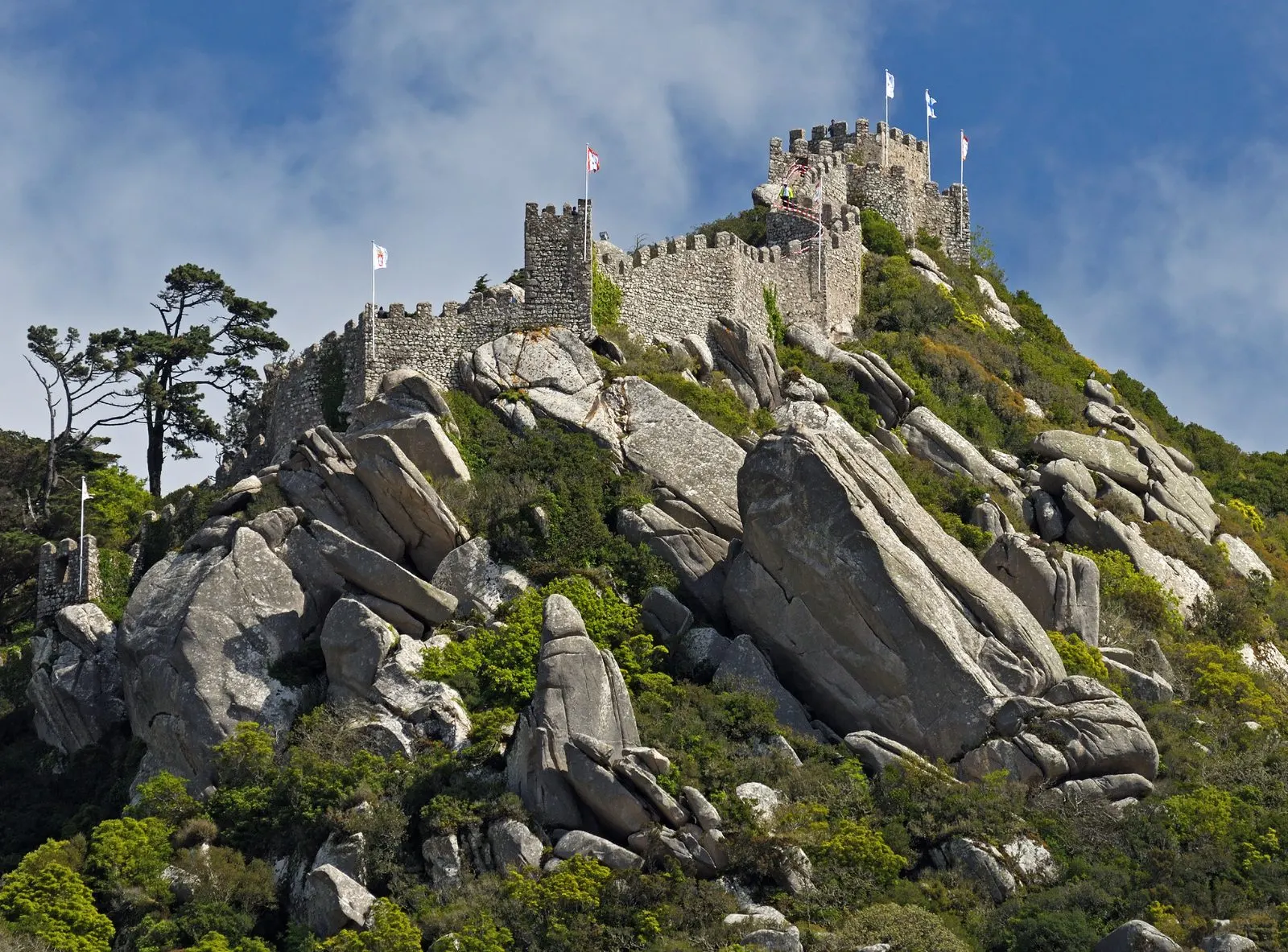
The Castelo dos Mouros occupies one of the peaks of the Sintra mountains, with granite walls following the crest between boulders and cliffs. From there one sees the town, the Pena Palace and, in the distance, the Atlantic. It is a fortification of Islamic origin, but what one walks through today results from a thousand years of use, abandonment, excavation and restoration. To understand the monument, it is useful to separate these layers.
A fortification of the Islamic period
Parques de Sintra – Monte da Lua, the body that manages the monument, presents it as a fortification founded in the 10th century, during the Muslim presence in the Iberian Peninsula. The UNESCO statement of outstanding universal value is more cautious about its origins: it admits a possible Visigothic origin and states that the site was certainly used in the 9th century. For Parques de Sintra, the position was strategic for defending the local territory and the sea routes to Lisbon.
Next to the walls there was a settlement, today called the Islamic Quarter. Excavations identified there the foundations of houses, silos and the base of a communal oven. The pottery recovered, including pots, jugs, bowls and bottles, corresponds to the Muslim material culture of the 10th to 12th centuries. Copper-alloy spindle whorls, loom weights and fragments of ivory distaffs also appeared. The silos, cavities cut into the rock inside and outside the wall, served to store cereals and pulses. This is one of the places where Islamic art and material culture in Portugal can be read through everyday objects, and not only through architecture.
From the 1147 handover to the medieval town
According to Parques de Sintra, Muslims inhabited the castle until 1147, when Sintra was handed over to D. Afonso Henriques, following the conquest of Lisbon and Santarém. The administration of the town and its territory was then granted to Gualdim Pais, Master of the Order of the Temple, and Sintra received its charter (foral) in 1154.
With the settlement of a Christian population, the Islamic quarter disappeared and gave way to a medieval town, occupied until the 15th century. Between the two wall circuits rose the Church of São Pedro de Canaferrim, built in the 12th century and considered the first parish church of Sintra. It is thought to have remained in use until the 14th century, and the apse preserves traces of 15th-century Gothic painting. Over the former quarter the church’s Christian necropolis was established, used for about three centuries (12th–14th), with graves holding several individuals.
The cistern, with a capacity of about 600 m³ and a vaulted roof, guaranteed water in case of siege. The pointed-arch doorway and the scarcity of masons’ marks allow it to be dated to the 13th century. The granite blocks appear to have been reused from an earlier structure. From the 15th century, once the frontier conflicts had ended, the population no longer needed to shelter beside the fortification, and the town was gradually abandoned.
The Romantic restoration by D. Fernando II
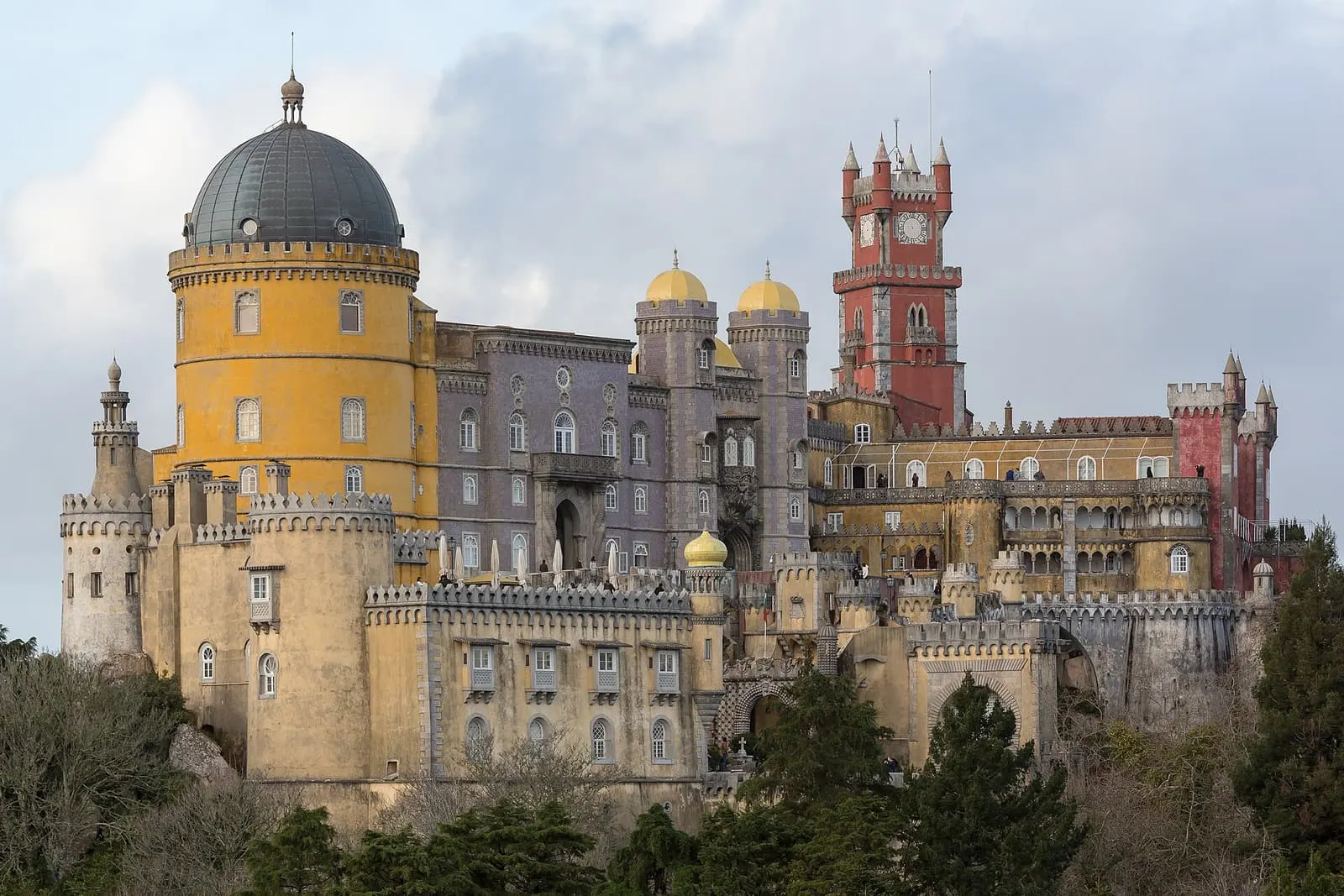
In the 19th century, D. Fernando II carried out restoration works at the castle, in the spirit of Romanticism and revivalisms. From 1840, the church of São Pedro de Canaferrim was turned into a Romantic ruin integrated into the forest of the Pena Park. Near the so-called Royal Tower, the king is said to have found a place of leisure and inspiration, with the Pena Palace in the background.
These works damaged part of the Christian necropolis. The bones then gathered were placed in a tomb bearing a crescent, a cross and the epitaph «What Man has joined together, only God may separate», because it was not known whether they were the remains of Christians or Muslims. For this reason, the castle visitors walk through today should not be read as an intact medieval fortification: it includes interventions from the 19th century.
Recent archaeology
The castle has been the subject of archaeological excavations since 1976. In 2000, Parques de Sintra assumed its management and, in 2009, set up an Archaeological Research Field. The excavations of 2009–2013 feed the Interpretation Centre, housed in the church of São Pedro de Canaferrim itself. It presents the site’s occupations from the Neolithic to the Middle Ages. Among the oldest finds is a complete vessel characteristic of the 5th millennium BC, recovered in the area of the necropolis.
Classification and World Heritage
The national register identifies the Castelo dos Mouros, including the cistern as a National Monument, by decree of 16 June 1910, published in the Diário do Governo no. 136 of 23 June 1910. The special protection zone was set by Ministerial Order (Portaria) no. 670/99, published on 30 June 1999.
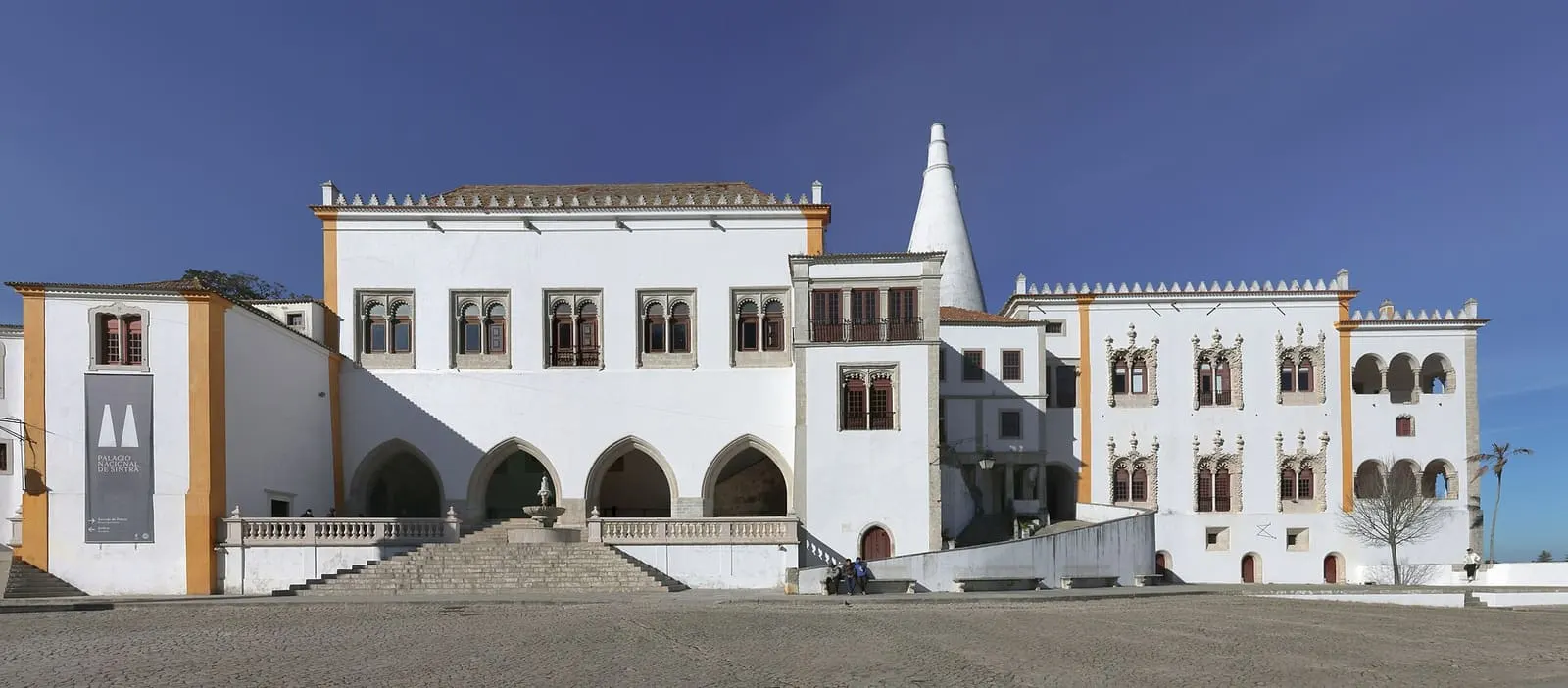
The castle is also part of the Cultural Landscape of Sintra, inscribed on the World Heritage List in 1995. The UNESCO statement of outstanding universal value expressly refers to the castle, the former parish church of São Pedro de Canaferrim and the Pena Park, which includes the castle. This inscription covers the landscape as a whole and does not constitute a separate inscription of the castle. For the wider context, see the page on the Cultural Landscape of Sintra. In the same territory lie the Sintra National Palace, which UNESCO places probably on the site of the former Islamic alcazar, and the Capuchos Convent. To compare with other fortifications, consult the page on Portuguese castles.
Planning the visit
In a consultation on 5 November 2026, the official page gave opening hours of 9:30 to 18:00, with the last ticket and last entry at 17:30. The ticket office closed between 12:00 and 13:00, with an automatic vending point available. The published prices were €12 (adult, 18–64 years), €10 (young person, 6–17 years, and senior, over 65) and €33 (family ticket, two adults and two young people). Please confirm opening hours, prices and any closures on the Parques de Sintra page before going.
The same source indicated that private vehicles are not permitted on the access roads to the monument. It recommends walking routes or public transport from the station, the historic centre or the peripheral car parks. From Sintra railway station, it pointed to bus 434. Parques de Sintra also reported that dogs are admitted to the castle. For accessibility conditions, consult the «Planear a Visita» (Plan Your Visit) section of the same website.
Photograph by Ввласенко, 24 April 2012. Original on Wikimedia Commons, under CC BY-SA 3.0; resized and compressed for the web, without altering the composition.
Frequently asked questions
- Is the Castelo dos Mouros really of Muslim origin?
- Parques de Sintra, the managing body, presents it as a fortification founded in the 10th century, during the Muslim presence. The UNESCO statement of outstanding universal value admits a possible Visigothic origin, but states that the site was certainly in use in the 9th century.
- What legal protection does the castle have?
- It is classified as a National Monument under the designation «Castelo dos Mouros, compreendendo a cisterna» (Castelo dos Mouros, including the cistern), by decree of 16 June 1910, published in the Diário do Governo no. 136 of 23 June 1910. It also forms part of the Cultural Landscape of Sintra, inscribed on the World Heritage List in 1995.
- Are the current walls all medieval?
- Not necessarily. The castle underwent restoration works in the 19th century, on the initiative of King Fernando II, which revived the medieval imagery of the site. The cistern is attributed to the 13th century and the church of São Pedro de Canaferrim to the 12th century.
- Can one reach the castle by car?
- In a consultation on 5 November 2026, Parques de Sintra indicated that private vehicles are not permitted on the access roads to the monument, and recommended walking routes or public transport from the town of Sintra.
Sources
- Parques de Sintra – Monte da Lua — Castelo dos Mouros
- Parques de Sintra – Monte da Lua — Castelo dos Mouros: história
- Parques de Sintra – Monte da Lua — Igreja de São Pedro de Canaferrim
- Parques de Sintra – Monte da Lua — Bairro Islâmico
- Parques de Sintra – Monte da Lua — Cisterna
- Parques de Sintra – Monte da Lua — Necrópole medieval cristã
- Parques de Sintra – Monte da Lua — Silos
- Parques de Sintra – Monte da Lua — Túmulo
- Parques de Sintra – Monte da Lua — Torre Real
- Diário do Governo — n.º 136, de 23 de junho de 1910 (decreto de 16 de junho de 1910)
- Património Cultural, I.P. — Atlas do Património Classificado: Castelo dos Mouros, compreendendo a cisterna (NINV 71811)
- UNESCO — Cultural Landscape of Sintra (723)
- Wikidata — Castelo dos Mouros (Q1049008)
Keep exploring
Heritage nearby
More places to discover from here. Approximate straight-line distances, within 50 km.