Monuments
Royal Snow Factory of Serra de Montejunto
Royal Ice Factory of Montejunto Mountain, in Cadaval: an ice-making facility rebuilt in 1782, with tanks and pits, a National Monument since 1997.
- Location
- Lamas, Lisboa
- Built
- Anterior a 1782; reedificada em 1782
The Royal Ice Factory of Montejunto Mountain, in the municipality of Cadaval, is a complex of tanks, pits and buildings where, in the eighteenth century, ice was produced and stored to supply Lisbon. The national register prefers to call it a snow factory, a name that reflects the technical and economic nature of the site. It is treated as a unique testimony in Portugal to this type of industrial facility, and forms part of the industrial heritage classified as a National Monument.
A factory without a motor
The text from the Património Cultural, I.P. describes the factory as a technical model imported from, and contemporary with, a European culture that developed this type of production chiefly in the seventeenth and eighteenth centuries, adapted to local geographical and climatic conditions. It had no sophisticated technological equipment and no centralised motor, but it followed a factory logic: a phased and rational process, concentrated in a single space, which went far beyond gathering snow and storing it.
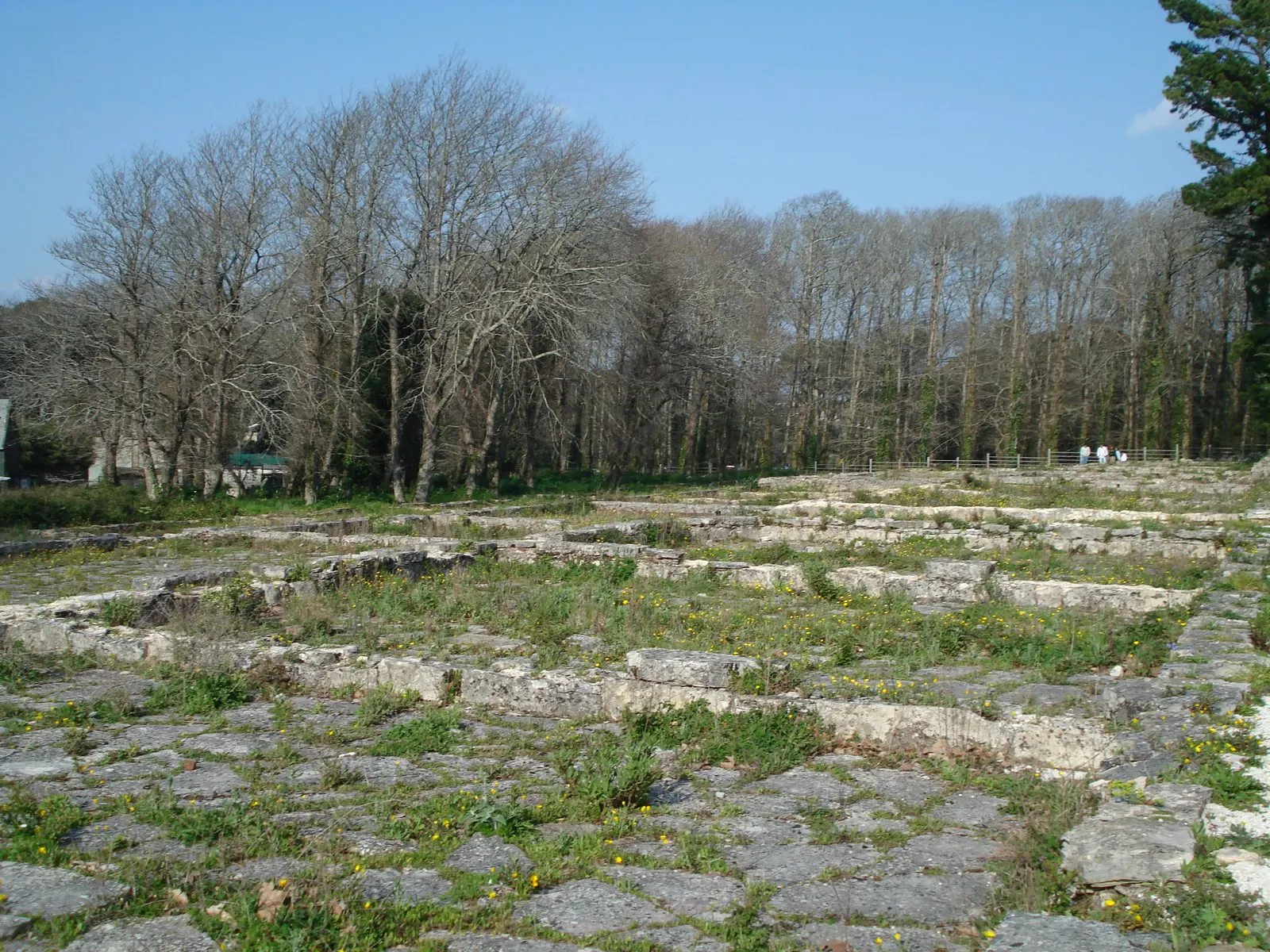
What survives is organised into three functional areas. The water extraction area has two wells, a waterwheel house and a large tank. The ice production area brings together 44 shallow tanks, linked by a water conduction system from the large tank. Both lie on a natural platform. The storage and dispatch area consists of the pits where the ice was kept, on sloping ground.
The register notes that the factory was once larger. At its most prosperous it would have had two wells and a pond, two sections of freezing tanks, and a buttressed structure that would have housed the storage pits. The set of instruments that operated it, now gone, is also missing.
Julião Pereira de Castro and 1782
The inscription over the most prominent doorway of the storage building, which in its construction and façade recalls a religious space, states that Julião Pereira de Castro, Knight of Malta, canopy-bearer and ice supplier to the Royal Household, bought and rebuilt the factory with its appurtenances on the last day of January 1782. The register adds that the same Julião Pereira de Castro built the snow storage pits of the Lousã mountains and rebuilt the Montejunto factory around the 1780s. It was a private factory, whose product was also sold to the Royal House.
The bibliography cited by the register shows that the site was studied early, with texts by Emanuel Carvalho (1991 and 1995), by Fernando Severino Lourenço, Fernando-António Almeida and Víctor Mestre in the journal Monumentos (no. 15, 2001), and by Deolinda Folgado (Estudos / Património, no. 9, 2006). The register refers to several construction phases, but only the 1782 rebuilding is dated in the text consulted, so this guide does not assert other dates.
Classification and landscape
The Royal Ice Factory is a National Monument under Decree No. 67/97, published in the Diário da República, I Série-B, no. 301, on 31 December 1997. The proposal to open the process dates from 1991, the opening order from 25 November 1992, the opinion of the IPPAR Advisory Council from 24 January 1995, and the approval from 2 April 1996. The monument also lies within the Montejunto Mountain Protected Landscape, created by Decree No. 11/99 of 22 July 1999. The register’s address is Quinta da Serra, Lamas, in the parish of Lamas e Cercal.
The municipality of Cadaval forms part of the reference territory of the Oeste Geopark, but being within that territory does not make the factory a UNESCO property. For other structures harnessing water and rural energy, see the water mills and watermills.
Planning the visit
When I consulted it on 5 November 2026, I did not find in an official source a regular timetable, a fee or a visiting regime for this monument. The Municipality of Cadaval website is the starting point for finding out whether there are guided visits or free access. The tanks and pits are outdoors, in the open mountain; respect the boundaries of the site and do not enter closed structures.
Photograph by Ricardo Martins, dated 15 April 2007. Original on Wikimedia Commons, under CC BY 2.0; resized and compressed for the web, without altering the composition.
Frequently asked questions
- How was ice made on Montejunto Mountain?
- According to the national register, water was drawn from wells and carried by a system of channels to a set of 44 shallow tanks where it froze by natural processes, and the ice was then stored in storage pits.
- When was the factory rebuilt?
- An plaque above the door of the storage building records that Julião Pereira de Castro, Royal Household canopy-bearer and ice supplier to the Royal House, bought and rebuilt the factory on the last day of January 1782, according to the national register.
- Is the Royal Ice Factory classified?
- Yes. It has been a National Monument since Decree No. 67/97, published in the Diário da República of 31 December 1997, and it lies within the Montejunto Mountain Protected Landscape.
- Can it be visited?
- When I consulted it on 5 November 2026, I found no regular opening hours published in an official source. Contact the Municipality of Cadaval before going.
Sources
- Património Cultural, I.P. — Real Fábrica de Gelo da Serra de Montejunto (71681)
- Património Cultural, I.P. — Atlas do Património Classificado, registo NINV 4159
- Diário da República — Decreto n.º 67/97, I Série-B, n.º 301, de 31-12-1997 (indicado no registo e no Atlas)
- Município do Cadaval — página oficial
- Wikidata — Real Fábrica de Gelo da Serra de Montejunto (Q10357821)
Keep exploring
Heritage nearby
More places to discover from here. Approximate straight-line distances, within 50 km.