Monuments
Glória Funicular, Lisbon
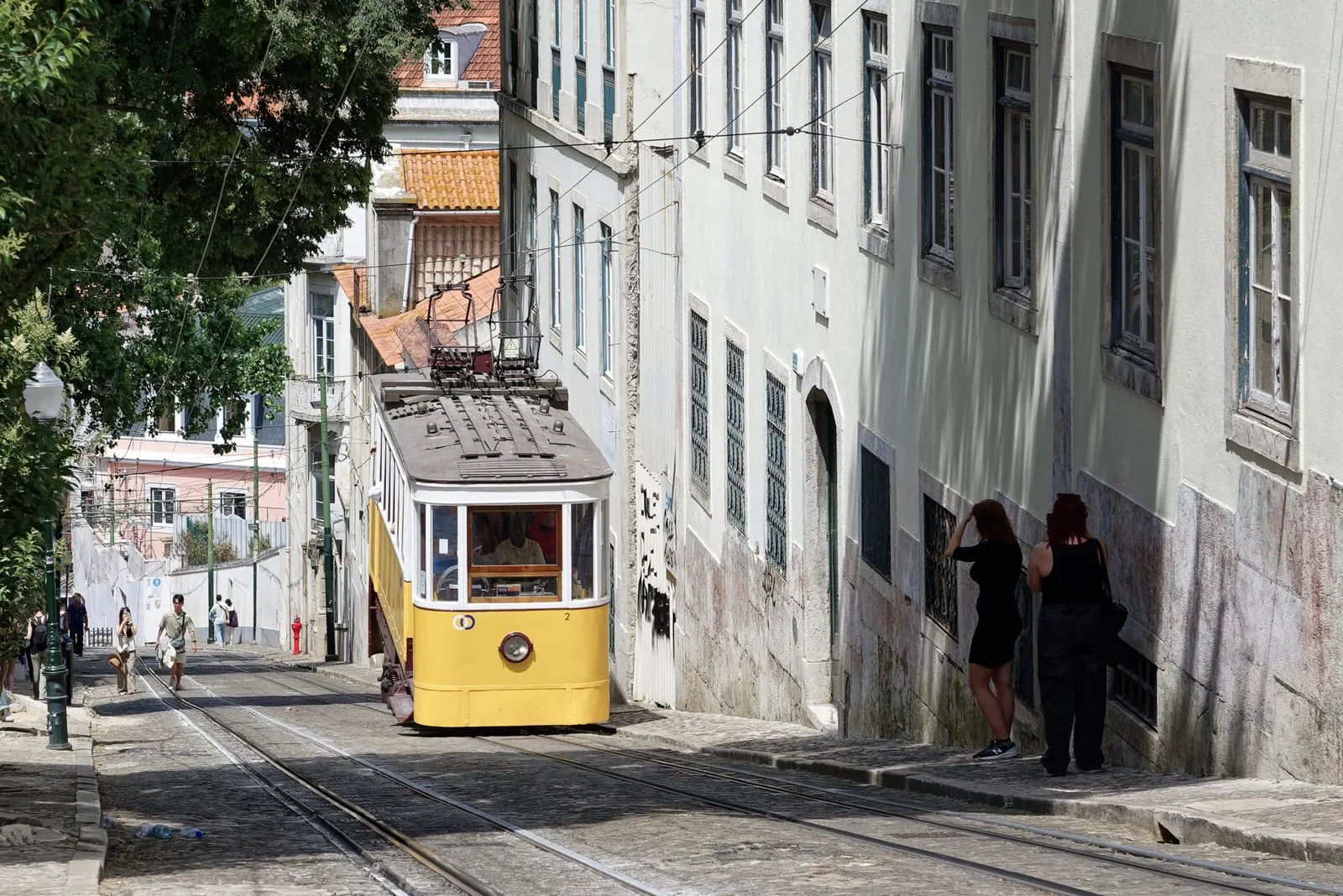
Built in 1885 by Raoul Mesnier du Ponsard, Lisbon's Ascensor da Glória is a National Monument operated by Carris, not running since the 2025 accident.
- Location
- Lisboa, Lisboa
- Built
- 1885
- Style
- Engenharia de transporte urbano do século XIX
The Glória Lift (Ascensor da Glória) links the Praça dos Restauradores to the Bairro Alto via the Calçada da Glória, in the city of Lisbon. It is one of the urban funiculars that the engineer Raoul Mesnier du Ponsard multiplied in the capital at the end of the nineteenth century, and it is classified as a National Monument, together with the urban setting that surrounds it. It has been out of service since September 2025, following an accident that caused 16 deaths.
A lift for the hills
The historical note from the Património Cultural, I.P. records that the design was entrusted to Raoul Mesnier du Ponsard (1848–1914), an engineer born in Porto, of French origin, author of other lifts in Lisbon and of funiculars elsewhere in the country. The lift was inaugurated on 24 October 1885, a date that Carris also gives. It was the second to be built in the city, promoted by the Nova Companhia dos Ascensores Mecânicos de Lisboa, after the Câmara Municipal had approved, in 1875, the installation of an inclined-plane transport on the site. The first was the Ascensor do Lavra, inaugurated in 1884.
The original system combined a rack rail and cable with a water counterweight: the two cars, linked to each other, had tanks that were emptied at the Restauradores and refilled at the Rua da Misericórdia. Interruptions in the city’s water supply halted the service, which led to the purchase of a steam engine from the German firm Maschinenfabrik (Esslingen). In 1912, a new concession contract with the Câmara allowed electrification, inaugurated three years later. The company was dissolved in 1926 and operation passed to Carris, which kept the yellow now associated with the cars.
What the register describes
The original cars had two decks, with continuous benches that faced away from the street on the lower deck and towards the street on the upper deck, which was reached by a spiral staircase. The register’s description refers to two cars that rise and descend alternately and simultaneously on two parallel tracks, with a three-compartment cabin: driving positions at the ends and the passenger area in the centre.
To understand the place, it is worth looking at the street and not only at the car. The classification covers the route, the Calçada da Glória (with the buildings lining it), the Rua das Taipas beside the Largo da Oliveirinha, and the Travessa do Fala-Só.
Classification
The Atlas do Património Classificado and the national register list the property as a National Monument, under the designation Glória Lift and the urban setting surrounding it. The process began with a proposal from Carris, dated 1 August 1995; the Minister of Culture authorised the classification by dispatch of 9 April 1997. Decree No. 5/2002, published in the Diário da República, I Série-B, No. 42, of 19 February 2002, made it effective. The register also lists Decree No. 31-F/2012, of 31 December 2012, as an extension.
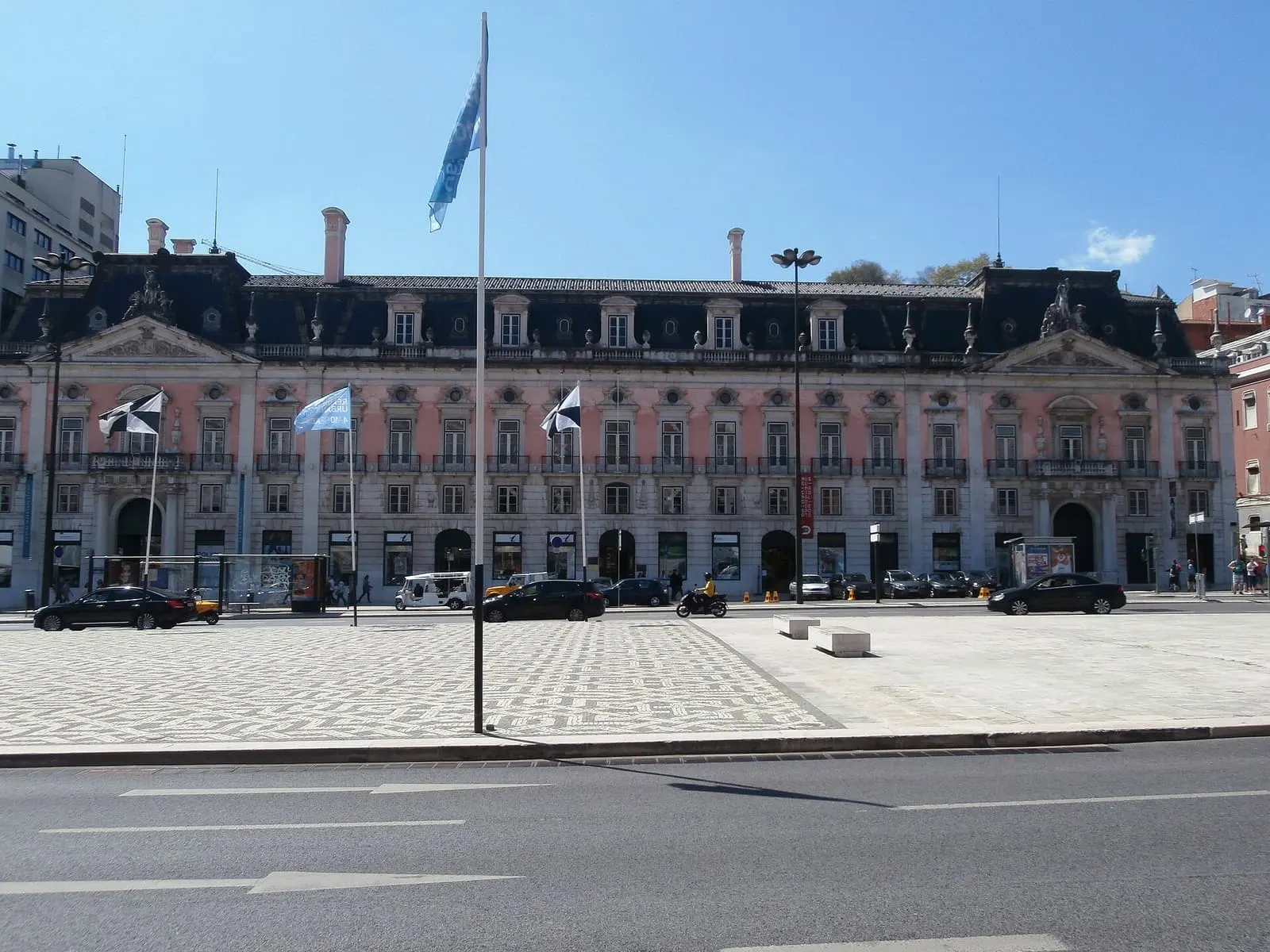
The special protection zone, shared by the lift and the Palácio Foz, was set by Ordinance No. 394/2018, published in the Diário da República, 2nd series, No. 153, of 9 August 2018, with restrictions. The lift is not a UNESCO World Heritage Site.
The accident of 3 September 2025
On 3 September 2025 an accident involving the Glória Lift occurred. The Government, on 4 September 2025, confirmed 16 dead. The Gabinete de Prevenção e Investigação de Acidentes com Aeronaves e de Acidentes Ferroviários (GPIAAF) is conducting the technical inquiry and released a preliminary report in October 2025. The document itself stresses that the information is incomplete and does not constitute final conclusions; Carris cites it when stating that it is not yet possible to say whether the irregularities in the use of the cable were relevant to the accident. For this reason, this page does not state causes.
When consulted on 5 November 2026, the final report was not yet known. Information on the inquiry and any liability should be sought from the GPIAAF and the judicial authorities.
Current situation and future
When consulted on 5 November 2026, the Carris lifts webpage listed the Glória Lift as temporarily closed. In September 2025, Carris and the Lisbon City Council set up a mission group with representatives of the LNEC, the Ordem dos Engenheiros and the Instituto Superior Técnico to study a new technological system, with the declared aim of preserving the lift’s heritage value. RFM reported on 2 September 2026 that Carris plans a new installation on the same route and points to a return in the first half of 2029, subject to change.
Even without the lift in service, the Calçada da Glória and the Rua de São Pedro de Alcântara, which the register cites as one of the city’s best viewpoints, can be visited on foot. For similar installations, see the Elevador de Santa Justa, also closed on that date, and the industrial heritage.
Photograph by Jakub Hałun, 4 June 2025. Original on Wikimedia Commons, under CC BY 4.0; resized and compressed for the web, without altering the composition.
Frequently asked questions
- When did the Glória Lift open and who designed it?
- It opened on 24 October 1885. The Cultural Heritage register attributes the design to the engineer Raoul Mesnier du Ponsard, and Carris confirms the opening date.
- Is the Glória Lift a classified monument?
- Yes. It is classified as a National Monument, under the designation Glória Lift and the urban setting surrounding it. The classification dates from Decree No. 5/2002 of 19 February 2002, and the register also lists Decree No. 31-F/2012 as an extension.
- Is the lift operating?
- When consulted on 5 November 2026, Carris's webpage listed the Glória Lift as temporarily closed, a situation that has continued since the accident of 3 September 2025. Please check the Carris website for confirmation.
- Will it be rebuilt?
- Carris and the Lisbon City Council have announced the creation of a mission group to study a new technological system, while preserving the heritage value of the equipment. According to the press, reopening is targeted for 2029, with no confirmed date.
Sources
- Património Cultural, I.P. — Ascensor da Glória e meio urbano que o envolve (70133)
- Património Cultural, I.P. — Atlas do Património Classificado, registo NINV 1567
- Carris — Ascensores
- Carris — Constituída equipa de missão para conceção de um novo sistema tecnológico do futuro Ascensor da Glória (11-09-2025)
- Carris — Comunicado à imprensa sobre o Relatório Preliminar do GPIAAF (outubro de 2025)
- Governo de Portugal — Primeiro-Ministro: Esta é uma das maiores tragédias humanas da nossa história recente (4-09-2025)
- RFM — Glória, Bica, Lavra e Santa Justa: um ano depois do acidente (02-09-2026)
- Wikidata — Ascensor da Glória (Q99636)
Keep exploring
Heritage nearby
More places to discover from here. Approximate straight-line distances, within 50 km.