Monuments
Mogadouro Castle
Mogadouro Castle in Trás-os-Montes: a Templar fortress, then an Order of Christ commandery and Távora palace. National Monument since 1946, now in ruins.
- Location
- Mogadouro, Bragança
- Built
- séc. XII (torre de menagem templária); reforma gótica e residência nos sécs. XIV–XV
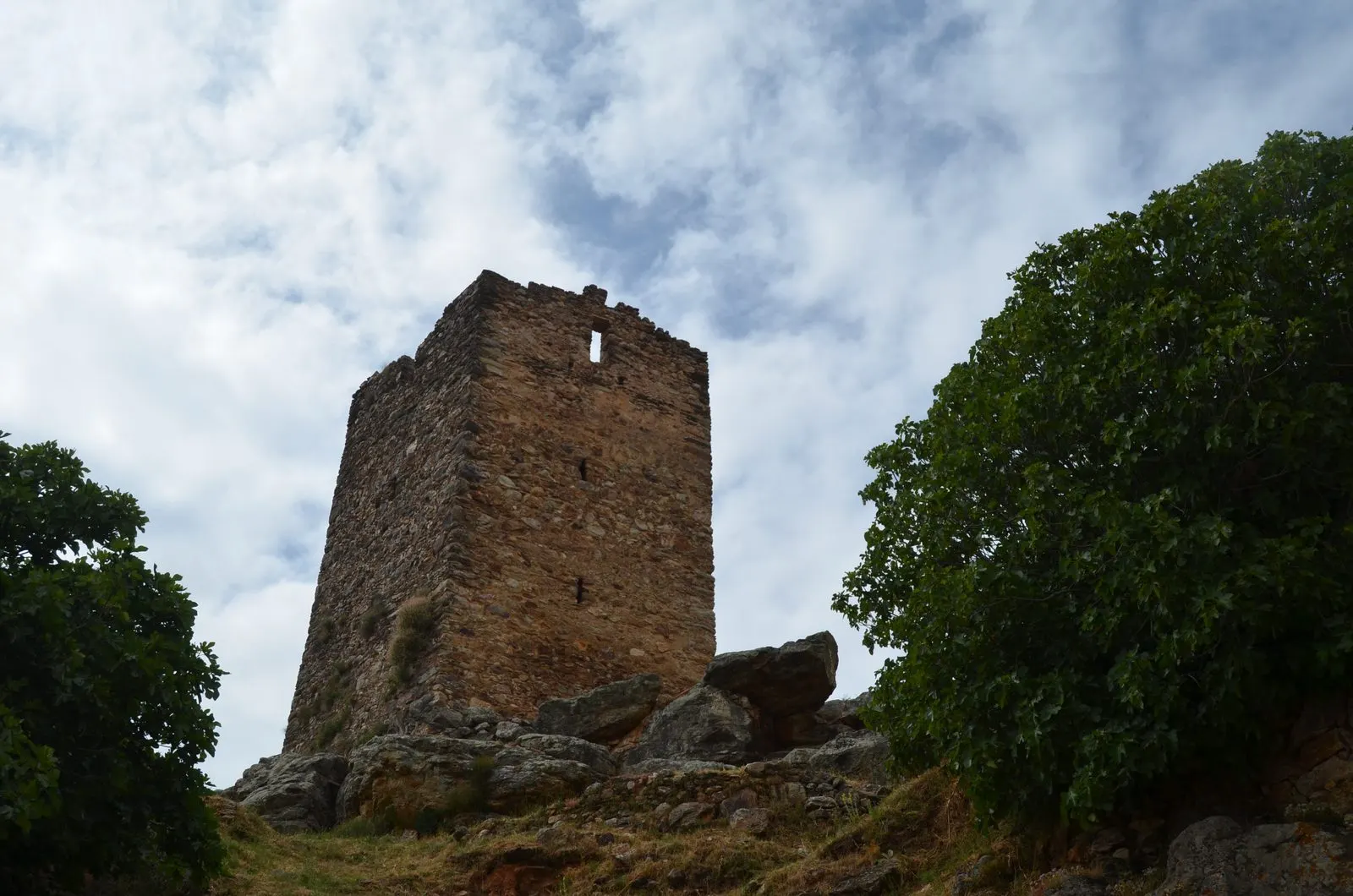
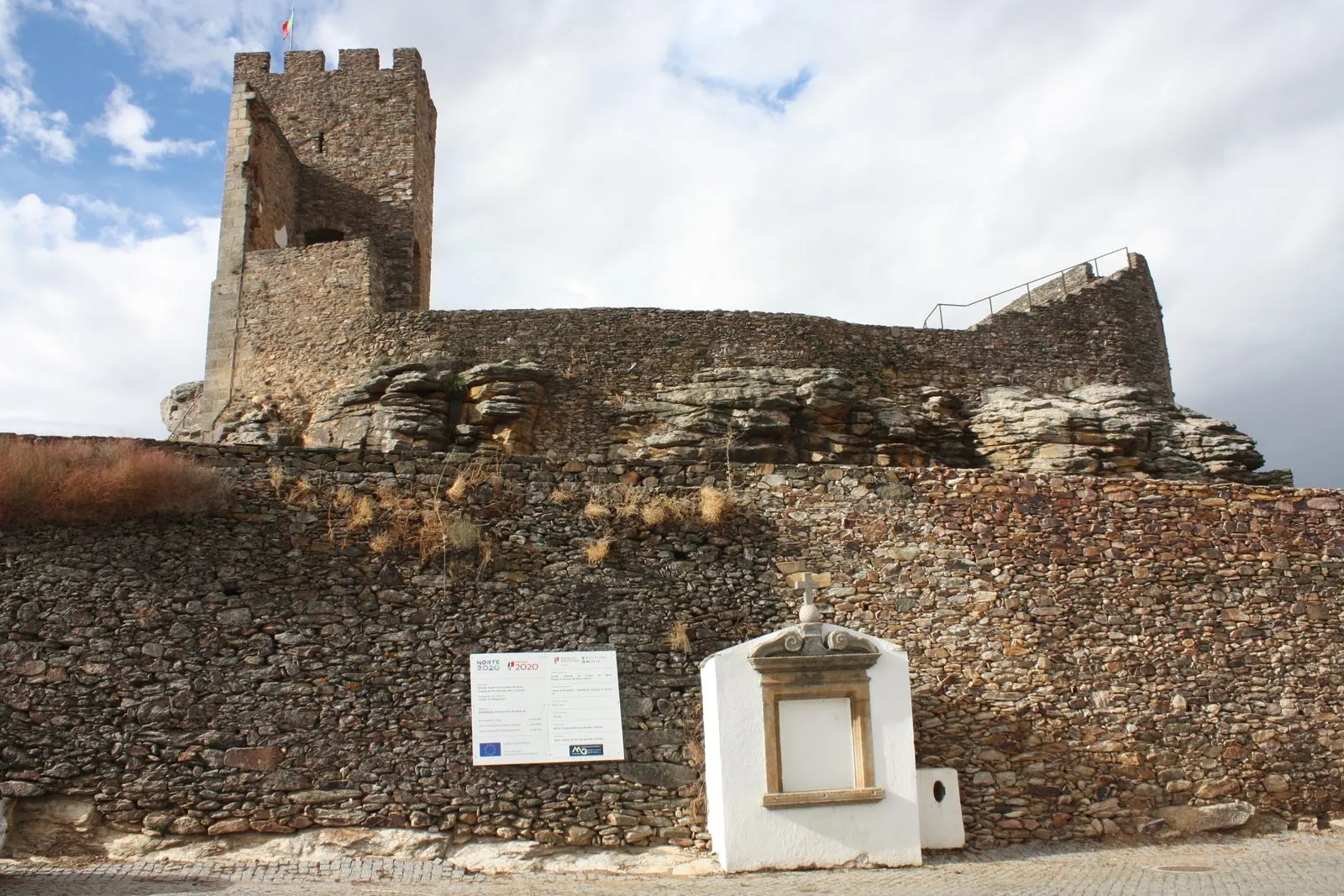
The Castle of Mogadouro occupies a rocky outcrop in the centre of the town of Mogadouro, in the northeast of Trás-os-Montes. Little survives of the complex that the Templars rebuilt in the twelfth century and that the Order of Christ and the Távoras turned into a residence: the keep and part of the walls. Even so, the castle well sums up the history of the Trás-os-Montes frontier. It was a military stronghold, a commandery of a religious order, a seigneurial palace and, finally, a ruin.
Origins still under discussion
The national register of Cultural Heritage, I.P. stresses that the castle’s origins are much debated. Excavations near the present parish church detected an occupation level of Roman date, which may be linked to an older proto-historic settlement, but without preserved contexts. The excavated area was small, and the register notes that the site awaits a full programme of study.
The first secure date is 1145. In that year, according to the national register, Fernão Mendes de Bragança donated Mogadouro to the Templars, together with the neighbouring fortress of Penas Róias. The municipal page presents the donation as made by King D. Afonso Henriques, in the second quarter of the twelfth century. In either case, the donation presupposes an existing military stronghold, probably dating from the first decades of that century.
The Templar fortress
The Order of the Temple is thought to have completely rebuilt this first stronghold, following the military architecture of the time. Only part of the Romanesque keep survives from that campaign. The municipality describes it as set on the rocky outcrop and isolated within the walled enclosure. The original layout cannot be reconstructed, but the register admits it would not have been very different from that of Penas Róias. There, an inscription of 1172 documents the Templar work: an isolated tower at the centre of the enclosure and a wall defended by square towers. The same logic appears in other Templar castles, such as Tomar and Almourol.
In 1197, D. Sancho I exchanged Mogadouro and Penas Róias for territories on the Beira Baixa frontier. A few decades later, the town reappears as a possession of the Temple. D. Afonso III granted it two charters, in 1272 and 1273. In 1319, Mogadouro passed to the Order of Christ, whose history can be followed at the Convent of the Order of Christ, in Tomar.
Gothic reform and the commanders’ palace
This phase is credited with a Gothic reform. The national register relies on the oval plan of the curtain wall, as drawn by Duarte de Armas at the beginning of the sixteenth century. This drawing, the oldest known depiction of the castle, shows the keep at the centre of the courtyard, apparently linked to a higher wall-walk. The register considers any conclusion about the final medieval transformations premature.
As the seat of a commandery, the castle was adapted into a residence for the commanders. In the fourteenth and fifteenth centuries several buildings were erected inside, especially under the Távoras, in the first half of the fifteenth century. Duarte de Armas drew a residence of three perpendicular wings, of two storeys. The former fourteenth-century dependencies served as stables, and the constructions eventually came to surround the keep itself.
In military terms, the castle drawn at the beginning of the sixteenth century had only three towers: the keep and two attached to the wall, one pentagonal and one square. A lower barbican surrounded the whole stronghold. The national register also mentions a small game enclosure where rabbits were kept.
From palace to ruin
The municipality indicates that the Távoras kept the castle as a palatial residence until 1759, when their property was confiscated by the Crown. From then until 1834 it was the residence of the juízes de fora (appointed magistrates), after which it fell into ruin. The national register cites an eighteenth-century designation, “Palácio, a que chamam castelo” (“Palace, which they call a castle”). It also describes the progressive destruction of the complex during the early modern period, accelerated in the last centuries. It has reached us as a ruin of which the keep and part of the walls survive. The register’s bibliography includes a 2006 article on an intervention at the castle, but the record does not describe the works.
Classification and protection
The castle is a National Monument under Decree No. 35 443, published in the Diário do Governo, I Série, No. 1, of 2 January 1946. The decree classifies the “Castelo da vila” in the municipality of Mogadouro. The special protection zone, with a non aedificandi zone, was set by Ordinance of 15 November 1965, published in the Diário do Governo, II Série, No. 29, of 4 February 1966. It is not part of any World Heritage property.
Preparing the visit
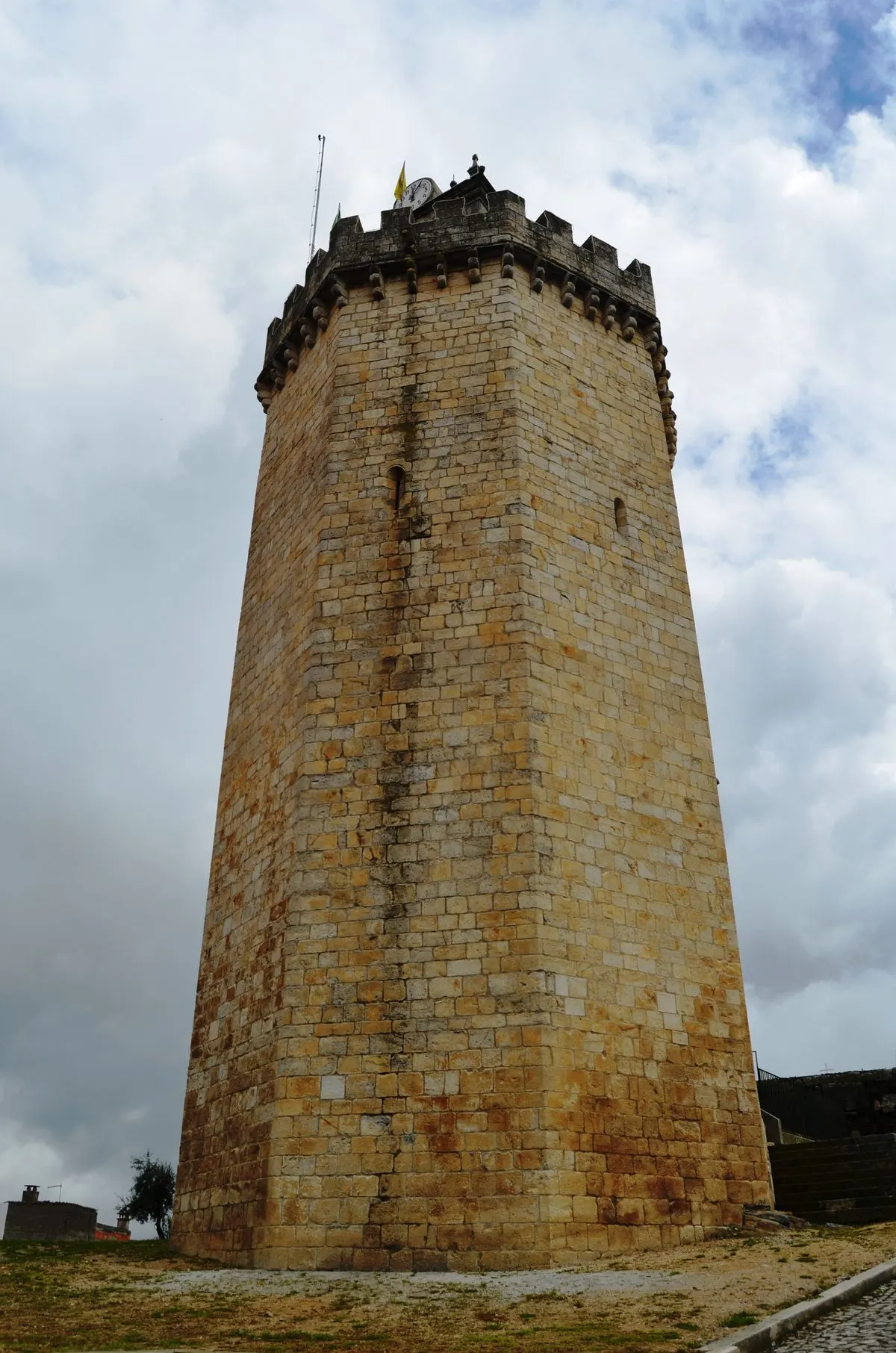
The castle stands in the centre of the town and is visible from public space. The municipal page presents it together with the Clock Tower (Torre do Relógio). When consulted on 5 November 2026, that page did not publish opening hours, prices or conditions of access to the interior of the tower. The Mogadouro tourist office operates at the Casa das Artes e Ofícios, in the town’s Civic Centre, according to the Municipality’s contacts page. Confirm there, or on the municipal page for the castle, whether it is possible to climb the tower.
To complete the Templar route of the municipality, continue to the Castle of Penas Róias, donated to the Order in the same year. In the district, the Castle of Bragança shows another scale of frontier fortification. The city of Bragança and the North serve as a starting point, and the national network is listed under castles of Portugal.
Photograph by Reis Quarteu, 18 September 2020. Original on Wikimedia Commons, under CC BY-SA 4.0; resized and compressed for the web, without altering the composition.
Frequently asked questions
- Who built the Castle of Mogadouro?
- The national register of Cultural Heritage, I.P. indicates that a stronghold already existed in 1145, when Fernão Mendes de Bragança donated Mogadouro and Penas Róias to the Templars. The Order of the Temple is then thought to have rebuilt the fortress; part of that Romanesque work survives in the keep.
- What remains of the castle today?
- According to the national register, only the keep and part of the old walls survive. The residential buildings that the commanders and the Távoras built inside disappeared during the early modern period.
- Is the Castle of Mogadouro classified?
- Yes. It is a National Monument under Decree No. 35 443, published in the Diário do Governo, I Série, No. 1, of 2 January 1946. It has a special protection zone, with a non aedificandi zone, set by Ordinance of 15 November 1965.
- Are there visiting hours?
- When consulted on 5 November 2026, the municipal page about the castle did not publish visiting hours or conditions. Confirm with the tourist office of the Mogadouro Municipal Council before going.
Sources
- Património Cultural, I.P. — Castelo de Mogadouro (70650)
- Património Cultural, I.P. — Atlas do Património Classificado, Castelo de Mogadouro (NINV 2416)
- Diário do Governo — Decreto n.º 35 443, de 2 de janeiro de 1946
- Município de Mogadouro — Castelo de Mogadouro e Torre do Relógio
- Município de Mogadouro — Contactos e localização
- Wikidata — Castelo de Mogadouro (Q5049790)
Keep exploring
Heritage nearby
More places to discover from here. Approximate straight-line distances, within 50 km.