Monuments
Penas Róias Castle
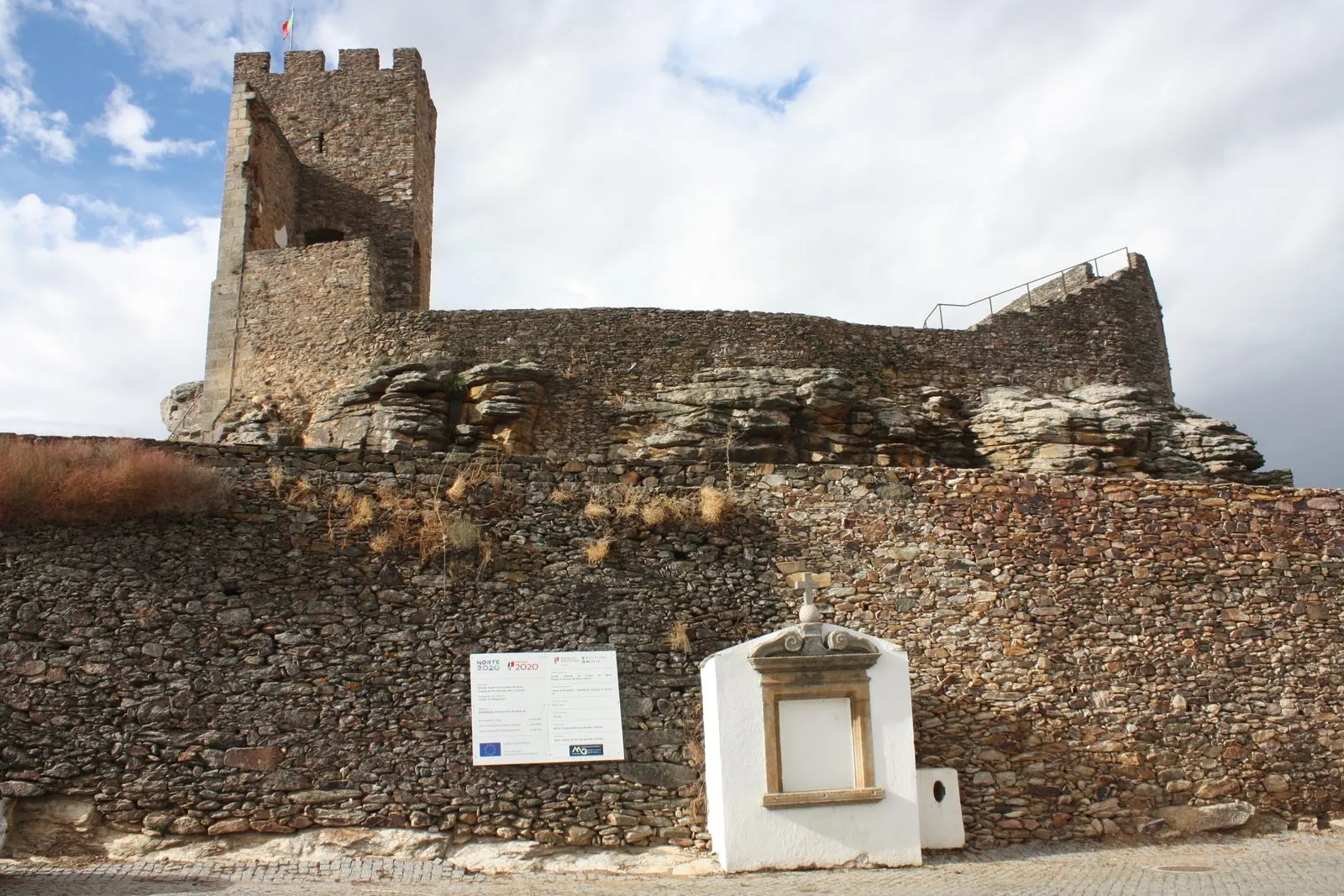
Templar keep of Castelo de Penas Róias, Mogadouro: inscription dated 1172 or 1182, built on a Trás-os-Montes rock and a National Monument since 1945.
- Location
- Penas Roias, Mogadouro, Bragança
- Built
- séc. XII (torre de menagem templária, inscrição de 1172 ou 1182)
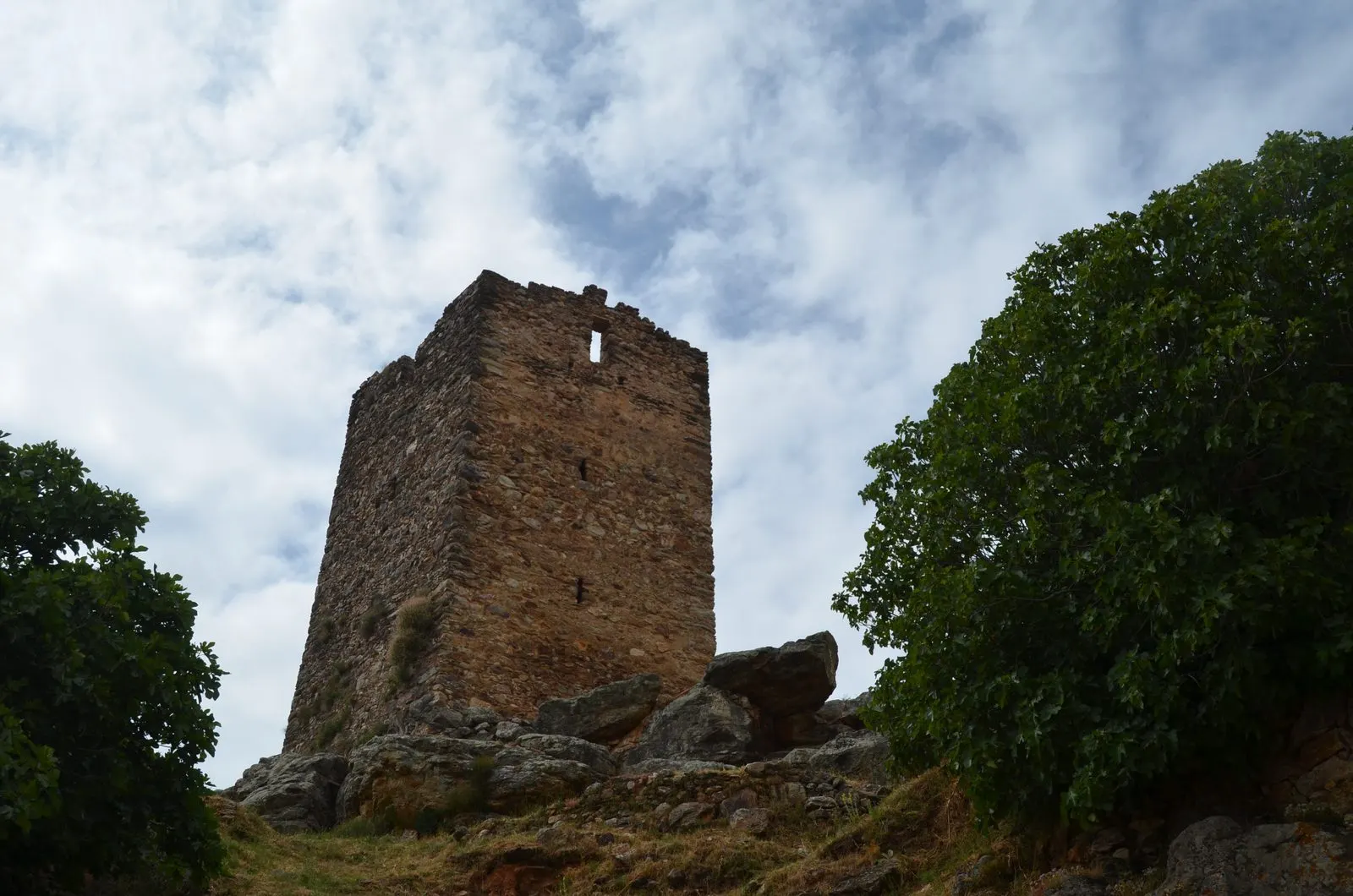
On the summit of a hill north of the village of Penas Róias, in the municipality of Mogadouro, a square tower rises above granite boulders. It is what remains of the Castle of Penas Róias, which the national register of Cultural Heritage, I.P. considers one of the most important medieval fortresses in Trás-os-Montes. In the 12th century it defended this border area at a time when the new kingdom of Portugal was asserting itself both against Islam and against the neighbouring kingdom of León. The ruin is today one of the clearest testimonies to the presence of the Templars in the northeast of the country.
Before the castle
The origins of settlement on the site are poorly known. The national register mentions numerous proto-historic materials, which may correspond to a fortified settlement. This would have extended to neighbouring areas, such as Valado, at the foot of the slope, and the rock shelter of Fraga da Letra. There follows a gap from the Roman period, a sign that the site ceased to be of interest, unlike many other Romanised fortified settlements. The High Middle Ages also left no trace. Only in the 12th century, or shortly before, do references and traces of occupation reappear.
The donation to the Templars
In 1145, Penas Róias was donated to the Templars by Fernão Mendes de Bragança, who then governed the Land of Bragança. The same donation included the neighbouring Castle of Mogadouro. The national register understands that, by that time, there was already a defensive stronghold of some importance here; otherwise, the donation would not have been justified.
This earlier stronghold may explain the traces of circular-plan towers still visible at the corners of the castle. Circular towers are unusual in medieval military architecture in northern Portugal, which generally preferred square plans. Some authors have associated them with the Leonese tradition, common in the castles on the right bank of the Côa. Studies by Mário Barroca, cited by the register, also date them before the Templar work. Barroca, however, links them to a higher quality of construction rather than to Leonese influence. The municipality’s webpage states that the two visible towers indicate construction in the early 12th century.
The keep and its inscription
The Templar work is documented by an inscription built into the keep. It is badly weathered, and the lower lines are difficult to read. The national register, following Mário Barroca, reads the date as the Era of 1210 or 1219, that is, 1172 or 1182. It thus sets aside the date of 1166, traditionally proposed. Some 20th-century authors wished to see in the inscription the name of the master Gualdim Pais. The register considers this reading not entirely verifiable, but does not doubt that the campaign had the direct patronage of the Order.
Penas Róias thus belongs to a group of Romanesque Templar castles marked by inscriptions, to which Tomar and Almourol also belong. The keep, of square plan, stood in the centre of the walled courtyard. It had at least three storeys, and entry was through a raised doorway, by means of a removable ladder. The municipality also notes a Templar cross carved on the lintel of the entrance. For the stylistic context, see Romanesque architecture in Portugal.
From the Order of the Temple to ruin
The Templars did not hold the castle for long. The national register indicates that they exchanged it for territories further south, in the Beira Interior: Idanha-a-Velha, in 1197, and a parcel near Vila Velha de Ródão, in 1199. According to the municipality’s webpage, after several exchanges between the Crown and the Templars, Álvaro Pires de Távora acquired the castle in 1457.
At the beginning of the 16th century, Duarte de Armas drew Penas Róias for the Livro das Fortalezas. The drawing still shows the curtain wall and a small settlement, somewhat apart from the castle. The municipality dates the drawing to 1509 and describes the fortress as still in relatively good condition. Two and a half centuries later, according to the national register, not a single stretch of the outer curtain wall remained. The municipality adds that the castle returned to the Crown in 1759 and that the ruin accelerated after the extinction of the former municipality of Penas Róias, in 1836.
Classification
The castle is a National Monument under Decree No. 34 452, published in the Diário do Governo, I Série, No. 59, of 20 March 1945. The national register does not indicate a special protection zone of its own. The municipality’s webpage refers to the general protection zone provided for in Article 43 of Law No. 107/2001. The castle does not form part of any World Heritage property.
Planning the visit
The castle stands on the summit of the hill north of the village, above rock outcrops, and the surrounding terrain is uneven. When consulted on 5 November 2026, the webpage of the Municipality of Mogadouro did not publish opening hours, access rules or directions to the tower. Please confirm conditions with the municipal tourist office, at the Casa das Artes e Ofícios de Mogadouro, before going.
The visit pairs well with the Castle of Mogadouro, a few kilometres away, which shares the same Templar history. In the district, the Castle of Bragança completes the picture of the Trás-os-Montes frontier. For more fortresses, consult the castles of Portugal and the guide to the North.
Photograph by Pedro from Maia (Porto), Portugal, of 15 June 2020. Original on Wikimedia Commons, under CC BY 2.0; resized and compressed for the web, without altering the composition.
Frequently asked questions
- When was the Castle of Penas Róias built?
- The keep is the product of Templar work commemorated by an inscription. The national register reads in it the Era of 1210 or 1219, that is, the year 1172 or 1182, and rejects the traditional date of 1166. Earlier still, in 1145, the castle already existed, as it was donated to the Templars.
- Was the keep built under Gualdim Pais?
- Some authors read the name of the Templar master Gualdim Pais in the inscription, but the national register considers this reading not entirely verifiable. It nevertheless accepts that the work enjoyed the direct patronage of the Order.
- What remains today?
- Mainly the square keep, which had at least three storeys and a raised doorway, along with traces of circular corner towers. Of the outer curtain wall, still drawn by Duarte de Armas at the beginning of the 16th century, not a single stretch survived two and a half centuries later.
- Is the castle protected?
- Yes. It is a National Monument under Decree No. 34 452, published in the Diário do Governo, I Série, No. 59, of 20 March 1945.
Sources
- Património Cultural, I.P. — Castelo de Penas Róias (69828)
- Património Cultural, I.P. — Atlas do Património Classificado, Castelo de Penas Róias (NINV 2418)
- Diário do Governo — Decreto n.º 34 452, de 20 de março de 1945
- Município de Mogadouro — Castelo de Penas Roias
- Município de Mogadouro — Contactos e localização
- Wikidata — Castelo de Penas Róias (Q5049813)
Keep exploring
Heritage nearby
More places to discover from here. Approximate straight-line distances, within 50 km.