Monuments
Church of Saint Michael of Entre-os-Rios
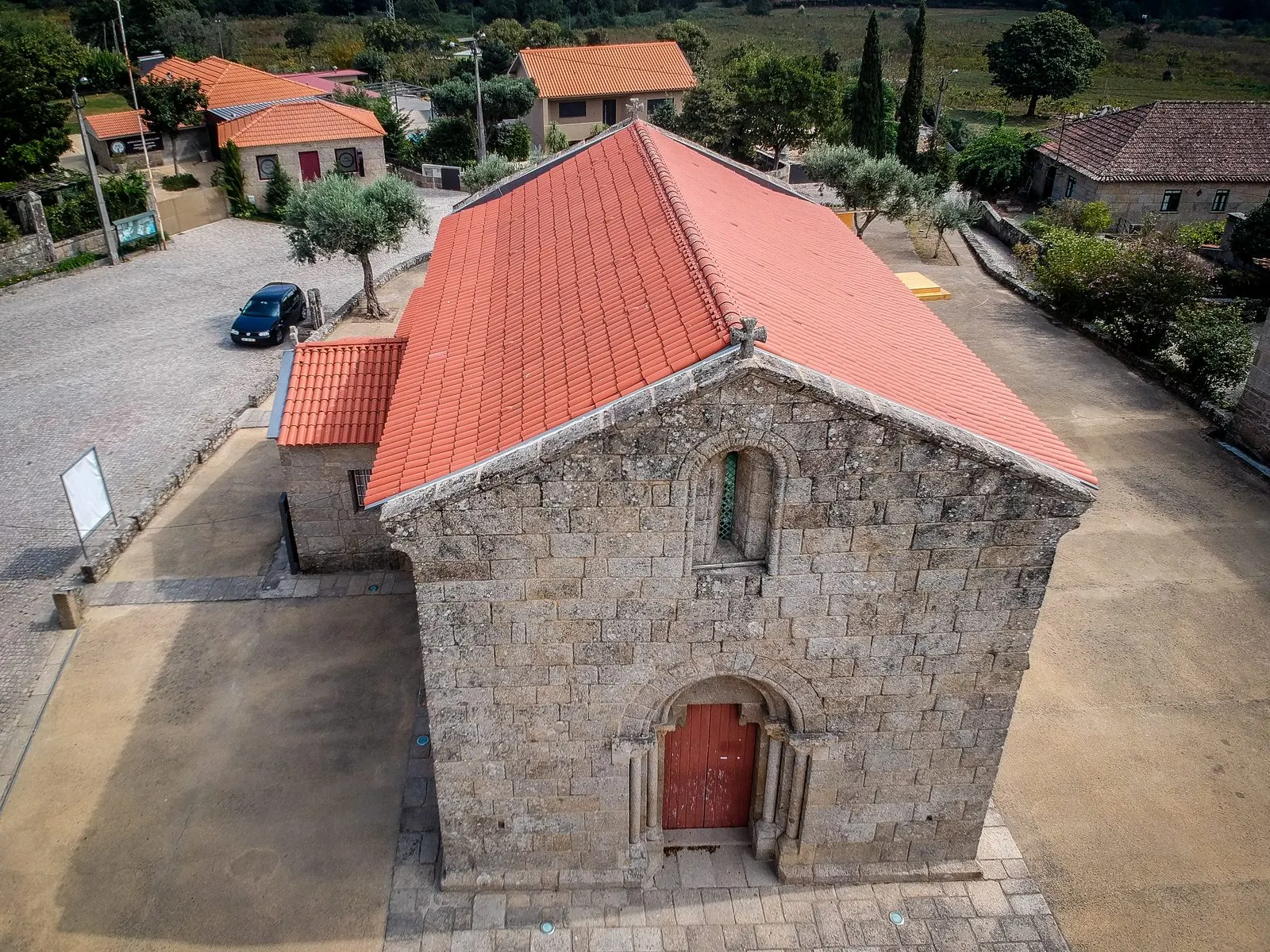
São Miguel de Entre-os-Rios Church, Eja (Penafiel): late Romanesque, with pointed-arch portals and a Baroque high altarpiece. A listed National Monument.
- Location
- Entre-os-Rios, Eja, Penafiel, Porto
- Built
- Românico tardio (século XIII ou XIV, segundo as fontes); capela-mor alargada e retábulo-mor do século XVIII; restauro iniciado em 1936
The Church of Saint Michael of Entre-os-Rios, also called the Church of Saint Michael of Eja, stands on Largo de São Miguel, in the locality of Entre-os-Rios, in the civil parish of Eja, in the municipality of Penafiel, on a small plateau overlooking the course of the Douro. It is a National Monument and one of the monuments of the Rota do Românico. It does not have the sculpture found in other churches on the route; its interest lies in its position, its early documentation and the way it shows the survival of Romanesque forms in the Gothic period.
A border place
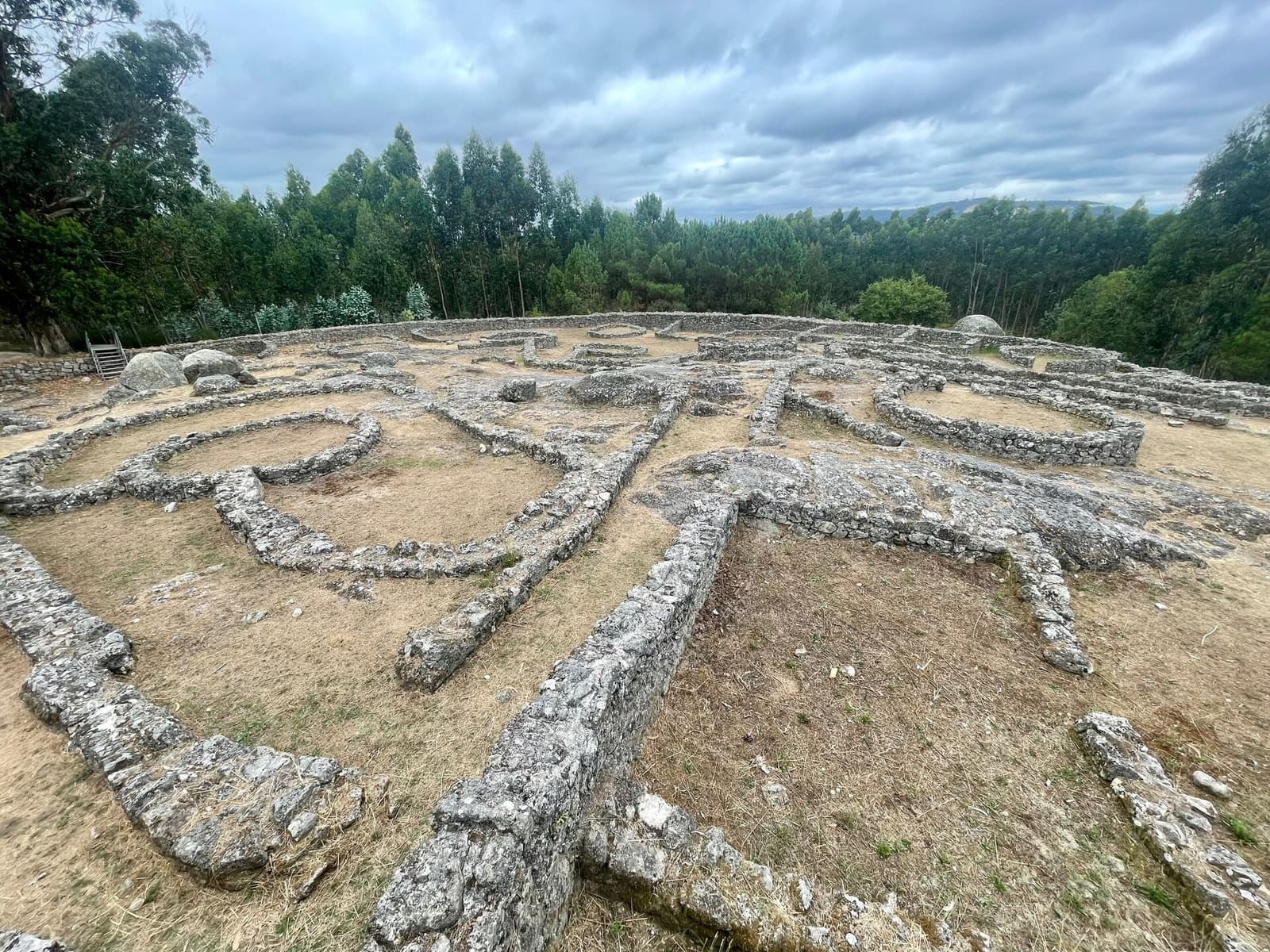
The Cultural Heritage register, I.P. and the Rota’s monograph both begin by emphasising the site’s position. The plateau has been occupied since protohistory: stretches of the wall of a hillfort survive, and late Roman pottery has turned up. In the Early Middle Ages, Eja was the seat of the territory of Anégia, documented from the 9th century, within the political and military reorganisation of the Douro valley that the monograph describes. The choice of the patron saint, Saint Michael, commander of the heavenly army, may not be unrelated, according to the same source, to the climate of the Reconquista.
The oldest documentary reference to the church comes from the Book of Testaments of the Monastery of Paço de Sousa: a document of 1095 mentions the donation of part of the church to that monastery, and another, from 1120, records a further donation of rights over it. The present building is considerably later than these dates.
Late Romanesque
As for the date of the building, the sources give a wide margin. The register states that it dates “presumably from the 13th century”; the Rota’s chronology says the 13th or 14th century; and Carlos Alberto Ferreira de Almeida, cited in the monograph, considers that the church is no earlier than the 14th century. All of them describe a church with a single nave and a square chancel, lower and narrower than the body, with sparsely pierced elevations and no significant decorative details.
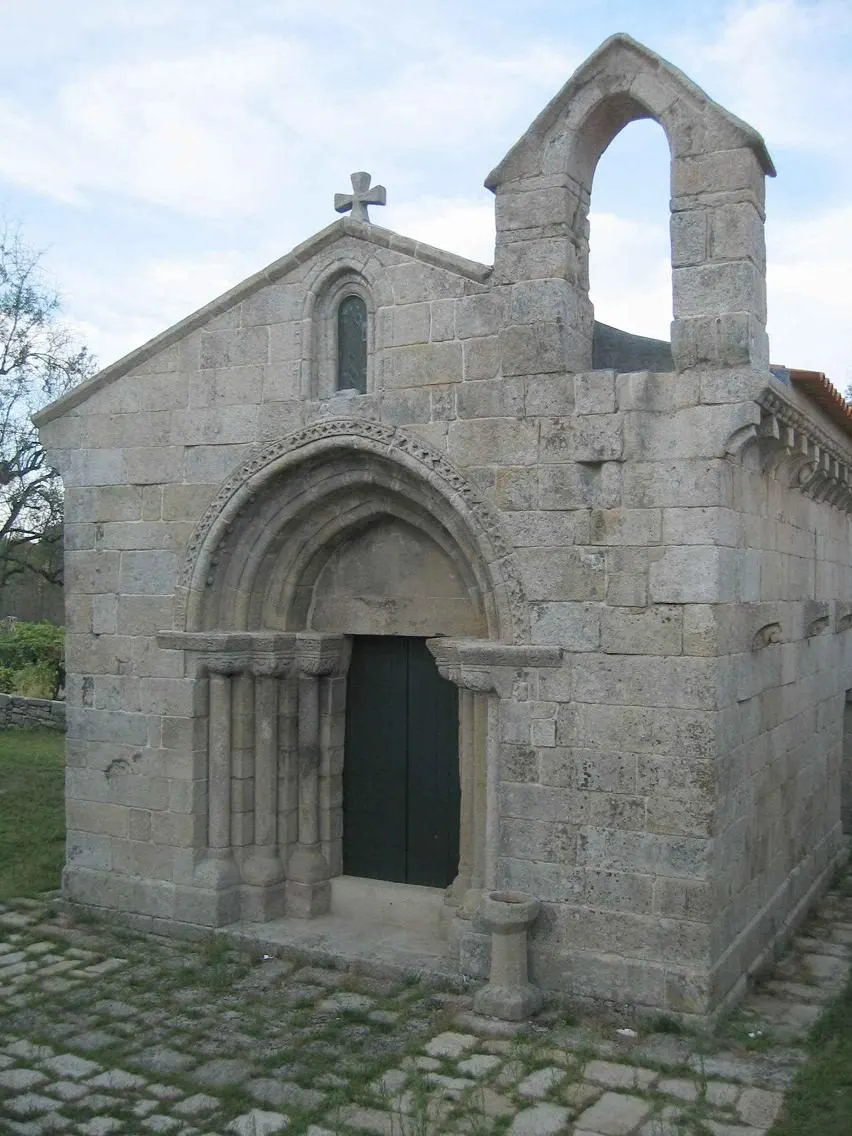
The main façade has little volume, with a pointed-arched portal, without columns or tympanum, resting on well-marked imposts, and surmounted by a small window. The gable finial has a cross at its apex and two 18th-century pinnacles; the monograph notes traces of the rope or chain of a bell above the portal, suggesting that the gable once supported a medieval belfry. The north portal is more decorated than the main one: it has an archivolt with diamond-point motifs and eight-petalled faceted, chamfered leaves, motifs that are repeated on the interior triumphal arch, also pointed, with vine leaves. The monograph sees here elements of late Romanesque and regional Gothic, and links the church to the group of late Romanesque churches of the Lower Tâmega, which includes Boelhe, Cabeça Santa and Abragão, in Penafiel. For the style, see Romanesque architecture in Portugal and, in the municipality, the Church of Saint Gens of Boelhe.
Ferreira de Almeida noticed one detail: the granite ashlar blocks show almost no mason’s marks, unlike what is usual in works of the same period; only one mason’s abbreviation was found on the façade. On the north wall of the chancel there is an arcosolium, a niche for a tomb, partly cut through by a doorway opened during a modern campaign.
The 18th-century chancel
The most important modern work was on the chancel. In the 18th century it was extended in depth and, according to the monograph, also raised; new openings were made, and the space became quite withdrawn in relation to the nave. There a high altarpiece in gilded woodcarving in the national style was installed, with concentric arches, acanthus foliage with bunches of grapes, children, birds and angels’ heads. On six sections of the ceiling and five on the arch of the tribune, Marian emblems are carved: the mirror, the enclosed garden, the ladder, the tower, the roses, the well, the cypress, the sun, the fountain, the moon and the star, and the olive tree. The monograph suggests that this programme may have been commissioned by the Brotherhood of Our Lady, based in the church. For the context of the woodcarving, see gilded woodcarving.
The altarpiece contains an image of Saint Michael weighing souls, in armour and with the devil under his feet, and an image of Saint John the Baptist. According to the register, the upper choir and the side altarpieces are later, from the following century; the Rota’s chronology dates the side altarpieces and the pulpit to the 19th century and the azulejo cladding to the 20th century. In 1758 the parish was small, with about thirty households and around a hundred inhabitants, and the church, isolated on the top of a hill above the Douro, held Mass every Saturday.
Classification and restoration
It is a National Monument under Decree No. 14 425, published in the Diário do Governo, I series, No. 228, on 15 October 1927. The register refers to a proposal for a special protection zone, with a favourable opinion from the IGESPAR Advisory Council dated 12 December 2007, and notes that it only takes effect after publication in the Diário da República; we have not confirmed that it has been published. The text of the 1927 decree is an image scan that we were unable to transcribe. The church is not included in any UNESCO listing.
Restoration began in 1936, under the direction of the architect Rogério de Azevedo, but the initial, more ambitious plan was not carried out; the register says that effective restoration only took place in the 1980s, which preserved the heritage from the modern period. Works followed in 1964, 1980–1982 and, within the framework of the Rota do Românico do Vale do Sousa, in 2003–2007 and in 2014. When consulted on 5 November 2026, the Rota indicated that for 2026 the conservation of the two side altarpieces of the nave and the associated sculptural ensembles was planned.
Preparing a visit
When consulted on 5 November 2026, the Rota do Românico page indicated that visits were by appointment (telephones +351 255 810 706 and +351 918 116 488; email [email protected]), Mass on Saturdays at 4 p.m., the patron saint’s feast on 29 September, and the monument as not accessible to people with reduced mobility. The page did not list a price. These details may change: please confirm them on the official page of the monument before travelling. For the region, see the page on the North.
Frequently asked questions
- What is the date of the Church of Saint Michael of Entre-os-Rios?
- The sources do not agree. The Cultural Heritage register presumably dates it to the 13th century; the chronology of the Rota do Românico says the 13th or 14th century; and Carlos Alberto Ferreira de Almeida, cited in the Rota's monograph, considers that the building is no earlier than the 14th century. The oldest reference to the church dates from 1095.
- What is the connection with Paço de Sousa?
- The Book of Testaments of the Monastery of Paço de Sousa records, in 1095, a donation of part of the church to that monastery and, in 1120, another donation of rights over it. According to the Rota do Românico, this is the oldest documentation known about the church.
- Is it part of the Rota do Românico?
- Yes. When consulted on 5 November 2026, the Rota do Românico website included the church among its monuments, with visits by appointment and accessibility listed as not accessible to people with reduced mobility.
- What is its classification?
- National Monument, under Decree No. 14 425, published in the Diário do Governo, I series, No. 228, on 15 October 1927.
Sources
- Património Cultural, I.P. — Igreja de São Miguel de Entre-os-Rios (70545)
- Património Cultural, I.P. — Atlas do Património Classificado e em Vias de Classificação (NINV 3688)
- Diário do Governo — Decreto n.º 14 425, de 15 de outubro de 1927 (I série, n.º 228)
- Rota do Românico — Church of Saint Michael of Entre-os-Rios
- Rota do Românico — Church of Saint Michael of Entre-os-Rios (monografia)
- Wikidata — Igreja de São Miguel de Entre-os-Rios (Q5994289)
Keep exploring
Heritage nearby
More places to discover from here. Approximate straight-line distances, within 50 km.