Monuments
Church of Santo Isidoro (Marco de Canaveses)
Church of Santo Isidoro, in Marco de Canaveses: 13th-century Romanesque, elaborate portal, 1536 fresco signed Moraes and National Monument since 2013.
- Location
- Santo Isidoro, Marco de Canaveses, Porto
- Built
- 2.ª metade do século XIII; pintura mural de 1536
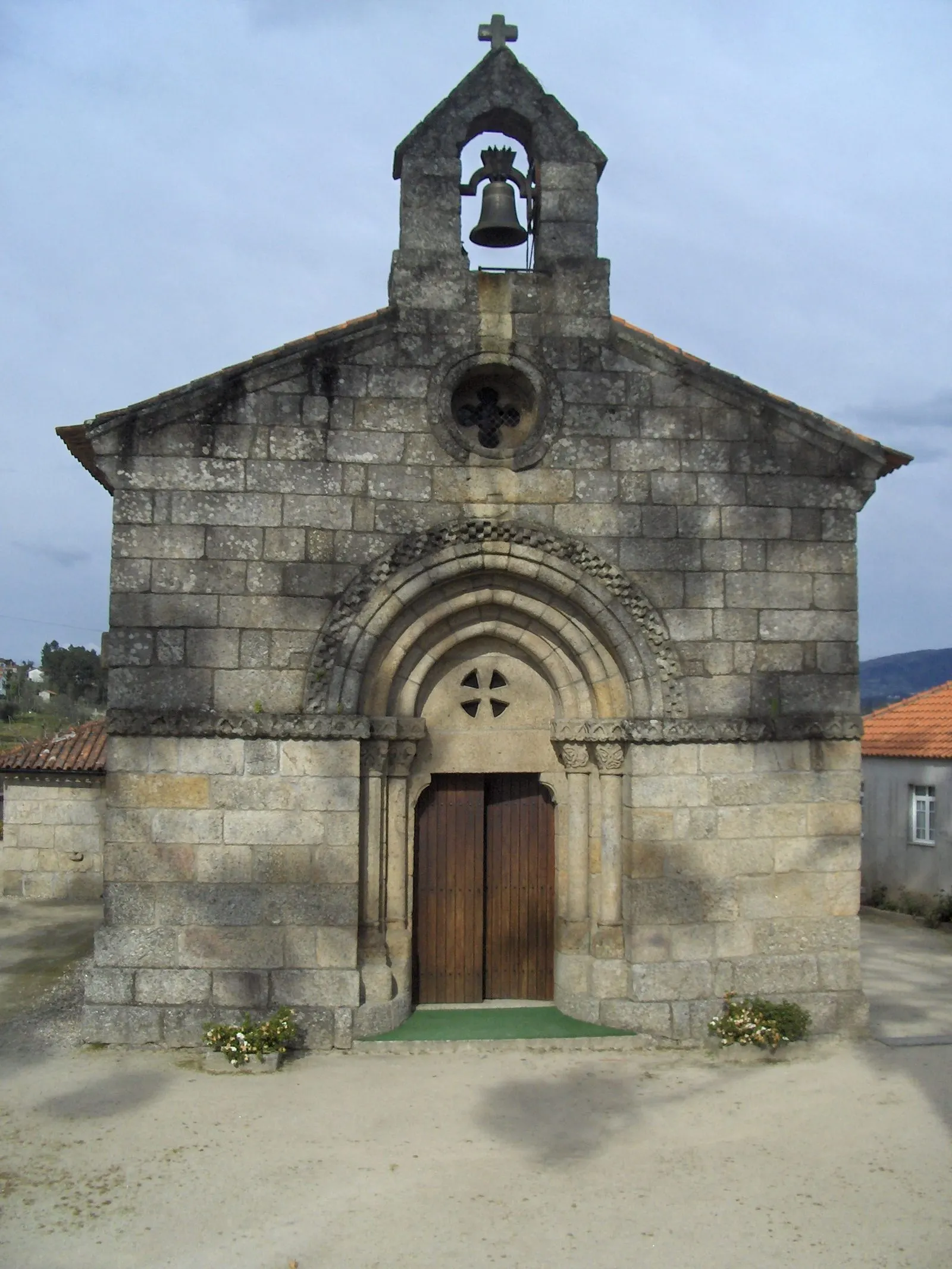
The Church of Santo Isidoro, at the place of Santo Isidoro, in the parish of Santo Isidoro e Livração, in Marco de Canaveses, is a small Romanesque church of simple plan, which the Rota do Românico describes as a temple of early Romanesque style in good condition. It was only classified as a National Monument in 2013. The official register uses only the designation «Igreja de Santo Isidoro».
Origins and dates
The Rota do Românico records the first reference to Santo Isidoro de Ribatâmega in 1115. The construction of the present temple is situated, based on the surviving Romanesque remains, in the second half of the 13th century, on a small platform, and dedicated to the bishop Saint Isidore. In 1520 the parish appears documented under the invocation of «Santo Isydro» and, according to the Rota’s chronology, in the 18th century the patronage is linked to Travanca, a monastery that also has its own page on this site.
Conservation works are recorded in the 1990s and, already within the scope of the Rota do Românico (which the monument joined in 2010), in 2017, on the sacristy roof, and in 2021, on the roofs, walls, openings, floors and ceilings, with enhancement of the forecourt.
What to see
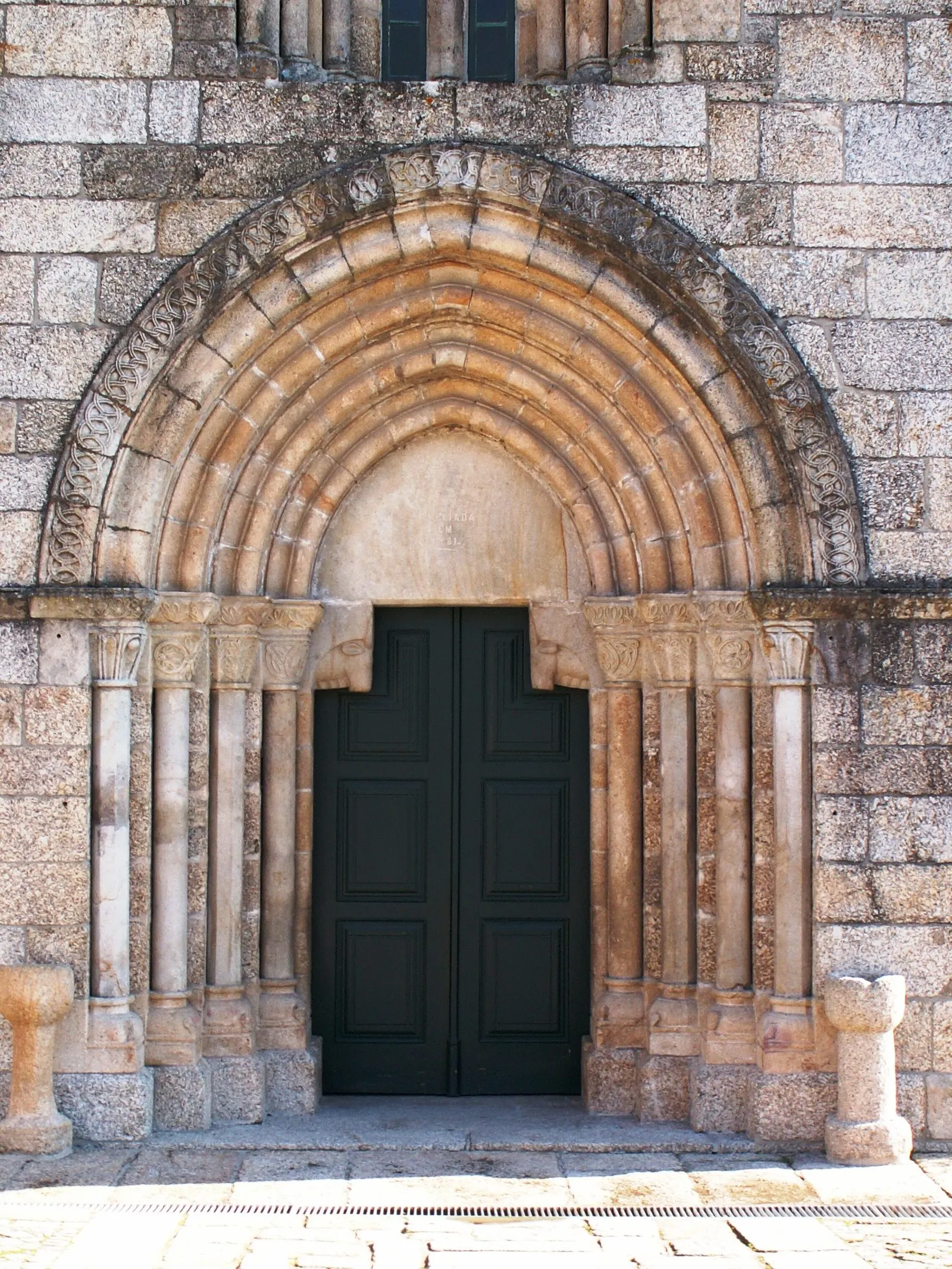
The most prominent element on the exterior is the main portal, elaborated to the scale of the building. The Rota links it to different traditions: the torus mouldings of the archivolts relate it to the Romanesque of the city of Porto, the prismatic and cylindrical shafts that support them recall the Romanesque scattered across the Sousa basin, and the palmettes in the rows of ashlar bring it closer to the Braga–Rates axis. For comparison, the page on São Pedro de Rates shows the other end of that axis.
Inside, light enters through narrow slit windows, which accentuates the austerity resulting from the 1977 restoration. The slightly pointed triumphal arch has no ornamentation at all. The mural painting covering part of the back wall of the chancel stands out: dated 1536 and signed by the painter Moraes, it is a triptych showing, from left to right, the Virgin with the Child, Saint Isidore and Saint Catherine of Alexandria. On the side walls one can still see, on the left, Saint Michael weighing souls and, on the right, the apostle Saint James dressed as a pilgrim. The painting of Saint Isidore was discovered in 1976.
Classification
The church is a National Monument under Decree No. 23/2013, published in the Diário da República, 1st series, No. 142, of 25 July 2013. The Atlas do Património Classificado also records the special protection zone, set by Ordinance No. 627/2013, Diário da República, 2nd series, No. 182, of 20 September 2013. It is not part of any UNESCO inscription. It should not be confused with the contemporary church by Álvaro Siza in the same municipality, which is covered by the page on Siza’s tentative list of works.
Preparing the visit
When consulted on 5 November 2026, the Rota do Românico indicated visits by appointment, with celebration on Saturdays at 4 p.m., and classified the monument as not accessible to persons with reduced mobility. The address given is Largo Padre Manuel R. Gomes, in Santo Isidoro. Bookings are made through the Rota’s contacts (+351 255 810 706 or +351 918 116 488, [email protected]). By train, the Rota points to Livração station, on the Douro Line, about 1.6 km away. Please confirm everything on the Rota’s website before travelling.
To see the wider group to which it belongs, consult the Rota do Românico and the page on Romanesque architecture in Portugal. In the same municipality are the Church of Vila Boa de Quires and the Church of Vila Boa do Bispo.
Photograph by Alegna13, dated 9 April 2007. Original on Wikimedia Commons, under CC BY-SA 3.0; resized and compressed for the web, without altering the composition.
Frequently asked questions
- Is it the Siza church in Marco de Canaveses?
- No. The Church of Santo Isidoro is a Romanesque church, classified as a National Monument. The church in Marco de Canaveses designed by Álvaro Siza is a contemporary work that appears on the tentative list of the architect's works for World Heritage status.
- When dates the mural painting?
- The Rota do Românico dates the fresco to 1536 and refers to the signature of the painter Moraes. It shows, in a triptych, the Virgin with the Child, Saint Isidore and Saint Catherine of Alexandria. It was discovered in 1976.
- What is the classification?
- National Monument, by Decree No. 23/2013, published in the Diário da República, 1st series, No. 142, of 25 July 2013. The special protection zone was set by Ordinance No. 627/2013, of 20 September 2013.
- How can it be visited?
- When consulted on 5 November 2026, the Rota do Românico indicated visits by appointment, with celebration on Saturdays at 4 p.m., and the monument as not accessible to persons with reduced mobility.
Sources
Keep exploring
Heritage nearby
More places to discover from here. Approximate straight-line distances, within 50 km.