Monuments
Celas Monastery
Coimbra's Celas Monastery, founded in the 13th century by D. Sancha: circular-plan church, Gothic capitals in the cloister, 16th-century works and protection.
- Location
- Celas, Coimbra, Coimbra
- Built
- início do séc. XIII; igreja sagrada em 1293; obras do séc. XVI
The Mosteiro de Celas, or Monastery of Santa Maria de Celas, stands on Celas Square, in the neighbourhood of the same name, in Coimbra. Now surrounded by residential streets and hospital buildings, it was a women’s house founded by an infanta, and it preserves one of the most debated pieces of Portuguese Gothic sculpture: the cloister capitals. The national heritage register itself acknowledges that the monastery’s medieval period “is full of contradictions and uncertainties”.
The foundation of D. Sancha
According to the national register, the monastery was founded in the early 13th century by the infanta D. Sancha, daughter of D. Sancho I, and the church was not consecrated until almost a century later, in 1293. The register admits that the course of the medieval works, and even their basic characteristics, is poorly known. The same document notes that D. Sancha did something similar at Alenquer, where she founded a Cistercian convent of which traces of a rotunda survive. The register’s bibliography treats Celas as a Cistercian monastery for women.
The church with a circular plan
The present church has a circular plan, in the manner of a rotunda, an unusual arrangement in Portugal. For a long time it was attributed to the first decades of the 16th century, when the abbess D. Leonor de Vasconcelos carried out extensive works. More recent theories push this planimetric scheme back almost to the monastery’s origins, by analogy with the rotunda at Alenquer. The question remains open, and the register presents both hypotheses.
The cloister capitals
The other medieval element consists of the Gothic capitals of the cloister, dating from the first half of the 14th century. According to the national register, they have nothing Romanesque about them: they represent the finest work of applied 14th-century Gothic sculpture produced in Portugal. They combine scenes from the life of Christ and the Virgin with secular and fantastical themes, in an iconographic programme without parallel in the country.
Specialists are divided on their origin. One hypothesis holds that they were a gift from King D. João III to the abbess D. Maria de Távora, conceived first for another location, possibly the Dionysian university college. Another attributes them to the original cloister at Celas, reused in the 16th century. Those seeking to understand the style will find context in Gothic architecture in Portugal.
The 16th-century campaigns
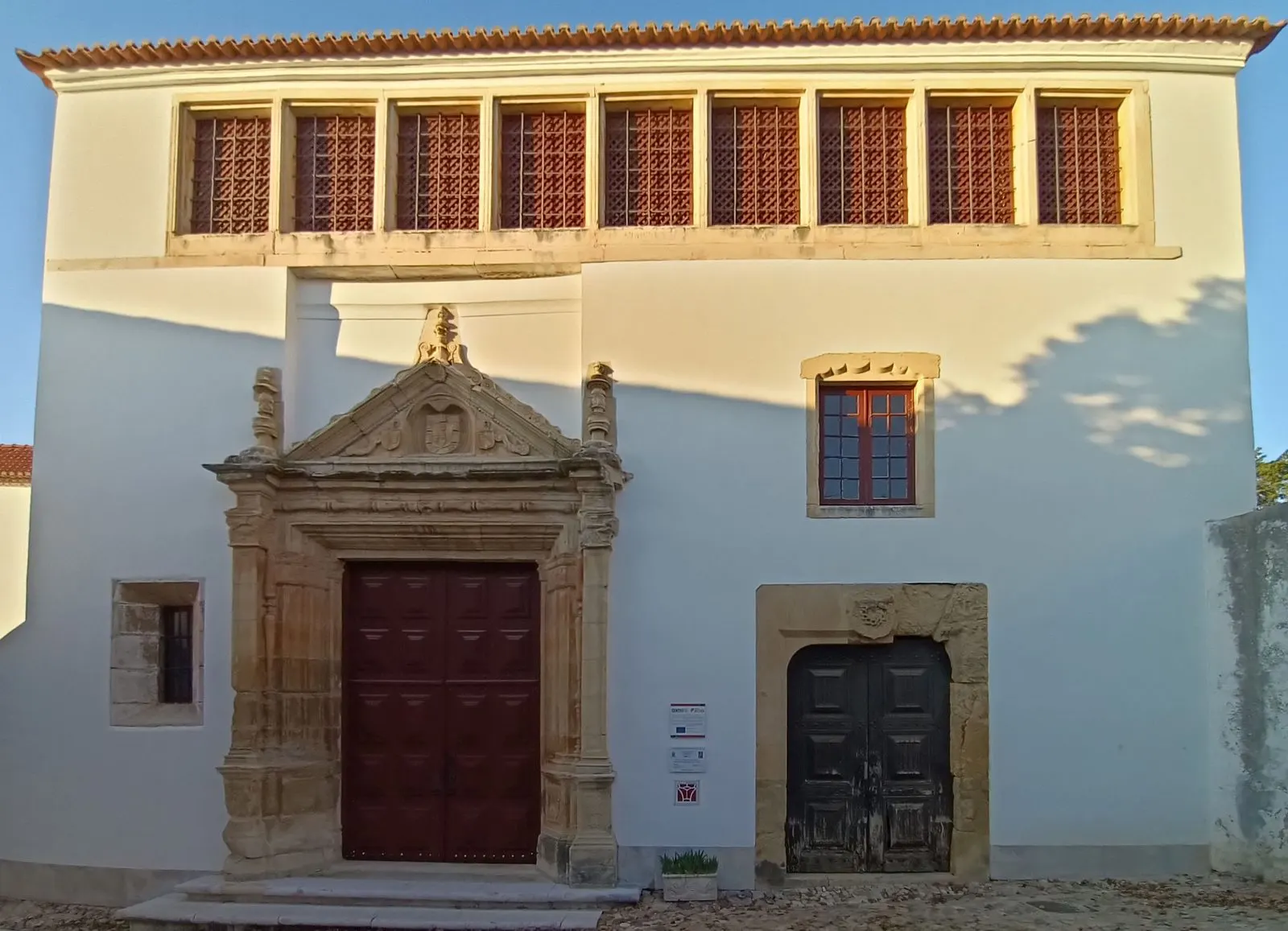
The early modern period is well documented in the Compêndio de toda a fazenda d’este Real Convento de Santa Maria de Celas, compiled by Frei Bernardo de Assunção in the mid-17th century. It records the major campaigns of two abbesses. During the time of D. Leonor de Vasconcelos (1521–1541) the church was renewed, with a new polygonal ribbed and buttressed vault, probably under the direction of Diogo de Castilho, and Renaissance works were carried out, such as the abbess’s tomb, commissioned from Chanterenne. The main portal, dated 1530, was also built, and on it, in the following century, the nine-window belvedere that crowns the façade was erected.
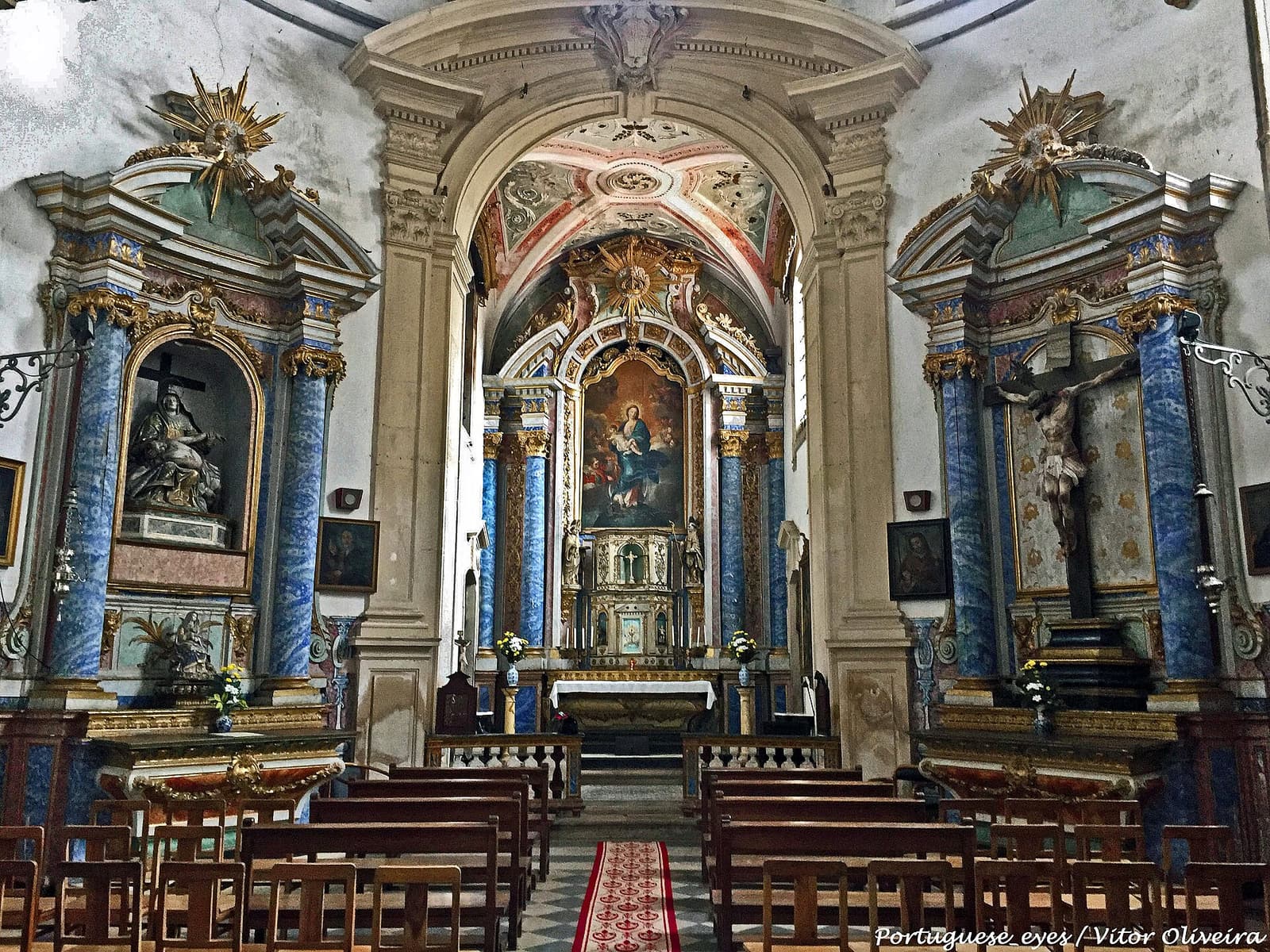
Under D. Maria de Távora (1541–1572), according to the register, came the first and last serious attempt to regularise the conventual buildings in a classical, orthogonal manner, with solutions shared by the 16th-century Coimbra colleges. The last major reform took place in the 18th century: a new chancel was built, but the essential organisation of the church remained unchanged.
Restoration and classification
The monastery was partially restored in the 1930s and 1940s, when, among other things, what remained of the cloister’s upper floor was demolished. The national register considers it one of the most important built ensembles in Coimbra.
It is a National Monument under the Decree of 16 June 1910, published in the Diário do Governo no. 136, 23 June 1910. The special protection zone was set by Portaria no. 223/2011 (Diário da República, 2nd series, no. 11, 17 January 2011), which replaced a 1959 portaria (published in 1960) establishing a non aedificandi zone. It is not a World Heritage Site; the University of Coimbra, inscribed by UNESCO, is a separate ensemble, described on the Coimbra page.
Planning a visit
The monastery is on Largo de Celas, in Santo António dos Olivais. Turismo de Coimbra highlights it as a point of interest in the neighbourhood. When we consulted sources on 5 November 2026, we did not find current opening hours, ticket prices or visiting conditions in any official source. The sources we did find are old and contradict one another, so we have not repeated them. To confirm details, contact Turismo de Coimbra (239 857 500; [email protected]) before you go.
In Coimbra, the monastery complements other monastic houses, such as the Mosteiro de Santa Clara-a-Velha, and the network of Cistercian routes in Portugal. For more comparable houses, see monasteries.
Photograph by ObserveOwl, 23 October 2024. Original on Wikimedia Commons, licensed under CC BY-SA 4.0; resized and compressed for the web, without altering the composition.
Frequently asked questions
- Who founded the Mosteiro de Celas?
- According to the national heritage register, it was founded in the early 13th century by the infanta D. Sancha, daughter of D. Sancho I. The church was not consecrated until almost a century later, in 1293.
- Are the cloister capitals Romanesque?
- No. The national register states that they have nothing Romanesque about them. They date from the first half of the 14th century and are considered the finest example of 14th-century Gothic sculpture produced in Portugal, with scenes from the life of Christ and the Virgin alongside secular and fantastical themes. Their origin is debated: they may have been made for another site or for the original cloister at Celas.
- What is its legal classification?
- It is a National Monument, under the Decree of 16 June 1910 (Diário do Governo no. 136, 23 June 1910). The special protection zone was set by Portaria no. 223/2011, published in the Diário da República, 2nd series, no. 11, on 17 January 2011.
- Can it be visited?
- When we consulted sources on 5 November 2026, we did not find a current official opening schedule. Older, unofficial sources mention afternoon visits on weekdays, but these are not confirmed. Contact Turismo de Coimbra (239 857 500; [email protected]) before going.
Sources
- Património Cultural, I.P. — Mosteiro de Celas (69791)
- Património Cultural, I.P. — Atlas do Património Classificado e em Vias de Classificação (NINV 2548)
- Diário do Governo — Decreto de 16 de junho de 1910 (n.º 136, 23-06-1910)
- Turismo de Coimbra — Celas (bairro e mosteiro)
- Wikidata — Mosteiro de Celas (Q10332616)
Keep exploring
Heritage nearby
More places to discover from here. Approximate straight-line distances, within 50 km.