Monuments
Church of Santa Maria de Airães
Late Romanesque church in Felgueiras, Santa Maria de Airães was enlarged to three naves, with an archivolt portal and 17th-century azulejos. National Monument.
- Location
- Lugar do Mosteiro, Airães, Felgueiras, Porto
- Built
- Finais do século XIII ou inícios do XIV; ampliada nos séculos XVII e XVIII
The Church of Santa Maria de Airães stands at Lugar do Mosteiro, in the parish of Airães, municipality of Felgueiras. It is a good example of how Romanesque forms persisted over time in the Tâmega e Sousa territory: the medieval construction is late, has elements of Gothic grammar, and was subsequently enlarged and covered with Baroque decoration. It is part of the Rota do Românico.
From the 11th to the 14th century
The Rota do Românico refers to records of a church on this site since 1091. The register of the Cultural Heritage Institute, I.P. speaks of documentary references pointing to the existence of the temple at the end of the 11th century, and adds a hypothetical date, 1184, said to have been inscribed on a pulpit stone since lost, recorded in the first decades of the 18th century by Francisco Xavier da Serra Craesbeeck. This is therefore a date transmitted by an eighteenth-century source, not an inscription that can be seen today.
The surviving building was constructed, according to the Rota, at the end of the 13th or beginning of the 14th century, judging by the late character of the capitals of the main portal and by the mouldings and capitals of the apse. The official register speaks of a remodelling between the 13th and 14th centuries, which gave the church elements and decoration of Gothic lineage and expanded the interior from one to three naves. Works in the 17th and 18th centuries enlarged the side naves and renewed the interiors. For comparison of style, see Romanesque architecture and Gothic architecture in Portugal.
What to see
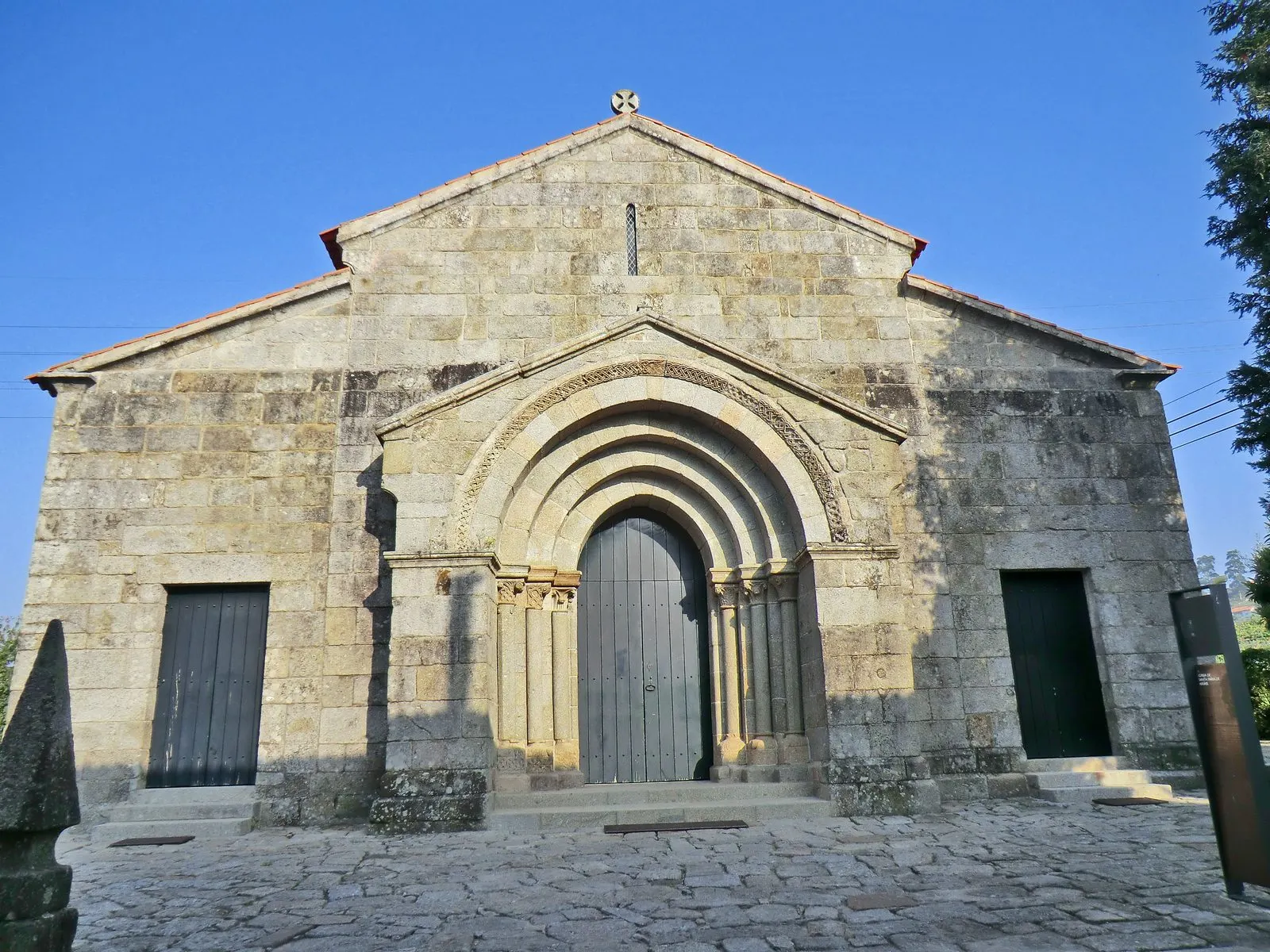
The plan is longitudinal. From the exterior, the register identifies a sacristy and a bell tower at the sides, the latter with access from outside. One enters through the main portal, with four perfect archivolts resting on imposts over smooth-shafted columns, but with capitals and bases carved with vegetal motifs and interlaced circles. According to the Rota, the interior preserves the apse, covered by a pointed barrel vault, and the central body of the main façade, which belong to the Romanesque single-nave construction.
At the base of the walls can be seen rusticated ashlar of Roman appearance, which led the Rota to admit an earlier building on the same site, possibly a Paleochristian or Suevo-Visigothic church. This is a hypothesis, not a proven fact.
The Baroque period left its mark on the chancel, lined with azulejo panels (in a seventeenth-century pattern, polychrome, in blue and yellow), with a central altarpiece and tabernacle in gilded carved wood and side altarpieces in polychrome carved wood with phytomorphic and shell-like decoration. On these coverings, see the pages on azulejo and gilded carved wood. The Rota also highlights the image of Santa Maria, in polychromed limestone, and, in the sacristy, a decorative piece that holds a Rococo nativity scene.
Classification
It is a National Monument under Decree No. 129/77, published in the Diário da República, I series, No. 226, of 29 September 1977. The Cultural Heritage register mentions a proposed special protection zone, with a favourable opinion from the IGESPAR Advisory Council of 12 November 2008, but does not indicate the publication of an ordinance. The church is not included in any UNESCO inscription.
Restorations
The Rota records preservation and restoration works in 1980 (by the parish, with technical guidance from DGEMN), in 1989 (roofing, external drainage and electrical installation) and in 1992 (roofs, ceiling and altars). In 1998 the church joined the Rota do Românico do Vale do Sousa, followed by works in 2004, 2005 and 2013–2014 on the roofs and exterior walls.
Planning the visit
The address given by the Rota is Rua de Santa Maria, Airães. As consulted on 5 November 2026, the Rota do Românico indicated visits by appointment, Mass on Saturdays at 4:00 p.m. and Sundays at 10:20 a.m., and that the monument is not accessible to people with reduced mobility. The feast of the patron saint is on 15 August. Confirm conditions and bookings on the Rota’s official page (rotadoromanico.com).
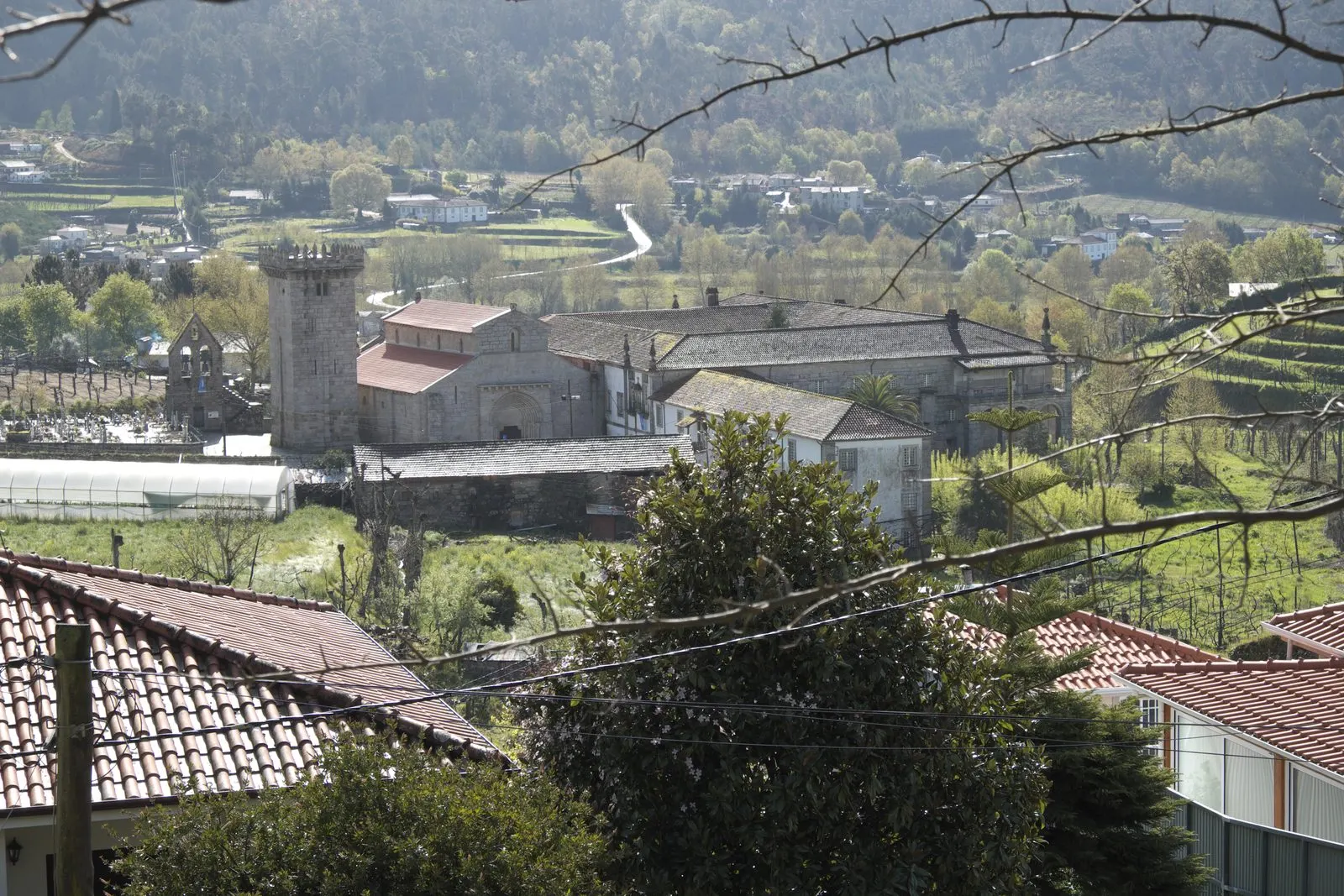
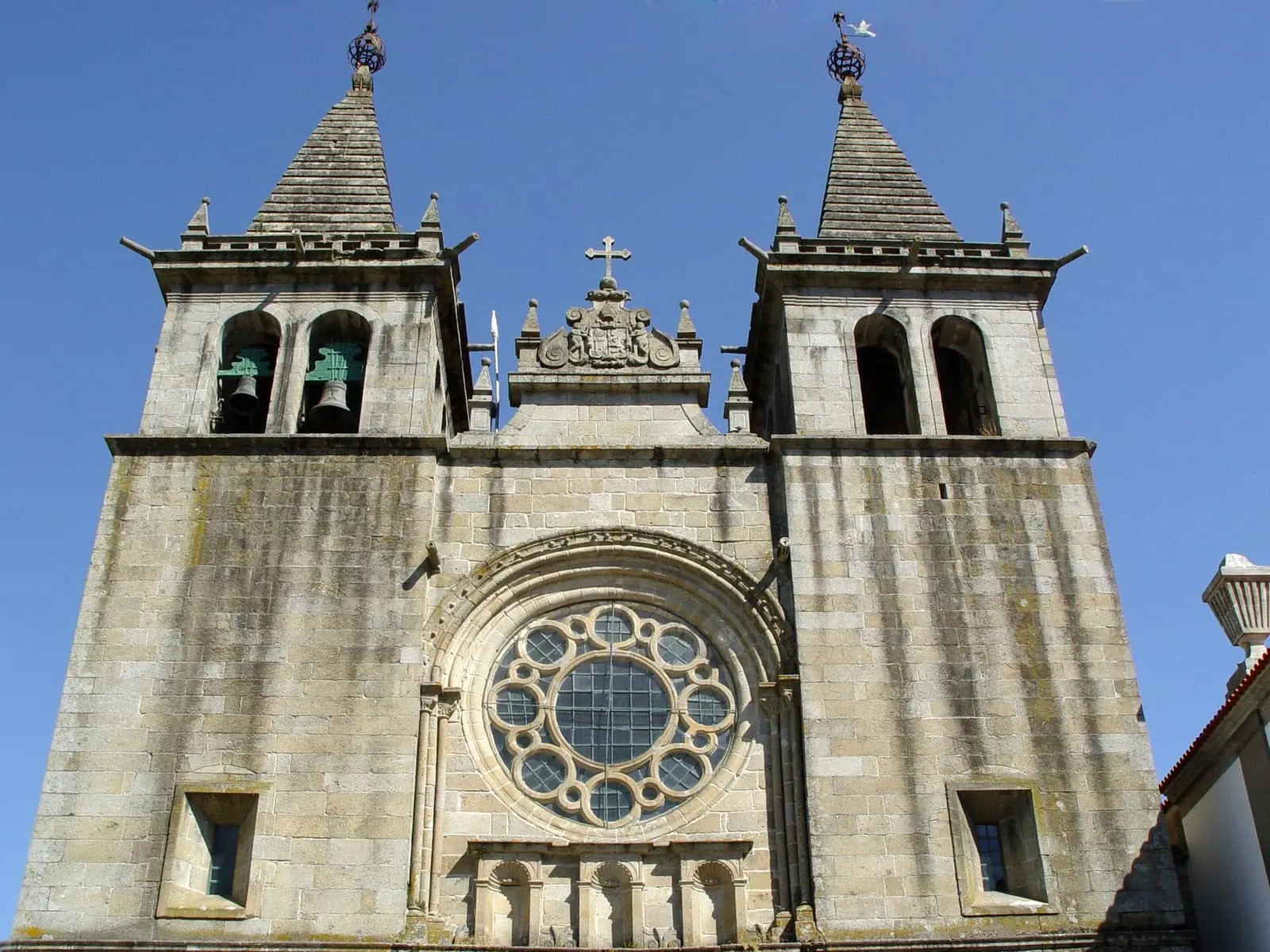
In the same region, the Mosteiro de Pombeiro, also in Felgueiras, is a major reference of Romanesque art in the Vale do Sousa.
Photograph by Alegna13, dated 22 September 2011. Original on Wikimedia Commons, under CC BY-SA 3.0; resized and compressed for the web, without altering the composition.
Frequently asked questions
- How old is the church of Airães?
- The Rota do Românico refers to records of a church on this site since 1091, but considers that the surviving medieval building was built at the end of the 13th or beginning of the 14th century. The Cultural Heritage register also mentions 1184 as a hypothetical date once inscribed on a pulpit stone that has since disappeared, cited in the 18th century.
- Is it a Romanesque or Gothic church?
- It is a late Romanesque work. The official register records a remodelling in the 13th and 14th centuries with elements of Gothic grammar, and the enlargement of the interior from one to three naves; the Rota do Românico highlights the late character of the portal capitals and preserves the apse and central body of the façade from the Romanesque construction.
- Can the church be visited?
- According to the Rota do Românico, as consulted on 5 November 2026, visits are by appointment and the monument is not accessible to people with reduced mobility. The indicated Mass times were Saturdays at 4:00 p.m. and Sundays at 10:20 a.m.
- What is its classification?
- National Monument, by Decree No. 129/77, published in the Diário da República, I series, No. 226, of 29 September 1977.
Sources
- Património Cultural, I.P. — Igreja de Santa Maria de Airães (71193)
- Património Cultural, I.P. — Atlas do Património Classificado e em Vias de Classificação (NINV 3624)
- Diário da República — Decreto n.º 129/77, de 29 de setembro de 1977 (I série, n.º 226)
- Rota do Românico — Igreja de Santa Maria de Airães
- Wikidata — Igreja de Santa Maria de Airães (Q5994174)
Keep exploring
Heritage nearby
More places to discover from here. Approximate straight-line distances, within 50 km.