Monuments
Quinta das Lágrimas
Visit Quinta das Lágrimas in Coimbra: the 1326 Fonte dos Amores, Fonte das Lágrimas, the legend of Pedro and Inês, historic gardens and IIP-listed heritage.
- Location
- Coimbra, Coimbra
- Built
- Canal dos Amores, 1326; palácio c. 1730, reconstruído após o incêndio de 1879
The Quinta das Lágrimas lies on the left bank of the Mondego, in Coimbra, a few hundred metres from the Mosteiro de Santa Clara-a-Velha. Two springs, the Fonte dos Amores and the Fonte das Lágrimas, link it to the history of D. Pedro and D. Inês de Castro and to the legend that grew from it. The estate comprises a palace rebuilt in the 19th century, now a hotel, and gardens of several periods, entrusted to the Fundação Inês de Castro.
Water for Santa Clara
The oldest document cited about the site is dated 26 June 1326. On that date, Queen Saint Isabel asked the friars of Santa Cruz de Coimbra, then owners of the Quinta do Pombal, for the land where two springs rose. She also asked for a strip of land around the springs and along the pipe that would carry the water to the Mosteiro de Santa Clara. The text, transcribed by the Fundação Inês de Castro, refers to the right to “go, come and stay” by the springs. The Foundation celebrates in 2026 the 700 years of the Fonte and the Canal dos Amores.
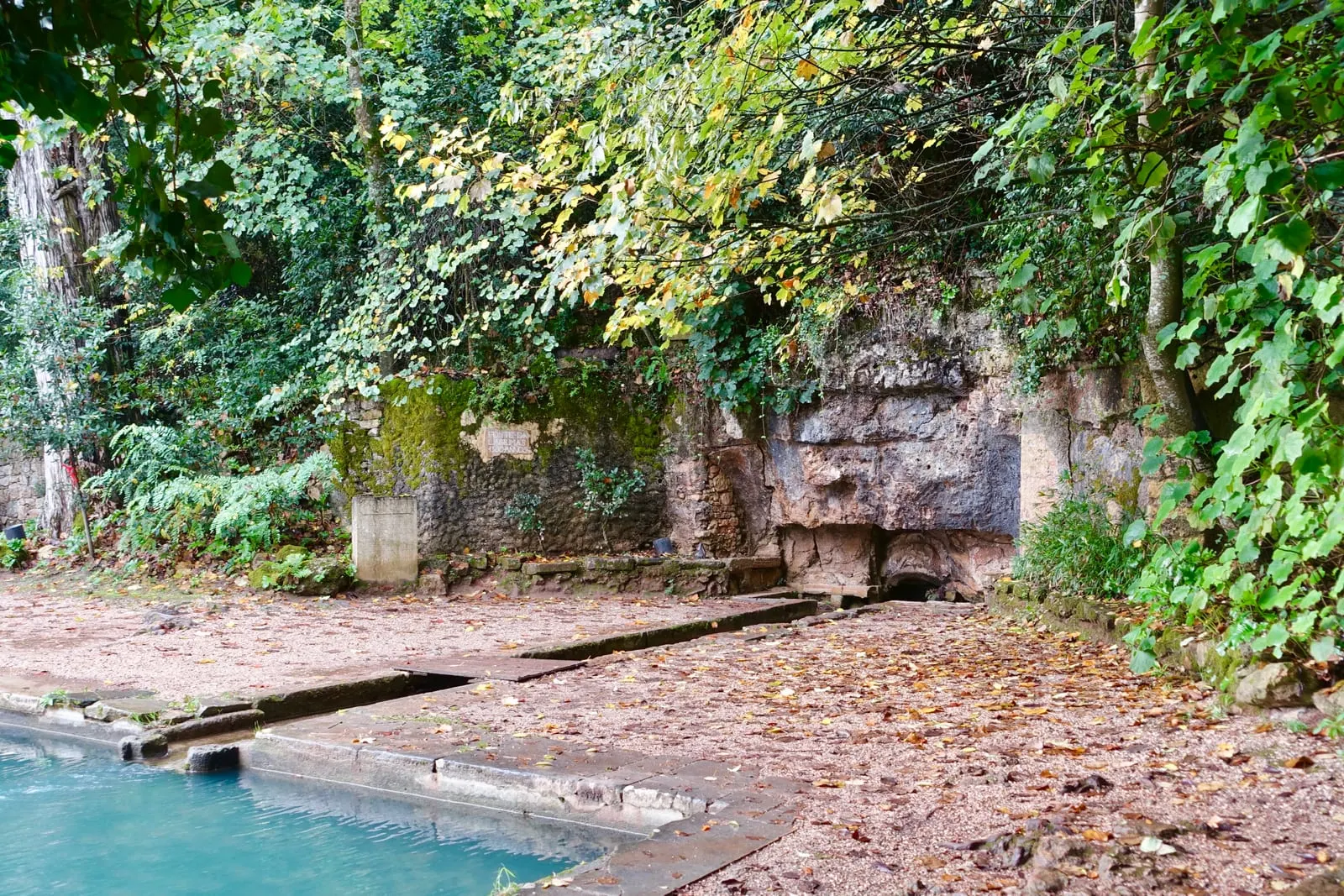
According to the Foundation, the place was already called Fonte dos Amores before Pedro and Inês, and no one knows exactly why. The national register describes the mine from which the water flows, with a pointed-arch doorway, “probably from the 14th century”, according to a study of 1947. The Fonte dos Amores is a small channel ending in two moss-covered stones.
History and legend of Pedro and Inês
The historical basis is well known. Inês de Castro, a Galician noblewoman, came to Portugal in the entourage of D. Constança, bride of the infante D. Pedro. After Constança’s death, Pedro and Inês lived in Coimbra, in the palace beside the Mosteiro de Santa Clara. Inês was executed on 7 January 1355 by order of D. Afonso IV, as recorded in the Livro da Noa of the Mosteiro de Santa Cruz. As king, Pedro declared that he had secretly married her and had her body transferred to the Mosteiro de Alcobaça. The national register designates that monument as “Mosteiro de Alcobaça, comprising the tombs of D. Pedro I and D. Inês”.
The legend added a setting to the history. Popular tradition placed Inês’s death on the estate and explained the Fonte das Lágrimas by the tears she is said to have wept. For the people, the red algae in the channel were her blood. The Fundação Inês de Castro presents the Quinta as “a historic place of love and a mythic place of death”, distinguishing the two. The hotel also mentions the tradition that Inês’s ghost walks the garden.
Luís de Camões gave the fountain its name and fame. Stanza 135 of Canto III of Os Lusíadas says that the daughters of the Mondego turned the tears wept into a fountain, with a name “that still lasts / of the loves of Inês that passed there”. A plaque with those verses stands beside the Fonte das Lágrimas. Unlike other fountains, this one is not a carved stone work: the water comes directly out of the rock into the channel.
The palace and the gardens
The origin of the estate as a property is unclear. According to the national register, its woods were royal hunting reserves, and the estate belonged to the University and to a religious order. From 1730 it was owned by the Osório Cabral de Castro family, who then built the palace. A fire in 1879 destroyed much of the building. Miguel Osório Cabral de Castro rebuilt it at the end of the 19th century, with revivalist influences gathered on travels around Europe. The building has a central body and two side wings, with galleries of square colonnettes on the main façade, and a chapel to the right. Among the images the national register holds of the garden are neo-Gothic ruins, evidence of the same taste for revivals, explained in romanticism and revivalisms.
The Foundation now describes several gardens:
- the Romantic Garden, of the 19th century, with winding lakes, a bamboo grove and large trees brought from other continents, such as the camphor tree, the podocarpus and the ficus;
- the Medieval Garden, a modern interpretation by the landscape architect Cristina Castel-Branco, which the Foundation itself says is not a restoration, watered with the water of the Fonte dos Amores;
- the Mata, on the slopes, with cedars, Aleppo pines and sequoias, whose walls and walking paths have been recovered;
- the Colina de Camões amphitheatre, also by Cristina Castel-Branco, awarded the National Prize for Landscape Architecture in 2008.
According to the Foundation, General Wellington and the botanist Brotero planted or recorded trees on the estate, and the two sequoias used in the amphitheatre are said to have been planted around 1810. These are claims of the managing body, not verified in another source. The hotel speaks of 12 hectares of historic gardens and also mentions a Japanese garden and a kitchen garden.
Hotel, Foundation and classification
The palace operates as a five-star hotel, a member of Small Luxury Hotels of the World. The Fundação Inês de Castro was created on 7 January 2005, when 650 years had passed since Inês’s death. It is based on the estate and is devoted to research and promotion of the Inesian theme. The company that owns the hotel granted it, under a commodatum, the grounds of the historic sites, gardens, slope and woodland. The Foundation manages the visits and organises a literary prize and an arts festival.
The legal protection has a precise scope. Decree No. 129/77 of 29 September (Diário da República, I series, No. 226) classified as a Property of Public Interest the “most representative elements existing in the Quinta das Lágrimas”. The classification does not cover the whole estate. The national register does not indicate a special protection zone nor any connection with the World Heritage List: the estate is not part of the Universidade de Coimbra – Alta e Sofia.
Planning the visit
The garden ticket office is on Rua José Vilarinho Raposo; the hotel and the Foundation have their address on Rua António Augusto Gonçalves. When consulted on 5 November 2026, the Foundation listed the winter opening hours (16 October to 15 March) as Tuesday to Sunday, 10:00–17:00, and the summer hours (16 March to 15 October) as 10:00 to 19:00, also closed on Mondays. Prices in force since 5 May 2026 were €3.50 (single ticket), €2 (under 15 and over 65) and €7 (family of two adults and two children). Guided visits and groups of more than 10 people require booking; visits to the palace and the Japanese garden are only possible as booked guided tours. Confirm on the Foundation’s page or by calling the ticket office at 912 464 332.
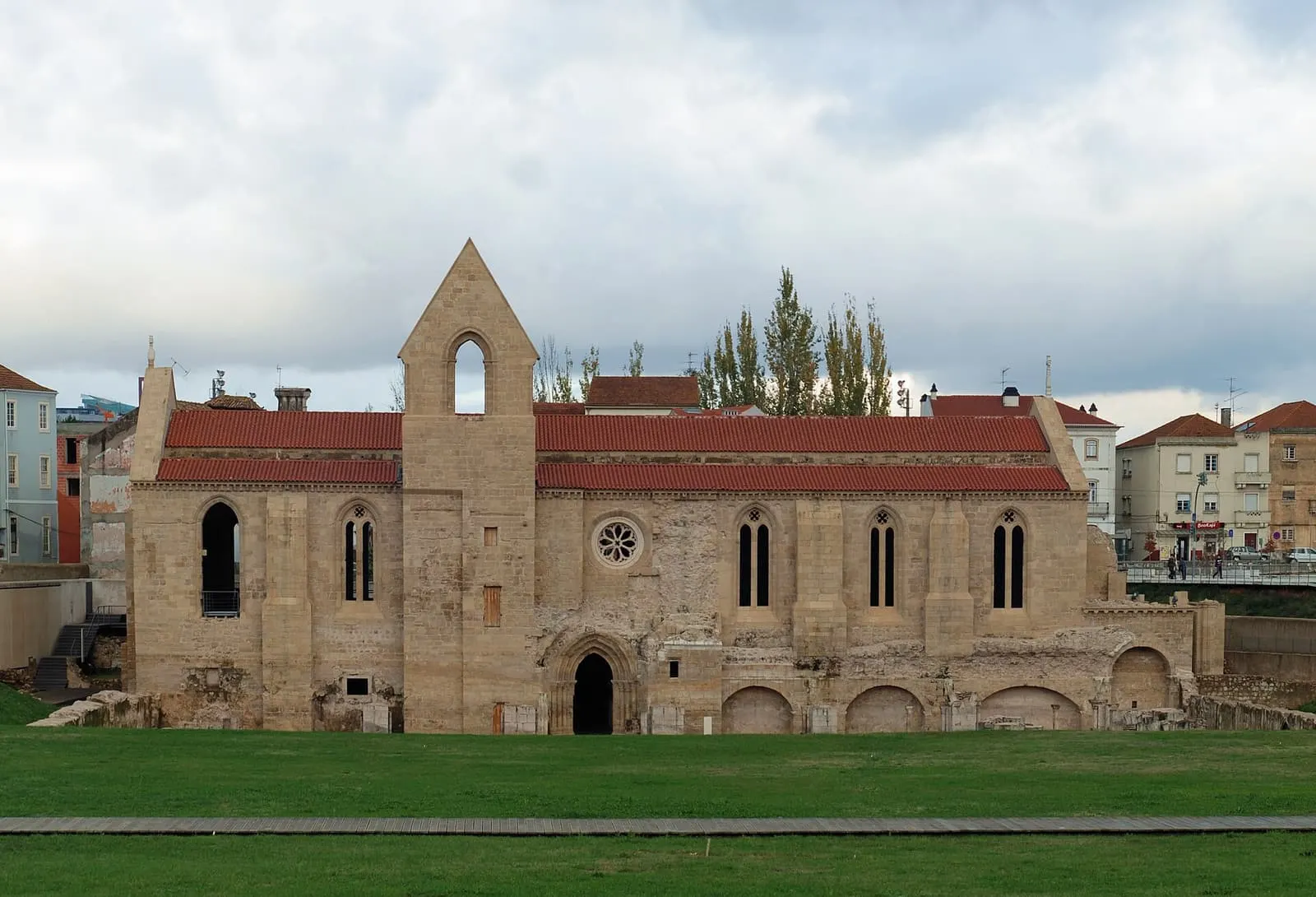
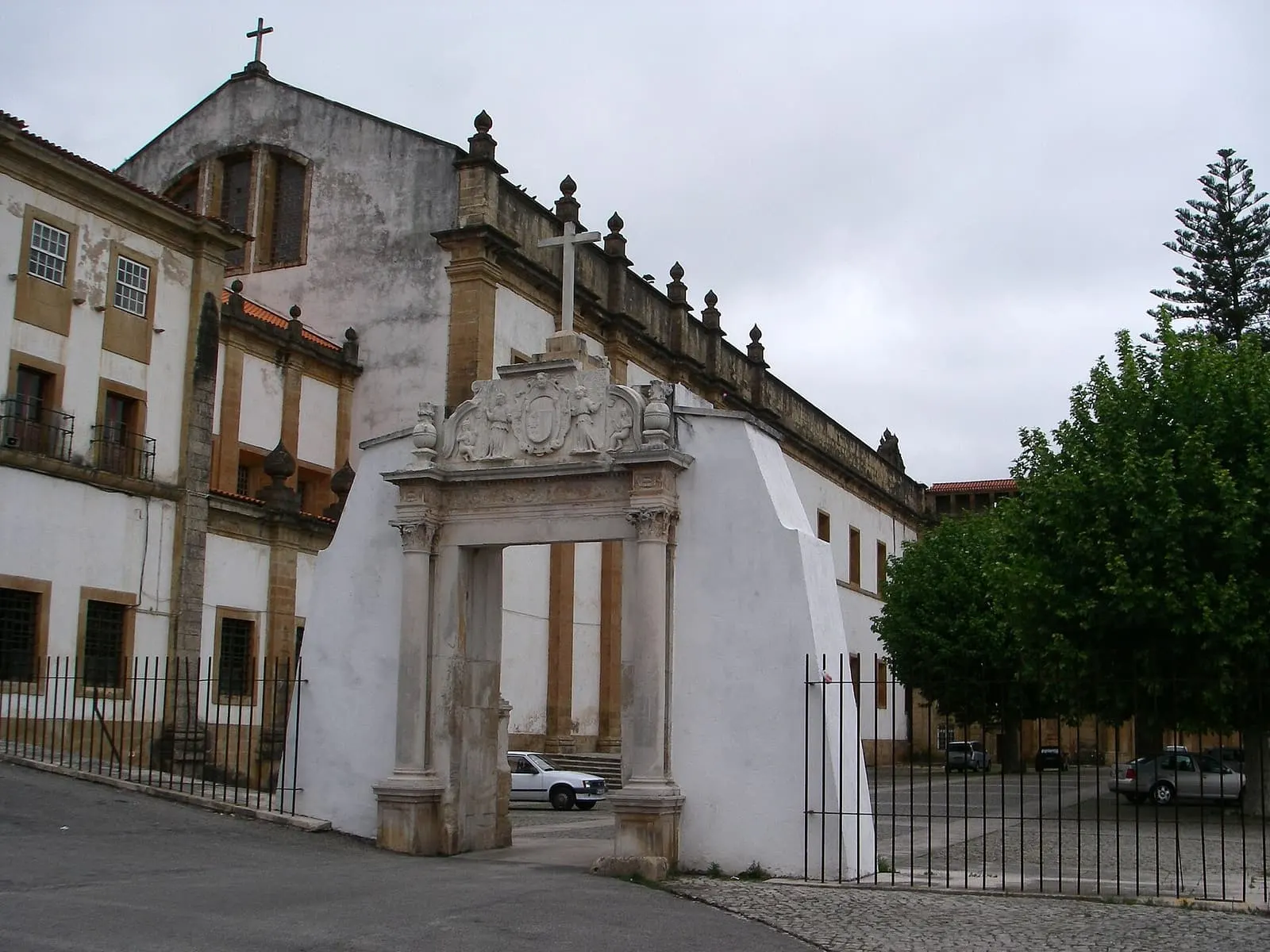
On the same bank are Santa Clara-a-Velha and the Mosteiro de Santa Clara-a-Nova. For other gardens, continue to historic gardens and country estates.
Photograph by Daderot, dated 4 November 2019. Original on Wikimedia Commons, under CC0 1.0; resized and compressed for the web, without altering the composition.
Frequently asked questions
- Was Inês de Castro killed at the Quinta das Lágrimas?
- Popular tradition places Inês's death there and explains the Fonte das Lágrimas as the place of her tears. Historically, Inês was executed on 7 January 1355; the Fundação Inês de Castro presents the location of the death at the Quinta as part of the legend.
- What is classified at the Quinta das Lágrimas?
- The "most representative elements existing in the Quinta das Lágrimas", classified as a Property of Public Interest by Decree No. 129/77 of 29 September. The classification does not cover the whole estate, nor the hotel as such.
- What is the origin of the Fonte dos Amores?
- On 26 June 1326, Queen Saint Isabel obtained from the friars of Santa Cruz the right to the water of two springs on the estate, and a channel to carry it to the Mosteiro de Santa Clara, according to the document cited by the Fundação Inês de Castro.
- How much does it cost to visit the gardens?
- When consulted on 5 November 2026, the Fundação Inês de Castro listed €3.50 (single ticket), €2 (under 15 and over 65) and €7 (family). Check the Foundation's page before your visit.
Sources
- Património Cultural, I.P. — Elementos mais representativos existentes na Quinta das Lágrimas (73803)
- Diário da República — Decreto n.º 129/77, de 29 de setembro (I série, n.º 226)
- Património Cultural, I.P. — Atlas do Património Classificado e em Vias de Classificação
- Fundação Inês de Castro — Jardins da Quinta das Lágrimas
- Fundação Inês de Castro — Inês de Castro
- Fundação Inês de Castro — Apresentação
- Fundação Inês de Castro — 700 anos da Fonte e do Canal dos Amores
- Quinta das Lágrimas — Hotel
- Quinta das Lágrimas — Jardins
- Wikidata — Quinta das Lágrimas (Q3414568)
Keep exploring
Heritage nearby
More places to discover from here. Approximate straight-line distances, within 50 km.