Monuments
Sanctuary of Nossa Senhora do Cabo Espichel
Sanctuary of Cabo Espichel, Sesimbra: 1701–1707 church, pilgrims' hostels, Ermida da Memória, Casa da Água, círios and the complex's legal protection.
- Location
- Sesimbra, Setúbal
- Built
- 1701–1770 (igreja 1701–1707; hospedarias 1745–1760)
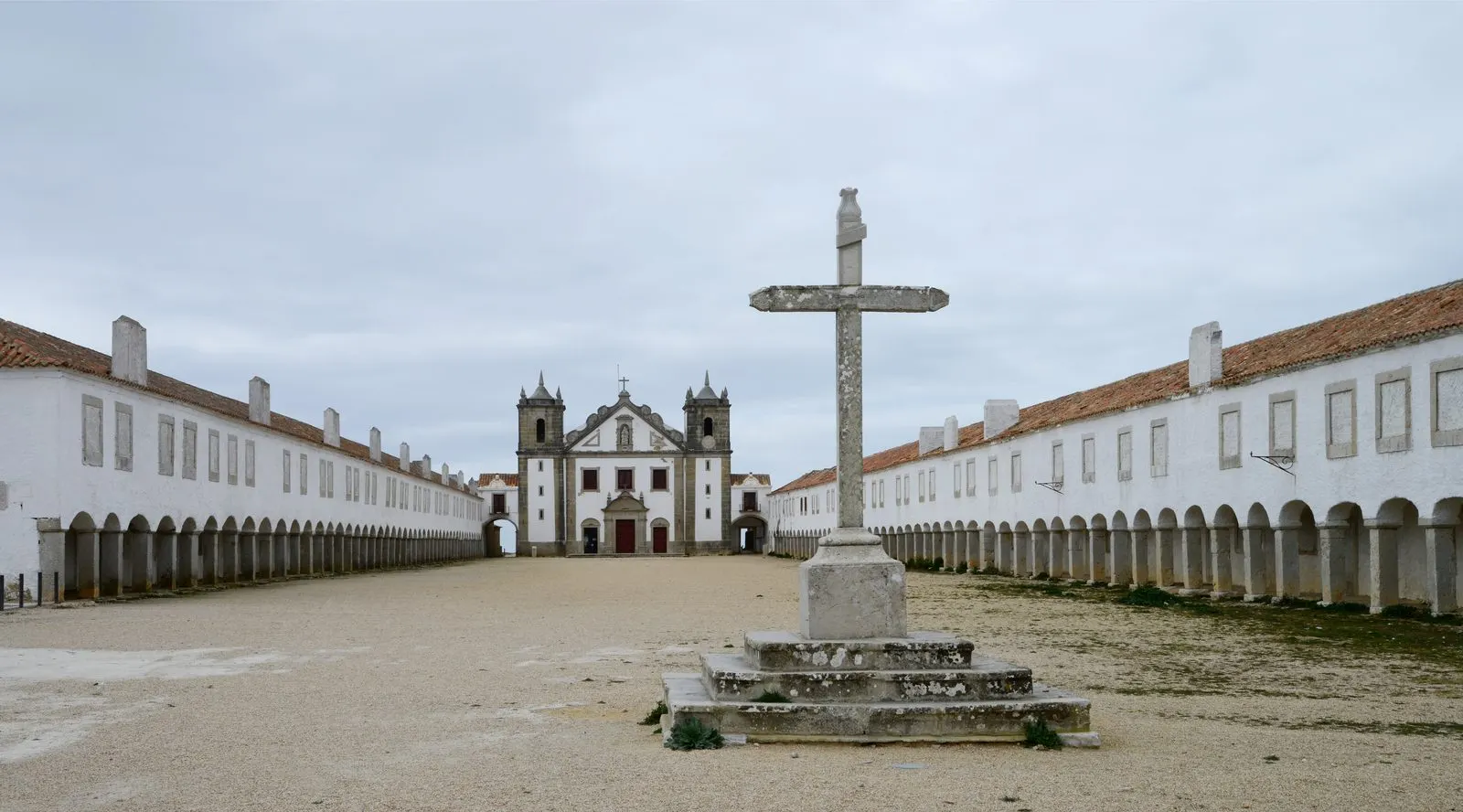
At the tip of the Setúbal peninsula, above limestone cliffs, the Sanctuary of Nossa Senhora do Cabo Espichel brings together a church, two long wings of hostels for pilgrims, and a forecourt open between them. The municipality of Sesimbra describes it as a civil and religious complex that combines the monumentality of its buildings with devotion. It is also known as the Sanctuary of Nossa Senhora da Pedra Mua. This name links it to a legend and to a site of dinosaur footprints on the same headland.
Origins: between document and legend
According to the municipality, the origins of the cult go back at least to the 14th century. A document from the chancery of King D. Pedro I, dated 1366, refers to the pilgrimage routes to Santa Maria do Cabo. Oral tradition places the discovery of the image later. In 1410, two old men, one from Caparica and one from Alcabideche, guided by similar dreams, are said to have found the image of Our Lady on the headland. The document is therefore earlier than the date that tradition assigns to the discovery.
In the 15th century the Ermida da Memória and the original church were built. The chapel stands at the top of the southern escarpment of the Bay of Lagosteiros and marks the spot where, according to the legend, the apparition occurred. In 1432 the Confraria de Nossa Senhora do Cabo was established, a sign of the number of pilgrims. The Government’s 2021 note on the sanctuary adds that nothing remains today of the original sanctuary described in the visitations of the Order of Santiago.
The 18th-century sanctuary
According to the municipality, the great campaign of works took place between 1701 and 1770. The main buildings of the complex date from this period: the church, the hostels, the Casa da Água, the aqueduct, the Mãe d’Água of the Poço Velho da Azóia, wells, the Casa da Lenha, three pilgrimage crosses and the arrival cross. The Government’s 2021 note attributes the initiative to D. Pedro II and D. José and gives more precise dates. The church was built between 1701 and 1707, in the plain style (estilo chão). The two wings of hostels date from 1745–1760. The Casa da Água, dated 1770, was supplied by an aqueduct.
The hostels are the most striking element of the complex. The two rows of dwellings for pilgrims form two lines that lead the eye to the church. The arcades of the ground floor and the windows of the upper floor create a play of solids and voids, and of light and shadow. The governmental source speaks of an architecture of popular design, yet of great interest. For the period’s architectural context, see Baroque architecture in Portugal. For other pilgrimage sites, see sanctuaries and pilgrimage sites.
The complex also includes a Casa da Ópera and the pilgrims’ gardens. The sources consulted do not agree on the date of the Casa da Ópera, so we do not assign it a date here.
The círios and the continuity of worship
According to the municipality, worship went into gradual decline with the Napoleonic invasions. This decline was halted by several restoration works in recent decades. Worship remains alive, notably through the celebrations of the círios of Azoia, Palmela and Sesimbra, with festivities in March and April and in August and September.
Legal protection
Decree No. 37 728, published in the Diário do Governo, I series, No. 4, of 5 January 1950, classified as a Property of Public Interest the «complex of the Church of Nossa Senhora do Cabo, at Cabo Espichel, house of the círios and forecourt». The national register now uses the designation Complex of the Church of Nossa Senhora do Cabo, house of the círios and forecourt. The special protection zone was set by ministerial order of 6 November 1963, published in the Diário do Governo, II series, No. 280, of 29 November 1963. The text of the decree does not list separately the Ermida da Memória, the Casa da Água or the aqueduct. Anyone who needs to know the status of each element should confirm it with Património Cultural, I.P.
The sanctuary lies within the area of the Arrábida Natural Park. The Pedra da Mua, on the same cape, preserves limestone slabs with trackways of Jurassic sauropod dinosaur footprints. The municipality associates the site with the legend of Nossa Senhora do Cabo. According to the municipality, the site has its own protection as a Natural Monument, under Decree-Law No. 20/97, of 7 May.
Ownership and the future of the hostels
Ownership of the complex does not rest with a single entity. According to the Government’s 2021 note, the north wing of the hostels belongs to the private domain of the Municipality of Sesimbra. The south wing includes a property of the Confraria de Nossa Senhora do Cabo, and the concession covered that part. That year, under the Revive programme, a 50-year concession tender was opened for these areas. The concession covered 5,937 m² of built area and was intended for a hotel establishment or another tourism project. When consulted on 5 November 2026, we were unable to confirm the outcome of this tender, or the current state of the works on the hostels, from an official source.
Planning the visit
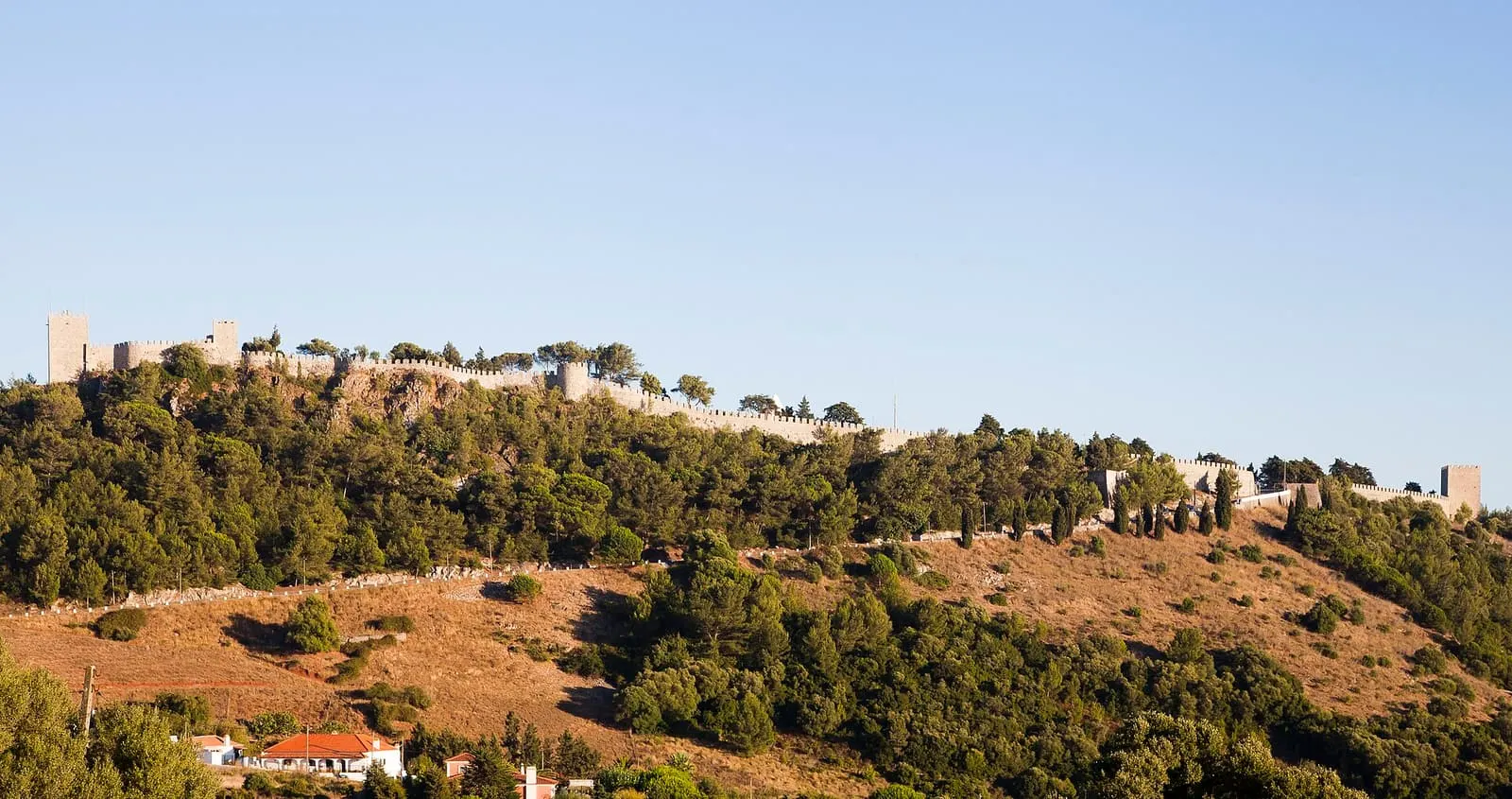
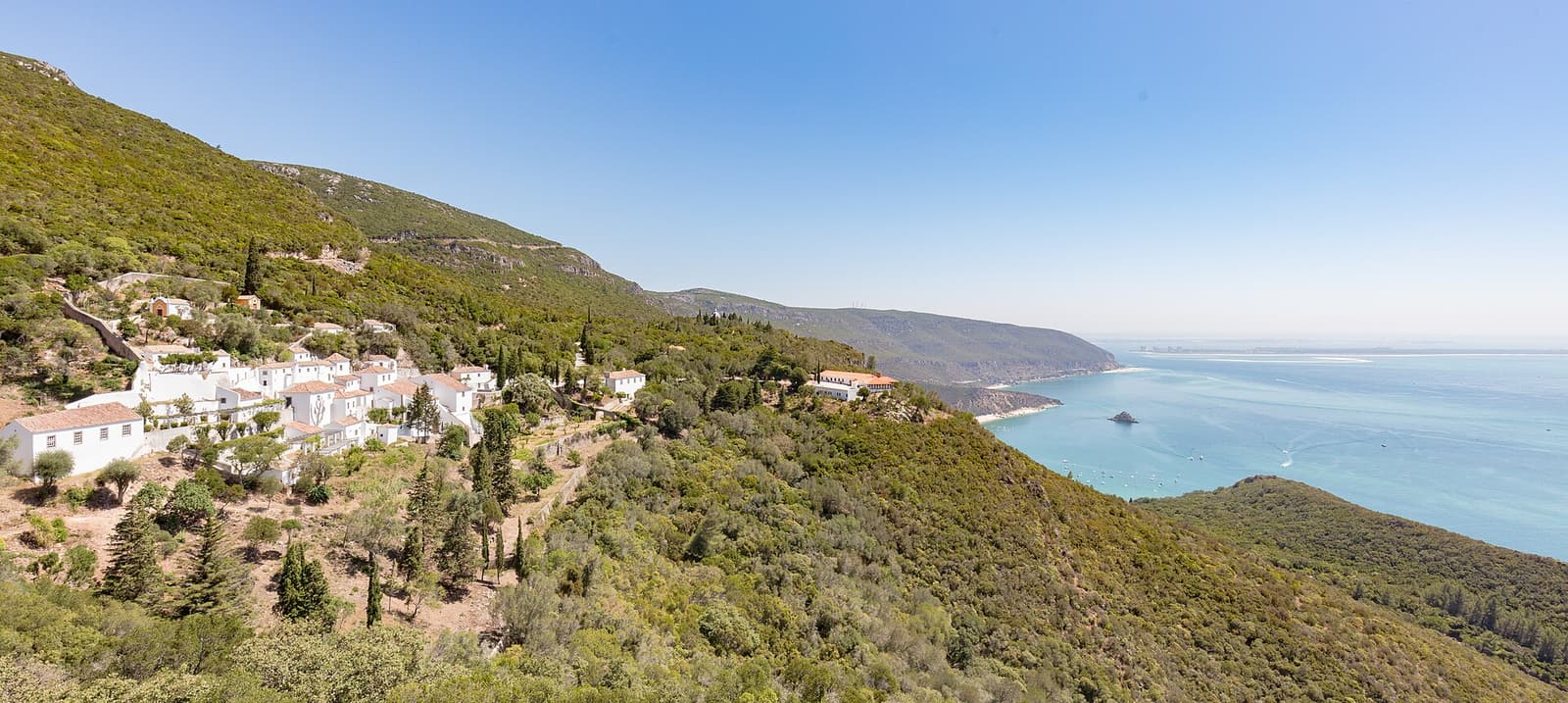
Cabo Espichel lies about 15 km from Sesimbra, according to the municipality. When consulted on 5 November 2026, we found no officially published opening hours for the church, nor conditions for visiting the interior of the hostels. Before planning the journey, please confirm the information with the Municipality of Sesimbra or the tourist office. The church is a place of worship: respect the celebrations in progress. To continue around the municipality, see Sesimbra Castle. In the hills, the Convento da Arrábida is another religious landmark in the landscape.
Photograph by Alvesgaspar, dated 28 February 2015. Original on Wikimedia Commons, under CC BY-SA 4.0; resized and compressed for the web, without altering the composition.
Frequently asked questions
- What is listed at Cabo Espichel?
- Decree No. 37 728, of 5 January 1950, classified as a Property of Public Interest the complex comprising the Church of Nossa Senhora do Cabo, the house of the círios and the forecourt. A ministerial order of 6 November 1963 set its special protection zone.
- When was the present sanctuary built?
- The municipality dates the main buildings of the complex to between 1701 and 1770. In 2021 the Government stated that the church was built between 1701 and 1707, that the two wings of hostels date from 1745–1760, and that the Casa da Água is dated 1770.
- Is worship still active at the sanctuary?
- Yes. According to the Municipality of Sesimbra, worship remains alive, notably through the celebrations of the círios of Azoia, Palmela and Sesimbra, with festivities in March and April and in August and September.
- What is the relationship between the sanctuary and the Pedra da Mua?
- The Pedra da Mua dinosaur-footprint site at Cabo Espichel is associated by tradition with the legend of Nossa Senhora do Cabo. It has separate protection: according to the municipality, the site was classified as a Natural Monument by Decree-Law No. 20/97, of 7 May.
Sources
- Município de Sesimbra — Santuário do Cabo
- Município de Sesimbra — Cabo Espichel
- Município de Sesimbra — Jazida de icnofósseis da Pedra da Mua
- Governo de Portugal — Revive: aberto concurso para concessão do Santuário do Cabo Espichel (2021)
- Diário do Governo — Decreto n.º 37 728, de 5 de janeiro de 1950
- Património Cultural, I.P. — Atlas do Património Classificado: Conjunto da Igreja de Nossa Senhora do Cabo, casa dos círios e terreiro (NINV 4041)
- Wikidata — Santuário de Nossa Senhora do Cabo Espichel (Q3344716)
Keep exploring
Heritage nearby
More places to discover from here. Approximate straight-line distances, within 50 km.