Monuments
Fort of Nossa Senhora da Graça (Elvas)
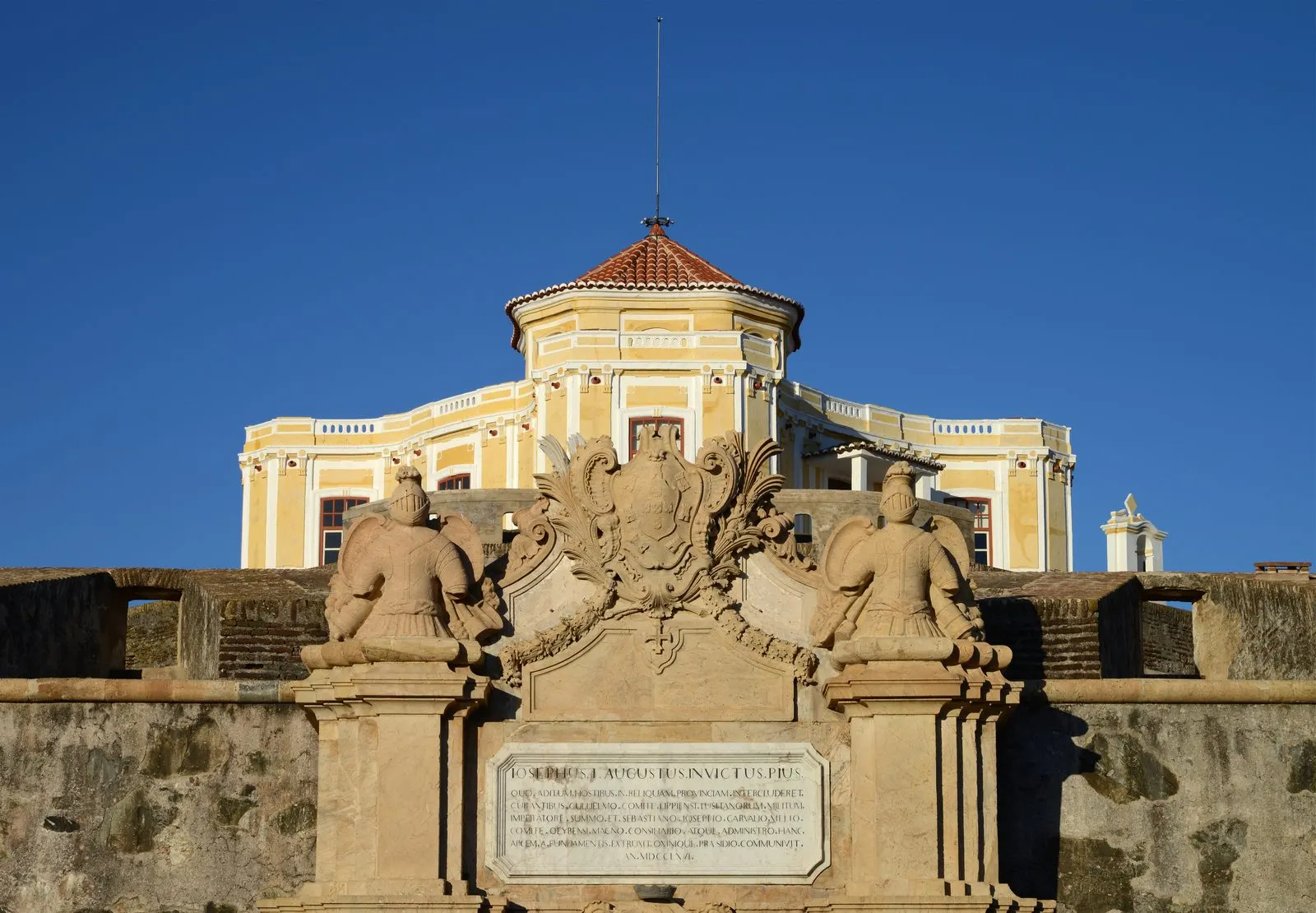
Fort of Graça (Lippe) in Elvas: bastioned fortress built from 1763 to 1792, former military prison, National Monument and part of a World Heritage Site.
- Location
- Elvas, Portalegre
- Built
- 1763–1792
The Fort of Nossa Senhora da Graça, also called the Fort of Graça or Fort of Lippe, occupies the rise that dominates Elvas from the north. It is an eighteenth-century bastioned fortress, built when the seventeenth-century city walls could no longer withstand artillery of longer range. Today it is one of the central elements of the ensemble classified as a World Heritage Site and can be visited.
A hill that had to be occupied
The rise was important before the fort. The Municipality of Elvas notes that, in the fifteenth century, the small chapel of Santa Maria da Graça stood there, from which the name derives. During the War of the Restoration, in 1658, Spanish troops built a redoubt at this point to attack the city. The lesson was clear: whoever held the hill could bombard Elvas from above.
The statement of outstanding universal value published in the Diário da República in 2013 explains the same problem in other terms. In the eighteenth century, the Fort of Graça and other forts were built to respond to the development of long-range artillery. The fort thus completed the ring of walls begun in 1643 and the Fort of Santa Luzia.
Lippe, Étienne and Valleré
Work began in 1763, on the initiative of Wilhelm, Count of Schaumburg-Lippe, to whom King D. José I had entrusted the reorganisation of the Portuguese army. According to the municipality, the direction of the works was first given to the engineer Étienne, shortly afterwards replaced by Colonel Guillaume Louis Antoine de Valleré. Construction was only completed in 1792, almost thirty years later. The municipality records who directed the works, not who designed the plan; for this reason, authorship of the layout should not be attributed to a single person.
The name «de Lippe», which the municipality uses as an alternative to «Forte da Graça», preserves the memory of that initial impulse.
Three bodies and a central redoubt
The municipality describes the fort as a work in three bodies: the outer works, the main body and the central redoubt. The main body has four bastions. The main gate opens at the midpoint of the southern curtain wall and is the most ornate element of a whole in which almost everything serves defence.
The governor’s house occupies the highest point of the fort and rises above the walls. The fort also retains the officers’ quarters, the cistern, the chapel, the firing galleries and the prison. The municipality links the design to the military architecture of the Vauban type. To compare solutions, see the page on bastioned fortresses and the route of the Rota das Fortalezas Abaluartadas da Raia.
From fortress to prison
The fort followed the changing nature of warfare. In 1856 a corrective company was established there and, in 1894, a disciplinary depot. According to the municipality, several political prisoners passed through it from the First Republic until 1974. This prison phase forms part of the monument’s history as much as the eighteenth-century military design.
Restoration and reopening
The monument underwent an intervention lasting eleven months and was inaugurated on 27 November 2015. The municipality reports the restoration of the governor’s house, the officers’ quarters and other architectural elements, with the original colours and materials reinstated. The cistern, the prison, the firing galleries and the chapel, where nineteenth-century frescoes were discovered, were also restored, and these too were treated.
Classification and World Heritage
The Portuguese Cultural Heritage register (Património Cultural, I.P.) identifies the Fort of Nossa Senhora da Graça as a National Monument by the Decree of 16 June 1910, published in the Diário do Governo no. 136, of 23 June 1910. The same register includes the fort in the ensemble «Border and Garrison City of Elvas and its Fortifications», inscribed on the UNESCO World Heritage List on 30 June 2012. Notice no. 15171/2013 published the statement of outstanding universal value and states that the property is declared a National Monument under Law no. 107/2001; the register also cites Notice no. 4499/2021.
The fort has no separate UNESCO inscription: it is one of the components of the Elvas property, alongside the historic centre with the castle, the Fort of Santa Luzia, the smaller forts and the Amoreira Aqueduct.
Preparing your visit
The fort is managed by the Municipality of Elvas. At the consultation on 5 November 2026, the municipal page indicated:
- winter opening hours (October to April): 10:00–17:00; summer opening hours (May to September): 10:00–18:00;
- closed on Mondays, with public exit half an hour before closing;
- general admission of €5, guided visit of €8 and a special guided visit, with advance booking, of €15, which gives access to the cistern and the counter-mines four times a year;
- discounts for youth cards, partner agreements and large families.
Please confirm opening hours, prices and dates of special visits on the Fort of Graça page, by telephone on +351 268 639 741 or by email at [email protected]. The fort lies outside the historic centre; plan your journey from the city. To see the defensive system as a whole, combine your visit with the fortifications of Portugal and the page on the Elvas border garrison.
Photograph by Alvesgaspar, dated 29 December 2016. Original on Wikimedia Commons, under CC BY-SA 4.0; resized and compressed for the web, without altering the composition.
Frequently asked questions
- When was the Fort of Graça built?
- According to the Municipality of Elvas, work began in 1763, on the initiative of the Count of Schaumburg-Lippe, and was not completed until 1792.
- Is the Fort of Graça a World Heritage Site?
- Yes, as part of the property «Border and Garrison City of Elvas and its Fortifications», inscribed by UNESCO in 2012. It is not a separate inscription: the statement of outstanding universal value published in the Diário da República expressly refers to the Fort of Graça.
- What is the national classification of the fort?
- The Portuguese Cultural Heritage register (Património Cultural, I.P.) identifies the Fort of Nossa Senhora da Graça as a National Monument by the Decree of 16 June 1910 (Diário do Governo no. 136, of 23 June 1910). It is also included in the classified ensemble bearing the UNESCO inscription.
- What were the opening hours of the fort in November 2026?
- At the consultation on 5 November 2026, the Municipality of Elvas' winter schedule (October to April) was 10:00 to 17:00, closed on Mondays. Please confirm on the municipal page before your visit.
Sources
- Município de Elvas — Forte da Graça
- Património Cultural, I.P. — Atlas do Património Classificado: Forte de Nossa Senhora da Graça (NINV 3530) e Cidade Fronteiriça e de Guarnição de Elvas e as suas Fortificações (NINV 1382)
- Diário da República — Aviso n.º 15171/2013, 2.ª série, n.º 242, de 13 de dezembro de 2013
- Wikidata — Forte de Nossa Senhora da Graça (Q10283837)
Keep exploring
Heritage nearby
More places to discover from here. Approximate straight-line distances, within 50 km.