Monuments
Lorvão Monastery
Lorvão Monastery, Penacova: 9th-century origins, Cistercian nuns from c. 1200, church of 1748–1761, choir stalls, Lorvão Apocalypse and its classification.
- Location
- Lorvão, Penacova, Coimbra
- Built
- Referências desde 878; igreja atual 1748–1761
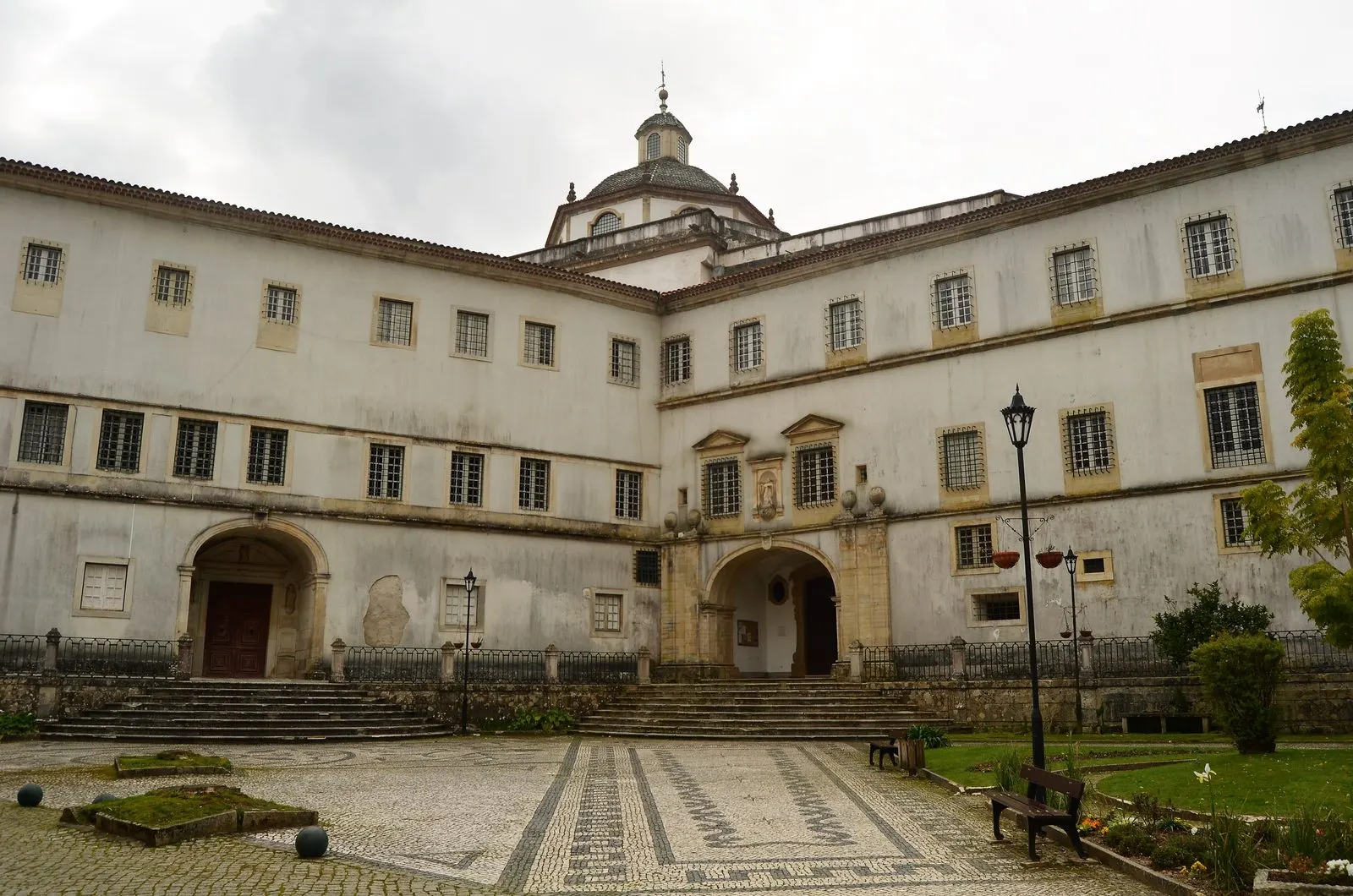
The Lorvão Monastery occupies a valley beside the Lorvão stream, in the municipality of Penacova, north-east of Coimbra. From the outside, one sees mainly a large Baroque complex of whitewashed wings and a church with a dome. The history of the site, however, is much older: it was a men’s monastery for centuries, became a women’s house of the Cistercian Order which, according to the Government, once had more than 300 nuns, and produced one of the best-known illuminated manuscripts in the Iberian Peninsula.
From the origins to the women’s monastery
Tradition traces the foundation of Lorvão back to the 6th century, when a parish of «Lurbane» is mentioned. The national heritage register notes that the site contains a stone with Visigothic ornament and traces of a Roman villa, but considers it more accurate, in the light of current historiography, to place the foundation after the first Christian reconquest of Coimbra, in 878, from which date the first known documentary references appear.
In the 10th century the monastery already had considerable importance; the 11th century brought a period of decline. After an initial phase without a fixed rule, the community adopted the Rule of Saint Benedict in the mid-11th century. Around 1180, according to the same register, there were major works, which most likely resulted in a new cloister and a three-aisled church. Only capitals remain from that Romanesque campaign.
The great turning point came around 1200. The monastery passed to the Cistercians and became a women’s house, under the invocation of Saint Mary. The change is due to D. Teresa, daughter of D. Sancho I, who lived there until her death, in 1250. The national register dates the transfer to 1200; a government communiqué of 2018 gives 1206. D. Teresa is buried in the church with her sister, D. Sancha, in urns made in 1714 by the Porto goldsmith Manuel Carneiro da Silva. The tombs of the two infantas form part of the official name of the classified monument.
The scriptorium: the Lorvão Apocalypse
The men’s monastery had an active scriptorium. The most celebrated work to come from it is the Lorvão Apocalypse, a parchment codex of 221 folios, copied in 1189 from the commentary on the Apocalypse by Beatus of Liébana, an 8th-century author. The description by the National Archive, published through Europeana, states that the manuscript came from the monastery of São Mamede de Lorvão and was taken by Alexandre Herculano to the Torre do Tombo in Lisbon, where it is kept.
In 2015, the codex became part of the joint Portuguese and Spanish inscription on UNESCO’s Memory of the World register, dedicated to the manuscripts of the commentary on the Apocalypse of Beatus of Liébana. The inscription covers the manuscript, not the building: visitors to Lorvão will not find the original there.
Specialised databases on medieval bestiaries attribute to the same scriptorium a book of birds, a copy of Hugh of Fouilloy’s De avibus, dated to around 1184 and now also held at the Torre do Tombo (MS. 90). We were unable to confirm these data in a record from the archive itself, so they should be checked with the custodian. The technique of these works is discussed in bookbinding and illumination.
The renewal of the 16th to 18th centuries
The present appearance results from works carried out over nearly two centuries. According to the national register, the renewal began in the last years of the 16th century with the cloister, in Renaissance style, with several chapels. In 1677 the cloister galleries were added, already close to the Baroque. The portal dates from 1630 and forms part of the new building begun in the 1620s.
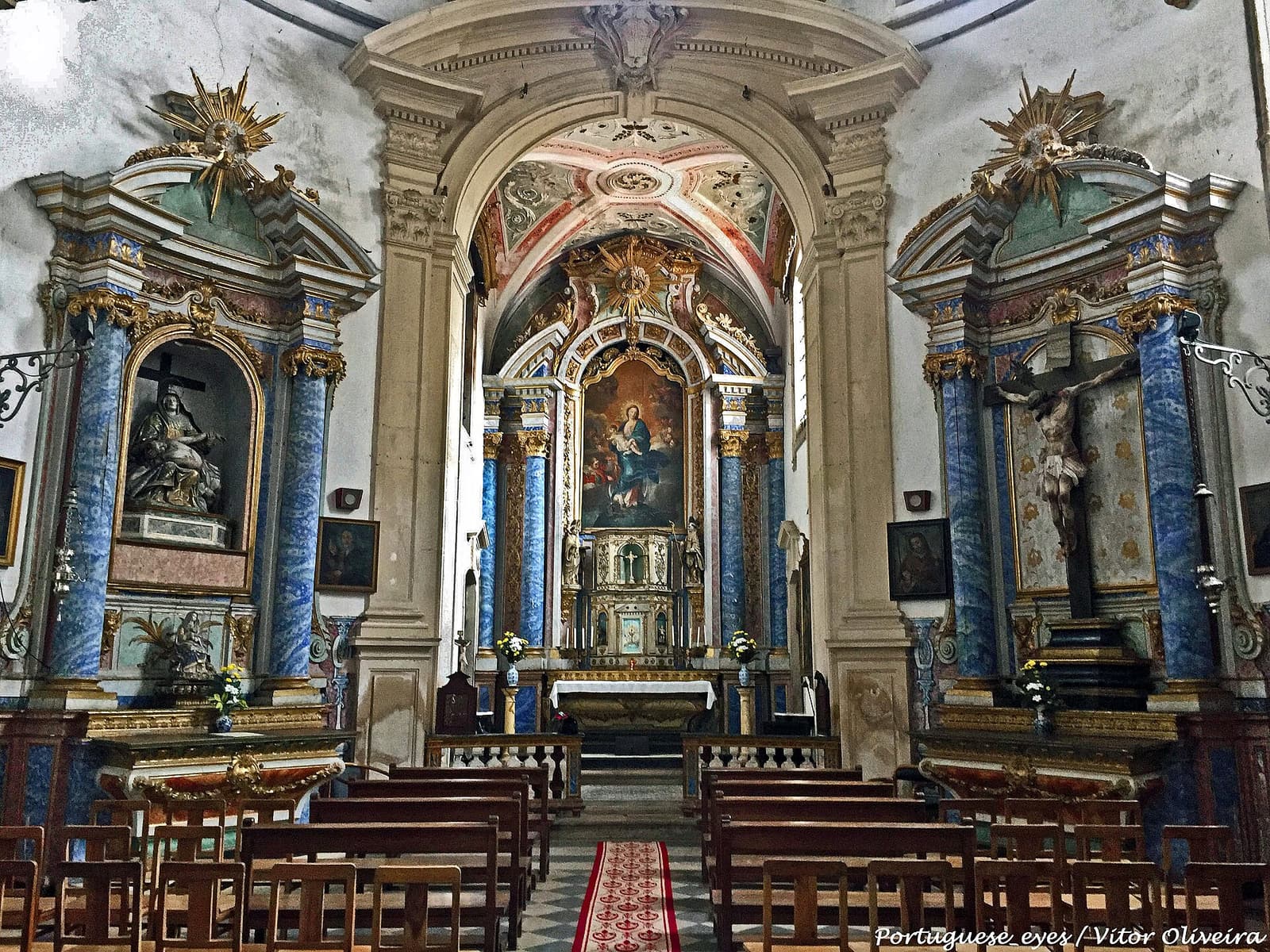
The Baroque cycle was the one that left the strongest mark on the complex. It is linked to the official cult of the «Holy Queens» D. Teresa and D. Sancha, whose canonisation process concluded in 1724. First the high altarpiece was renewed, and gilded woodcarving covered the interior of the church. In 1728 the new novitiate was built. A decade later a further remodelling began: between 1748 and 1761, the church was rebuilt to a plan in which historiography recognises the influence of Mafra.
Inside, the highlight is the choir stalls of the lower choir, made between 1742 and 1747 in rosewood and walnut, with tall backrests and figures of martyr saints framed in foliage. The national register considers them a reference of eighteenth-century woodcarving on a national scale. The nuns’ choir, separated from the nave, follows an arrangement also found at the Monastery of Arouca.
Above the choir arch stands the organ. According to the Lusa news agency, in a 2014 report, it was begun by Manuel Teixeira de Miranda, with sculptures for the case by his son Machado de Castro, and completed in 1795 by another son, Machado de Cerveira. At that time, the organ builder Dinarte Machado had just restored it, reinstating some two thousand pipes. This instrument is one of the cases covered in Portuguese historic organs.
Extinction, hospital and concession
With the extinction of the religious orders in 1834, the building passed to the State, but it retained religious functions until the death of the last nun, in 1887. During this period, a large part of the furnishings were dispersed to national museums, and another part was lost. In the 20th century, the complex was adapted as a psychiatric hospital, which closed in 2012, according to the Government.
The monastery then entered the Revive programme. The tender was launched in December 2018. The 50-year concession contract for rehabilitation and tourist exploitation was signed on 18 March 2021 with the company Soft Time Unipessoal, Lda. It envisaged an estimated investment of about 7 million euros and the start of operations in 2024. When consulted on 5 November 2026, we found no official source confirming the opening of the hotel or the current state of the works.
Classification and protection
The national register identifies the monument as Mosteiro de Lorvão, compreendendo os túmulos de Santa Teresa e de Santa Sancha, classified as a National Monument by the Decree of 16 June 1910, published in the Diário do Governo no. 136, of 23 June 1910. The special protection zone was set by ministerial ordinance of 12 November 1960 (Diário do Governo, II series, no. 269, of 18 November 1960). The property is included in the thematic inventory of the Cistercian Itineraries. It is not a World Heritage Site; the link with UNESCO runs only through the manuscript held in Lisbon.
Preparing a visit
The monastery lies in the parish of Lorvão, about 7 km from Penacova, according to the location given in the national register. When consulted on 5 November 2026, we found no official opening hours published by the Municipality of Penacova or by Património Cultural, I.P., and the tourist concession may restrict access to parts of the building. Please confirm entry conditions for the church and cloister in advance with the Municipality of Penacova, especially on days of religious celebrations.
To place the visit in context, compare Lorvão with other Cistercian monasteries in the Centre and North and with the route described in the Cistercian routes in Portugal.
Photograph by Pedro from Maia (Porto), Portugal, of 29 March 2018. Original on Wikimedia Commons, under CC BY 2.0; resized and compressed for the web, without altering the composition.
Frequently asked questions
- When did Lorvão Monastery pass to the Cistercian Order?
- The national heritage register states that the Benedictine rule remained in force until 1200, when the monastery passed to the Cistercians and became a women's house, through the action of D. Teresa, daughter of D. Sancho I. A government communiqué of 2018 gives 1206; the exact date should be read with that reservation.
- Is the Lorvão Apocalypse kept at the monastery?
- No. The codex, copied in 1189, is held at the National Archive of the Torre do Tombo in Lisbon, to which it was taken by Alexandre Herculano. It is the manuscript, not the building, that forms part of the 2015 Memory of the World inscription dedicated to the commentaries on the Apocalypse of Beatus of Liébana.
- What is the monument's classification?
- National Monument, under the designation «Mosteiro de Lorvão, compreendendo os túmulos de Santa Teresa e de Santa Sancha», by Decree of 16 June 1910 (Diário do Governo no. 136, of 23 June 1910). The special protection zone was set by ministerial ordinance of 12 November 1960.
- Is the monastery going to become a hotel?
- In March 2021 the State signed a 50-year concession contract, under the Revive programme, for rehabilitation and tourist exploitation, with opening planned for 2024. When consulted on 5 November 2026, we found no official confirmation that the hotel has opened.
Sources
- Património Cultural, I.P. — Mosteiro de Lorvão, compreendendo os túmulos de Santa Teresa e de Santa Sancha (70694)
- Património Cultural, I.P. — Atlas do Património Classificado e em Vias de Classificação
- Diário do Governo — Decreto de 16 de junho de 1910 (n.º 136, 23-06-1910)
- Governo de Portugal — Lançado concurso Revive do Mosteiro de Lorvão (2018)
- Governo de Portugal — Programa Revive: contrato de concessão do Mosteiro do Lorvão assinado a 18 de março (2021)
- Europeana / Arquivo Nacional Torre do Tombo — Apocalipse do Lorvão
- UNESCO — Manuscripts of the Commentary to the Apocalypse (Beatus of Liébana) in the Iberian Tradition
- The Medieval Bestiary — Arquivo Nacional da Torre do Tombo, MS. 90 (De avibus)
- RTP / Lusa — Restauro devolve som original a órgão do século XVIII em Lorvão, Penacova (29-04-2014)
- Wikidata — Mosteiro de Lorvão (Q10332624)
Keep exploring
Heritage nearby
More places to discover from here. Approximate straight-line distances, within 50 km.